
how to get rid of pantry moths: find the source and stop the infestation
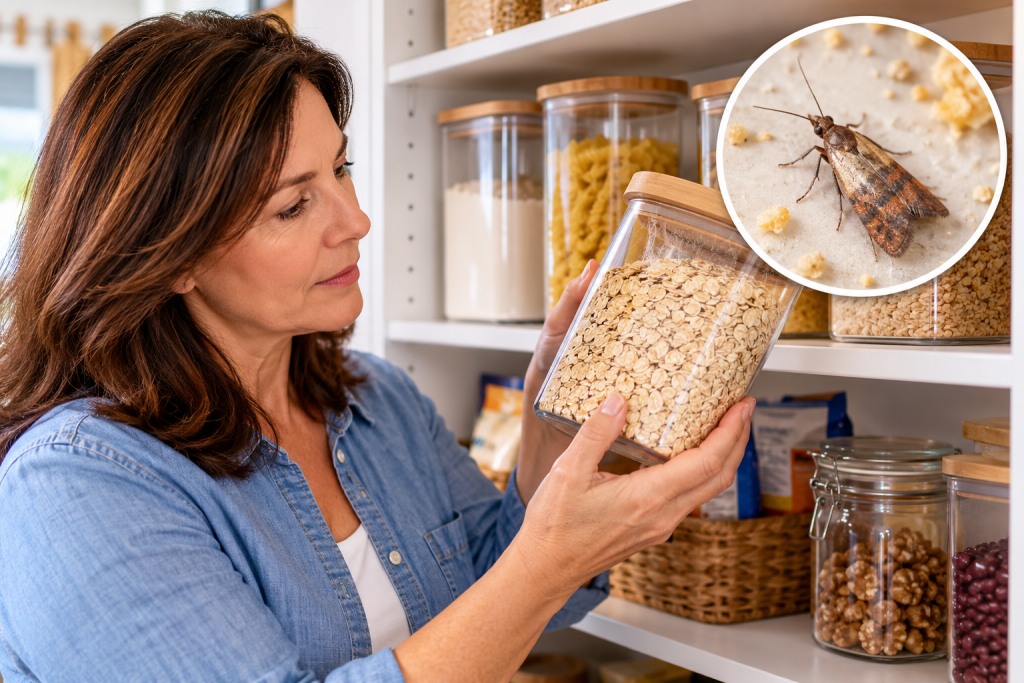
To get rid of pantry moths, start by finding and removing the dry food that is supporting the infestation. Adult moths may be the most visible sign, but larvae usually develop inside stored food. Inspect vulnerable foods carefully, discard anything infested, clean the affected storage area, protect remaining food in secure containers, and reinspect if moths continue appearing.
| What you find | What it may mean | What to do |
|---|---|---|
| Moths flying near a pantry | A stored-food source may be nearby | Inspect dry foods in that area |
| Webbing or larvae in food | Active infestation | Seal and discard the product |
| Larvae on walls or ceilings | Larvae may have left food to pupate | Inspect nearby foods and clean corners |
| Repeated moth sightings after cleanup | A source may have been missed | Reinspect food, pet food, and birdseed |
| No visible contamination in nearby food | The product may still need monitoring | Inspect packaging and store securely |
What Pantry Moths Are
Pantry moths are small moths associated with stored dry foods. Homeowners often notice the adults flying around kitchens, cupboards, or pantry areas, but the damaging stage is the larva developing in food.
An infestation can begin in a product before it ever enters the home. That means even a clean kitchen can develop a pantry moth problem after an infested package is brought inside.
Not every small moth indoors is a pantry moth. Where the insects are appearing and whether stored food shows larvae, webbing, or other contamination are important clues.
Common Signs of Pantry Moths
Adult moths are only one possible sign. A closer look at stored food and the surrounding pantry may reveal more useful evidence.
Signs to look for
- Small moths repeatedly flying near stored food
- Caterpillar-like larvae inside packages
- Fine webbing in food or around package seams
- Dry food clumped together by webbing
- Larvae crawling across shelves, walls, or ceilings
- Small cocoons or pupal cases in cabinet corners
- Holes or other damage in food packaging
- Shed skins or unusual debris inside packages
- Repeated activity around the same cupboard or pantry
Larvae do not always remain beside the food they were feeding on. Some may crawl away before pupating, which is why larvae or cocoons can appear on a wall, ceiling corner, or cabinet joint even when the infested package is lower down.
How to Get Rid of Pantry Moths by Finding the Food Source
Finding the infested food is the most important part of pantry moth control. Killing a few adult moths will not stop the infestation if larvae are still developing inside a forgotten package.
Start where moth activity is concentrated, then work methodically through susceptible foods.
Foods worth inspecting
Check dry stored products such as:
- Flour and baking mixes
- Cereal and oats
- Rice, pasta, and grains
- Nuts and seeds
- Dried fruit
- Crackers and similar dry snacks
- Spices when contamination is suspected
- Chocolate and other packaged dry foods
- Dry pet food
- Birdseed
- Dry animal feed
- Bulk foods stored in bags or bins
Do not overlook unopened products. Pantry moth larvae may be present in food before purchase, and some packaging provides only limited protection.
Rarely used products at the back of a cupboard are especially easy to miss.
Inspect packages carefully
Examine both the food and the packaging when practical. Look for:
- Webbing inside the package
- Live larvae
- Shed skins
- Clumped product
- Small holes in bags or liners
- Unusual debris
- Insects or webbing caught in seams
- Larvae between an outer box and its inner bag
Avoid tasting questionable food. If a product clearly contains insects, larvae, webbing, or other obvious contamination, there is no reason to investigate it further by hand.
What food should be discarded?
Discard products showing obvious signs of infestation, including live insects, larvae, webbing, contamination, or packaging damage that has allowed pests into the food.
Seal infested products in a bag or other closed container before carrying them through the house. Take them outside for disposal promptly so larvae or moths are less likely to spread to another storage area.
Do not spray pesticides onto food or into food packages.
What about food that looks unaffected?
Nearby food does not automatically need to be thrown away if there are no visible signs of infestation. It should, however, be inspected carefully.
Check seams, folds, lids, and inner liners. Vulnerable dry foods can then be transferred to durable containers with secure lids where practical.
Continue monitoring those products. A package looking clean during one inspection is not a guarantee that it could never contain developing insects, so renewed activity should trigger another check.
Empty and Clean the Affected Pantry Area
Once infested products are removed, cleaning eliminates spilled food, webbing, larvae, and debris that may remain around the storage area.
Remove food and loose items so you can reach the shelves, corners, and accessible crevices.
Vacuum or wipe up:
- Flour dust and grain particles
- Cereal and cracker crumbs
- Seeds and pet-food pieces
- Webbing
- Visible larvae
- Debris along shelf edges
- Material collected around shelf supports
Pay particular attention to cabinet corners, joints, hinges, shelf-pin holes, and the underside of accessible shelves. Larvae may move away from the food source before forming a cocoon.
If you vacuum visible larvae, webbing, or contaminated debris, empty the vacuum or dispose of its contents promptly outside the living area where practical.
Wipe container exteriors before returning them to the pantry. Use household cleaning products according to their directions, keep cleaners away from exposed food, and never mix cleaning chemicals. Food-contact surfaces should be cleaned appropriately before food is placed back on them.
Look beyond the shelf surface
A pantry can appear clean while larvae remain in small accessible hiding places.
Look at:
- Shelf corners and cabinet joints
- Undersides of shelves
- Hinges and hardware recesses
- Shelf-pin holes
- Nearby trim gaps
- Adjacent walls
- Ceiling corners near the pantry
There is no need to dismantle cabinets, remove trim, or open walls. If insects appear to be coming from inaccessible building spaces and the source remains unclear, professional evaluation is more appropriate.
Protect Remaining Food and Check Overlooked Sources
After cleanup, reducing access to stored food makes it easier to contain any activity that was missed and helps protect new groceries.
Use secure food-storage containers
Glass containers, sturdy plastic containers, and other durable food-storage containers with tight-fitting lids are useful for vulnerable dry goods.
Thin bags, folded packages, and cardboard boxes may not provide dependable long-term protection. Secure containers also make future inspection easier because contamination is confined to one product rather than spreading through a shelf of loosely packaged food.
For broader household pest prevention beyond the pantry, see our whole-home guide on how to keep bugs out by reducing food sources, moisture, shelter, and common entry points.
Clean up dry-food spills
Small amounts of loose food can remain beneath packages and along shelf edges.
Pay attention to:
- Flour dust
- Cereal crumbs
- Rice or grain spills
- Seeds
- Dry pet-food pieces
- Food debris beneath removable shelf liners or bins
Routine cleanup helps remove material that might otherwise support stored-food pests.
Do not forget pet food and birdseed
Dry pet food, birdseed, animal feed, and stored seeds can be overlooked because they may be kept in a different cabinet, garage storage area, utility room, or large bag.
Inspect these products for the same warning signs as pantry foods, including larvae, webbing, clumping, damaged packaging, and insects around package seams.
Store unaffected products in appropriately sized containers with secure lids when practical.
Can Pantry Moth Traps Help?
Pheromone traps can be useful as a monitoring tool for certain pantry moths. They may attract adult male moths and help show whether adult activity is continuing in an area.
They do not eliminate larvae developing inside food, remove contaminated products, or replace a pantry inspection.
A trap catching moths while an infested bag of grain remains in the cupboard will not solve the underlying problem. Source removal, cleanup, secure storage, and reinspection remain the main control measures.
If you want help choosing a monitoring trap, our pantry moth trap guide explains pheromone lures, trap types, placement, and what trap catches can actually tell you.
Why Pantry Moths Keep Coming Back
Seeing moths after cleanup does not always mean the cleaning failed. Larvae or pupae that were already present may continue developing, and adults can appear after the original food source has been removed.
Continued or repeated activity can also mean something was missed.
Common reasons include:
- An infested package remained in the pantry
- Larvae are developing in another dry food
- Pet food, birdseed, or animal feed was overlooked
- A rarely used product at the back of a cabinet was missed
- Larvae or cocoons remain in accessible cabinet corners
- A new infested product was brought into the home
- Adult moths were trapped, but the food source remained
There is no reliable fixed number of days in which all activity must disappear. What matters is the trend. Sightings should decline as sources are removed.
If moths continue appearing, repeat the food inspection instead of relying only on traps.
Should you spray pesticide inside the pantry?
Broad pesticide spraying is generally not the foundation of pantry moth control. The primary problem is usually larvae associated with stored food, so finding and removing infested products is more important.
Spraying around food-storage areas also creates avoidable concerns about food and food-contact surfaces. Do not use foggers, spray pesticides onto food or packaging, or apply pesticides inside food containers.
Any pesticide used in or around a food-storage area must be specifically labeled for that use and used exactly according to its directions. For a typical household pantry infestation, inspection, disposal, sanitation, secure storage, and monitoring are the appropriate first response.
A Practical Pantry Moth Control Sequence
Step 1: Locate the main activity
Note which pantry, cupboard, or storage area has the most frequent moth sightings.
Step 2: Inspect susceptible dry foods
Work through flour, cereal, grains, nuts, dried fruit, baking products, pet food, birdseed, and other vulnerable products.
Step 3: Remove infested products
Seal food showing larvae, webbing, insects, or obvious contamination and take it outside for disposal.
Step 4: Inspect nearby packages
Check unopened and apparently unaffected products, including package seams and inner bags.
Step 5: Clean the storage area
Remove crumbs, webbing, larvae, and debris from shelves, corners, joints, and other accessible crevices.
Step 6: Secure remaining dry foods
Move vulnerable products into durable food-storage containers with tight-fitting lids where practical.
Step 7: Check overlooked food sources
Inspect pet food, birdseed, animal feed, bulk foods, and rarely used ingredients stored elsewhere.
Step 8: Use traps only as monitoring support
A pheromone trap may help show whether adult moth activity continues, but it does not replace source removal.
Step 9: Reinspect if moths continue appearing
Return to stored foods and nearby hiding places if activity persists or increases.
When Professional Help May Be Useful
Most pantry moth problems can be addressed with careful food inspection, disposal, cleaning, and storage changes.
Consider a pest professional when moths continue appearing despite repeated inspection and cleanup, the infested source cannot be located, insects are appearing throughout several areas of the home, or inaccessible spaces seem to be involved.
Professional identification can also help when you are not sure whether the insects are pantry moths or another indoor pest.
Final Thoughts
The key to getting rid of pantry moths is removing the food that allows larvae to keep developing. Focus first on susceptible dry foods, including unopened and rarely used products, then clean the affected storage area and protect remaining food in secure containers.
Traps can help monitor adult activity, but they cannot replace source removal. If moths keep appearing, reinspect the pantry, pet food, birdseed, bulk products, and nearby accessible corners until the missed source is found or professional help becomes appropriate.