acrylic vs fiberglass tub: which is better?
Acrylic vs fiberglass tub comparisons should start with the actual construction, not the material name alone. For many homeowners, a well-supported acrylic tub is the stronger choice when finish quality and long-term appearance are priorities, while a gel-coated fiberglass tub can make sense when controlling the initial purchase cost is more important. Neither is automatically better: reinforcement, thickness, support, installation design, care requirements, and warranty terms can matter more than the label.
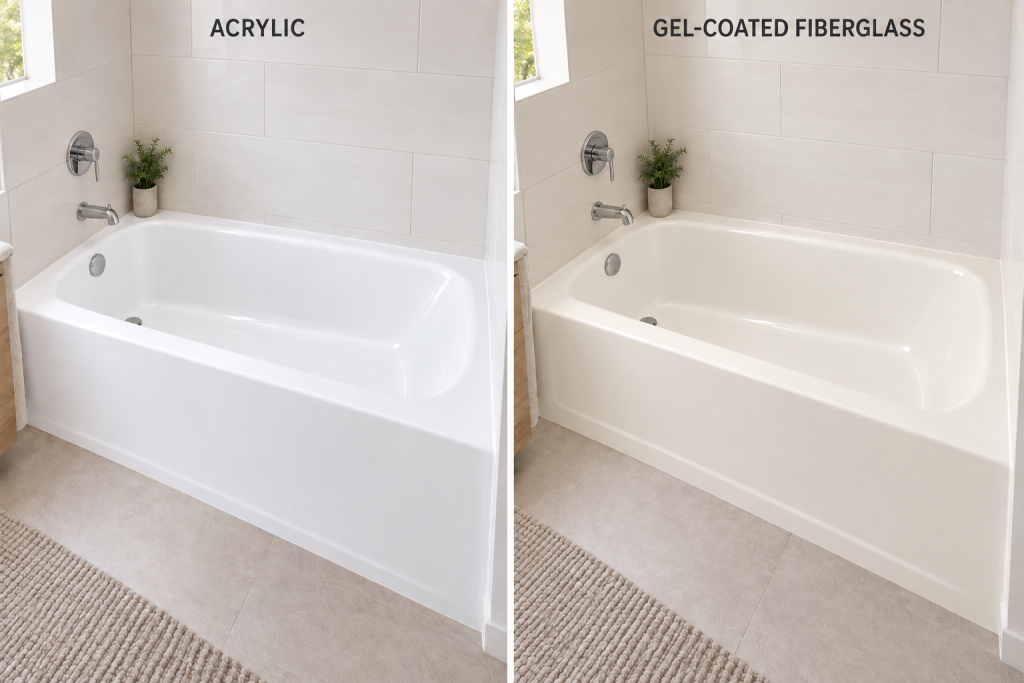
Acrylic vs Fiberglass Tub: Quick Comparison
For this comparison, “acrylic” means a tub with an acrylic bathing surface, commonly reinforced underneath with fiberglass. “Fiberglass” means a fiberglass-and-resin tub with a gelcoat surface.
| Factor | Acrylic-surfaced tub | Gel-coated fiberglass tub |
|---|---|---|
| Construction | Formed acrylic surface with reinforcement beneath | Gelcoat surface over fiberglass/resin structure |
| Purchase cost | Often positioned above basic fiberglass | Often a budget-oriented option |
| Surface wear | Varies by acrylic type, thickness, and care | Gelcoat can scratch or dull if mistreated |
| Repair | Some surfaces allow cosmetic renewal | Some gelcoat damage can be professionally repaired |
| Installation | Support method is model-specific | Support method is model-specific |
| Best fit | Finish quality and longer-term ownership priorities | Initial-cost-conscious projects |
The important word in that table is often. Product lines overlap, and a heavily reinforced fiberglass tub can be more substantial and more expensive than a basic acrylic model.
What Acrylic and Fiberglass Tub Construction Actually Means
Acrylic and fiberglass are not always competing materials inside a bathtub.
A typical acrylic tub begins with a sheet of acrylic that is heated and formed into the tub shape. Manufacturers commonly reinforce the underside with fiberglass and resin, and some add wood, metal, foam, or other reinforcement at specific locations.
That means an “acrylic tub” can still contain a substantial amount of fiberglass. Acrylic describes the visible bathing surface and an important part of the shell construction, not necessarily everything underneath it.
A gel-coated fiberglass tub is built differently. The visible surface is gelcoat, a resin-based finish applied to the mold. Fiberglass and resin behind that surface create the structural laminate. Manufacturers can add further reinforcing layers or panels depending on the design.
This distinction matters because the surface you touch, clean, scratch, and maintain is different even when both tubs use fiberglass somewhere in their construction.
It also explains why material names alone tell you relatively little about rigidity. A tub’s reinforcement pattern, shell design, bottom support, rim structure, and installation all affect how solid it feels in service.
When comparing two tubs, look for a manufacturer description such as “cast acrylic with fiberglass reinforcement” or “gelcoat/fiberglass construction” instead of relying on a retailer’s broad material filter.
Purchase Cost Versus Total Installed Cost
In an acrylic vs fiberglass tub decision, gel-coated fiberglass is commonly associated with a lower entry price, while acrylic frequently occupies a higher price tier. That is useful as a starting point, but it is not a reliable budget comparison until you match equivalent tubs.
Compare products with similar:
- Length, width, and bathing depth
- Alcove, drop-in, undermount, or freestanding configuration
- Integral apron or separate surround requirements
- Drain orientation
- Flange design
- Included components
- Support system
- Special features
A simple alcove fiberglass tub and a large freestanding acrylic soaking tub do not provide a meaningful material-price comparison.
Total installed cost can narrow or erase the difference in tub price. A model that fits the existing alcove, drain location, wall arrangement, and support conditions may cost less to install than a cheaper tub that requires substantial changes.
Before buying, have the exact installation manual reviewed against the bathroom. If a tub would require drain relocation, concealed plumbing changes, floor or framing alterations, or reconstruction of the surrounding waterproofing, those are separate project costs rather than advantages or disadvantages inherent to acrylic or fiberglass.
Durability, Scratching, Finish Wear, and Repair
Acrylic is frequently marketed for its glossy, nonporous surface and resistance to staining and scratching. Some manufacturers use acrylic with color extending through the surface material and describe minor cosmetic damage as renewable or polishable.
Those characteristics can be valuable, but they should not become a universal promise. Acrylic formulation and thickness vary, and a poorly supported tub can develop problems regardless of how attractive the surface is.
Gelcoat is also capable of providing a durable, smooth bathing surface. It is a distinct finish layer over the fiberglass structure, however, and its appearance can be affected by abrasive cleaners, metal tools, impact, or inappropriate chemicals. Manufacturers of gelcoat fixtures commonly warn that abrasive products can scratch or dull the finish.
For either construction, separate cosmetic damage from structural damage.
Light surface scuffs or scratches may have a manufacturer-approved repair or refinishing option. Gelcoat manufacturers may also support professional cosmetic repairs. Availability, color matching, and the acceptable repair method vary by product.
A crack that extends through the shell, a soft or flexing floor, separation of structural layers, or damage around a load-bearing area is different. Do not assume a cosmetic repair kit restores the structural integrity of a damaged tub.
Installation quality also affects durability. A bathtub designed to transfer its load through feet, a base, or specified supports should not be expected to perform correctly if it is supported in some other way. Flex that results from an incorrect installation is not evidence that every tub made from that material is weak.
Warranty length is similarly limited as a comparison tool. Manufacturers use different terms for shells, finishes, labor, accessories, and commercial versus residential installations. A warranty describes covered defects and conditions; it is not a prediction of how long the bathtub will last.
Cleaning, Maintenance, Comfort, and Heat Retention
Both acrylic and gelcoat finishes benefit from following the exact manufacturer’s care instructions. Mild cleaners and soft cloths are common recommendations, while abrasive pads and harsh cleaners frequently appear on prohibited lists.
Do not assume that vinegar, solvents, bleach, polishing compounds, or a particular bathroom cleaner are safe simply because they worked on another tub. Compatibility depends on the actual surface.
This is especially important when comparing future maintenance. A finish that can tolerate a manufacturer-approved polishing or renewal process may be attractive to one homeowner, while another may prefer a tub whose routine care requires little more than gentle cleaning.
For everyday care, see our guide on how to clean a bathtub without damaging the finish.
Comfort is even more model-dependent. Acrylic manufacturers sometimes promote their tubs as warm to the touch or describe fiberglass and other backing materials as providing additional insulation. Those claims can be relevant, but they do not establish that every acrylic tub keeps bathwater warmer than every gel-coated fiberglass tub.
Meaningful heat retention depends on the complete tub assembly, including reinforcement, insulation, shape, exposed surface area, water volume, and installation conditions. Without comparable measurements under the same test conditions, “acrylic stays warmer” is better treated as a possible model-specific advantage than a rule.
Tub shape can have a greater effect on everyday comfort anyway. Backrest angle, bathing depth, usable floor length, rim width, and overflow position deserve attention before you buy based on a general material claim.
Weight, Support, and Installation Requirements
Both constructions can be relatively manageable compared with much heavier bathtub materials, but do not assume that every fiberglass tub weighs less than every acrylic tub.
Reinforcement changes the equation. An acrylic shell can include multiple fiberglass layers, support panels, a frame, or leveling legs. A gelcoat/fiberglass model can likewise include substantial reinforcement. Compare the published weight of the exact models if carrying the tub through the house or loading the floor is a concern.
More important, read the installation manual before purchasing.
Manufacturers use very different support strategies. Current acrylic models can have pre-leveled legs or self-supporting bases, while other designs specify additional supporting materials. Gelcoat/fiberglass products can use integral leveling structures, reinforcing panels, adhesives, or other model-specific systems.
Never assume that a mortar bed, construction adhesive, ledger, foam, or another support method is universally required or interchangeable. Follow the manual for that exact tub.
Also verify:
- Actual product dimensions and installation tolerances
- Left-, right-, or center-drain configuration
- Alcove opening requirements
- Integral or add-on flange design
- Apron or access requirements
- How the tub is supported
- Required clearances
- Compatibility with the planned wall system
- Published product weight
- Whether components are included or purchased separately
The bathtub should be supported in the way its manufacturer designed. If installation would require structural changes, concealed plumbing work, drain relocation, or reconstruction of the waterproofing system, factor professional work into the buying decision rather than improvising around the tub.
How to Compare Actual Models Before Buying
The strongest acrylic vs fiberglass tub comparison puts two suitable models side by side instead of comparing generic material reputations.
Start with fit. A tub that does not match your space, drain configuration, or installation type is not the better purchase no matter how appealing its surface is.
Then compare construction details. Look for how the manufacturer describes the surface, reinforcement, bottom support, flange, apron, and any structural frame or panels. “Fiberglass reinforced” is more informative when you know what is being reinforced and how the tub is supported.
Next, review surface-care documentation. Check which cleaners are permitted, which are prohibited, and whether the manufacturer offers an approved path for minor cosmetic damage. This matters more than a generic claim that one material is “easy to clean.”
Finally, read the warranty rather than comparing only its headline length. Look for:
- What part of the tub is covered
- Whether finish and structural coverage differ
- Exclusions related to installation or cleaning
- Who qualifies for coverage
- Whether labor is included
- Requirements for documenting a claim
Choose acrylic when you find an appropriately reinforced model whose finish, design, care requirements, and installation details fit a bathroom you expect to keep for the longer term.
Choose gel-coated fiberglass when initial purchase cost carries more weight, and you find a well-supported model with acceptable finish care, warranty coverage, and installation requirements.
Do not reject either material solely because of its category. A properly designed and installed gelcoat/fiberglass tub can be a better purchase than an acrylic model that is poorly suited to the space, and the reverse is equally true.
If you are also deciding between installation styles, our guide to types of bathtubs compares alcove, freestanding, drop-in, and other configurations.
Final Thoughts
The acrylic vs fiberglass tub choice is really a comparison between complete bathtub assemblies. Acrylic commonly provides the visible surface over fiberglass reinforcement, while a fiberglass tub typically uses gelcoat as its visible finish over a fiberglass-and-resin structure.
For many long-term remodels, a well-built acrylic model is worth considering first. For a cost-conscious project, gel-coated fiberglass can remain a practical option. In either case, choose the tub by its actual construction, fit, support requirements, care instructions, and warranty—not by the material name alone.