Can you paint over spackle without primer?
Can you paint over spackle without primer? Yes, sometimes you can, but it depends on the size of the repair, the paint sheen, the wall color, and how noticeable the patch will be once the paint dries.
For a tiny nail hole, you may be able to touch up the spot without primer and get an acceptable result. For larger spackle patches, dents, gouges, or areas that were sanded smooth, primer is usually recommended before painting.
Spackle does not absorb paint the same way the surrounding painted wall does. If you skip primer, the patched area may dry dull, shiny, lighter, darker, or slightly outlined. This is why a small repair can still show through even after you used the right paint color.
The safe beginner-friendly approach is simple: spackle, let it dry, sand it smooth, wipe away dust, prime if needed, and then paint.
Primer vs. No Primer Over Spackle
| Situation | Primer Needed? | Why | Best Approach |
|---|---|---|---|
| Tiny nail hole | Maybe not | Very small patches may not absorb enough paint to show | Touch up carefully |
| Small dent or gouge | Usually yes | Spackle can flash through paint | Spot prime, then paint |
| Large patch | Yes | Uneven absorption is more likely | Prime the patch before painting |
| Glossy or dark wall | Yes | Touch-ups are easier to notice | Prime and consider painting a larger area |
Why Spackle Shows Through Paint
Spackle is more porous than a painted wall. That means it can soak up paint faster than the surrounding surface.
When paint is absorbed unevenly, the finish can look different over the patch. The wall may technically be covered, but the repaired area can still catch your eye in certain light.
This is especially common when sunlight, ceiling lights, or lamps hit the wall from an angle. A patch that looked fine straight on may suddenly appear as a dull spot or slightly raised outline.
If the repaired spot still catches the light after painting, this guide to paint flashing over a drywall patch explains why it happens and how to fix it.
What Primer Does Before Painting
Primer helps seal the spackle so the finish paint sits more evenly on the surface. It gives the patched area a better chance of matching the rest of the wall.
Primer is not a replacement for sanding or good patch work. It will not hide a lumpy repair, a raised edge, or a rough surface. But it does help reduce the difference between bare spackle and the already-painted wall around it.
Primer helps prevent these common problems:
- Flashing where the patch catches light differently
- Dull spots over the spackled area
- Shiny spots from uneven paint absorption
- Uneven color after the paint dries
- A visible patch outline
- Extra coats of paint needed to hide the repair
For most homeowner wall repairs, a regular drywall primer or interior primer is enough. You do not need to build up heavy layers of primer. A thin, even coat is usually the goal.
When You Can Paint Over Spackle Without Primer
You can sometimes paint over spackle without primer when the repair is extremely small. A tiny nail hole or pinhole may not need a separate primer step, especially on a flat or low-sheen wall.
This is most likely to work when the wall paint is newer, the color match is good, and the patch is not in a bright or highly visible area.
Even then, the result is not guaranteed. Skipping primer is more of a shortcut than the best method.
Painting without primer may work when:
- The repair is only a tiny nail hole
- The spackle area is smaller than a pea
- The wall has flat or matte paint
- The paint color is light or forgiving
- The wall is not hit by strong side lighting
- You still have the original paint used on the wall
- The repair is in a low-visibility spot
A small touch-up brush can work for tiny repairs, but do not overload it with paint. Dab lightly, keep the paint close to the repair, and avoid creating a raised blob.
When Primer Is Definitely Recommended
Primer is recommended when the spackle patch is large enough to see after sanding. The bigger the repaired area, the more likely it is to absorb paint differently.
If you filled a dent, patched a gouge, repaired drywall damage, or smoothed a larger area with spackle, use primer before painting. This gives you a better chance of avoiding flashing and uneven color.
Primer is also smart when the wall has a sheen. Satin, semi-gloss, and gloss paint reflect more light, so patched areas are easier to notice.
Use primer before painting over spackle when:
- The patch is larger than a tiny nail hole
- You sanded the spackle smooth
- The wall has satin, semi-gloss, or gloss paint
- The wall color is dark, bold, or hard to match
- The patch is in a bright room
- The repair is near a window or lamp
- You are painting a highly visible wall
- You had to apply more than one layer of spackle
- The patch still looks dull or chalky after sanding
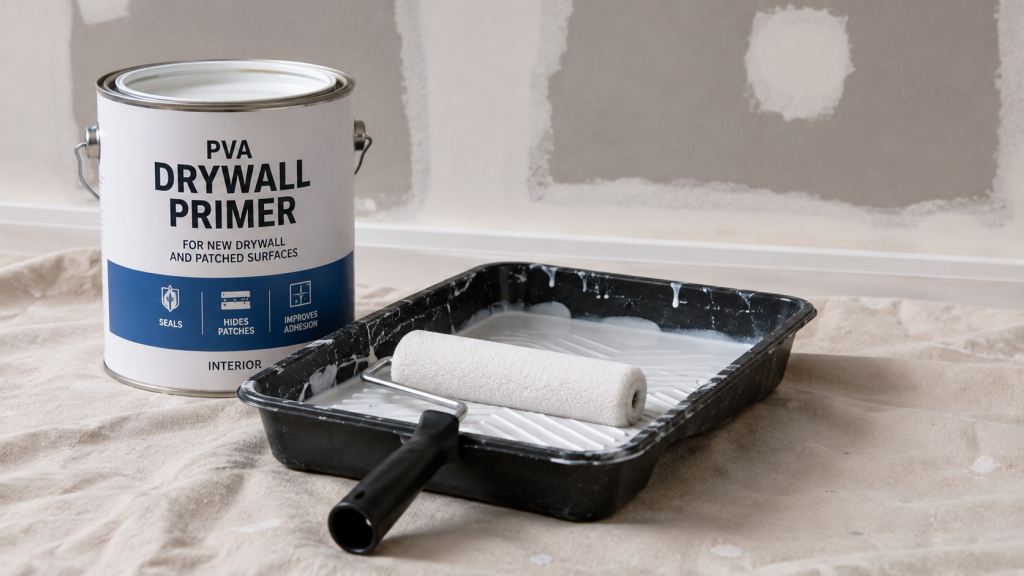
For these repairs, a small amount of drywall primer can make the final paint look much better. A mini roller, small paint tray, and touch-up brush are usually enough for spot priming.
For help choosing the right product, read this guide to the best primer for patched drywall before painting.
The Correct Order for Painting Over Spackle
The order matters. Painting too soon or skipping prep can make the patch more visible.
The basic process is easy, but each step needs to be done cleanly. The spackle should be dry, smooth, and dust-free before primer or paint goes on.
Follow this order:
- Apply spackle with a putty knife.
- Let the spackle dry fully.
- Sand the patch smooth with a sanding sponge.
- Wipe away dust with a microfiber cloth.
- Apply primer if the patch needs it.
- Let the primer dry according to the label.
- Paint the repaired area.
- Add a second paint coat if needed.
Do not rush the drying steps. Spackle that feels dry on the surface may still be soft underneath if it was applied thickly. Painting too soon can lead to uneven texture, poor coverage, or a patch that stays visible.
How to Prime Spackle Without Making the Patch Worse
Primer should be applied in a thin, even coat. You are not trying to bury the patch. You are sealing it.
Heavy primer buildup can create a raised edge that makes the repair more noticeable. This is especially common when using a brush and applying too much product in the center of the patch.
A mini roller is often a good choice for small to medium wall patches because it can help match the light texture of the surrounding painted wall. A touch-up brush works well for very small repairs, corners, and tight spots.
A simple spot-priming method:
- Pour a small amount of primer into a small paint tray.
- Use a touch-up brush for tiny patches or edges.
- Use a mini roller for larger patches.
- Cover the spackle and slightly feather past the edges.
- Keep the primer coat thin.
- Let it dry fully before painting.
- Check the patch from an angle before adding paint.
Feathering means spreading the primer lightly beyond the patch so there is no hard stop line. This helps the paint blend better when it dries.
What Kind of Primer Should You Use Over Spackle?
For most spackle patches, use a regular drywall primer or interior wall primer. These primers are made to seal porous wall repairs so paint absorbs more evenly.
You usually do not need a heavy-duty stain-blocking primer unless there is a stain involved. You also usually do not need a bonding primer unless the surrounding surface is glossy or difficult for paint to grip.
Good primer choices depend on the repair:
- Use drywall primer for ordinary spackle patches.
- Use interior wall primer for small general repairs.
- Use stain-blocking primer if there is water staining, smoke, marker, or discoloration.
- Use bonding primer if the wall is glossy or slick.
- Use a tintable primer if you are repainting with a deep color.
For a normal spackled nail hole, dent, or gouge, a small container of drywall primer is usually enough. Keep the product simple and match it to the repair.
Brush, Roller, or Spray: Which Is Best?
For most spackle repairs, a brush or mini roller is better than spray primer. They give you more control and create less mess.
Spray primer can work on very small patches, but it can also create overspray, texture differences, and uneven buildup. If you use it indoors, you need to protect nearby surfaces carefully.
A brush is useful for tiny repairs. A mini roller is better when the patch is larger than a few inches or when the surrounding wall has a roller texture.
Use the tool that matches the patch:
- Tiny nail hole: touch-up brush
- Small spackle patch: touch-up brush or mini roller
- Medium patch: mini roller
- Patch near trim: painter’s tape and small brush
- Larger wall repair: mini roller or standard roller
- Isolated tiny spot: spray primer only with careful masking
A small paint tray makes the job cleaner, especially when using a mini roller. Painter’s tape can help protect trim, baseboards, and edges. A microfiber cloth is useful for removing dust before primer and paint.
What If You Already Painted Over Spackle Without Primer?
If you already painted over spackle without primer and the patch shows, do not panic. This is a common mistake, and it can usually be fixed.
First, let the paint dry fully. Wet paint can look uneven while it is drying, so do not start sanding or repainting too quickly. Once it is dry, look at the patch in normal light and angled light.
If the patch is only slightly dull, another coat of paint may help. If the patch is clearly flashing, outlined, or absorbing paint differently, you may need to lightly sand, prime, and repaint.
To fix a visible spackle patch:
- Let the paint dry fully.
- Lightly sand any raised edges or rough texture.
- Wipe away dust with a microfiber cloth.
- Apply a thin coat of drywall primer over the patch.
- Feather the primer slightly beyond the repair.
- Let the primer dry.
- Repaint the area.
- Paint a larger section of the wall if the touch-up still shows.
If the wall paint is older or has faded, painting only the small spot may still be visible. In that case, repainting the wall from corner to corner may give the cleanest result.
Common Mistakes When Skipping Primer
Skipping primer can work on tiny repairs, but it becomes risky when homeowners treat all patches the same way. A small shortcut can turn into a visible repair.
Most problems come from rushing, using too much paint, or assuming paint alone will hide the patch.
Common mistakes include:
- Painting over spackle before it is fully dry
- Skipping sanding
- Leaving sanding dust on the wall
- Using too much paint over the patch
- Touching up with a brush on a rolled wall
- Using glossy paint over an unprimed patch
- Trying to hide a patch with thick paint
- Ignoring stains under the repair
- Painting only the patch on an older faded wall
- Expecting paint to hide rough spackle edges
The biggest mistake is using paint as a substitute for prep. Paint can add color, but it will not fix a rough patch, loose dust, or uneven absorption.
Product-Use Tips for a Cleaner Repair
A few basic tools can make a spackle repair look much cleaner. You do not need a complicated setup, but using the right small tools helps avoid mess and uneven results.
For beginner homeowners, a simple patch-and-paint kit can cover most small wall repairs.
Helpful supplies include:
- Lightweight spackle for small holes and dents
- Putty knife for applying and smoothing spackle
- Sanding sponge for leveling the repair
- Microfiber cloth for wiping away dust
- Drywall primer for sealing patched areas
- Small paint tray for primer or paint
- Mini roller for blending wall texture
- Touch-up brush for tiny repairs and corners
- Painter’s tape for protecting trim and edges
Choose the putty knife size based on the repair. A small putty knife is fine for nail holes, while a wider knife can help feather larger patches. For sanding, a fine sanding sponge is easier for beginners to control than loose sandpaper.
Should You Paint the Patch or the Whole Wall?
For a tiny repair, you may only need to paint the patch. For larger repairs, painting a wider area often looks better.
Touch-up paint can be difficult to blend, especially if the existing wall paint is old, faded, dirty, or has a sheen. Even the same paint from the same can may look slightly different if the wall has aged.
Primer helps the patch absorb paint evenly, but it does not guarantee an invisible touch-up on every wall.
Use this simple guide:
- Tiny nail hole: touch up the small spot
- Small patch: prime the patch and blend paint lightly
- Medium patch: prime and paint a wider area
- Large repair: prime the repair and repaint the wall
- Glossy wall: consider repainting from corner to corner
- Dark color: expect to use extra care with blending
When appearance matters, painting the full wall is often the safest option. Corners give your eye a natural stopping point, which helps hide slight color or sheen differences.
Final Thoughts
Can you paint over spackle without primer? For a tiny nail hole, you often can. For most visible spackle patches, primer is the safer choice.
Spackle absorbs paint differently than the surrounding wall. Without primer, the repair may show as a dull spot, shiny spot, uneven color, or visible outline. A thin coat of drywall primer helps seal the patch so the finish paint looks more even.
The best process is simple: spackle, dry, sand, wipe, prime if needed, and paint. Do not use heavy primer buildup, do not rush the drying time, and do not skip surface prep. A small amount of primer and a few basic tools can make a patched wall look much cleaner when the paint dries.