floor tile lifting: causes and what to do
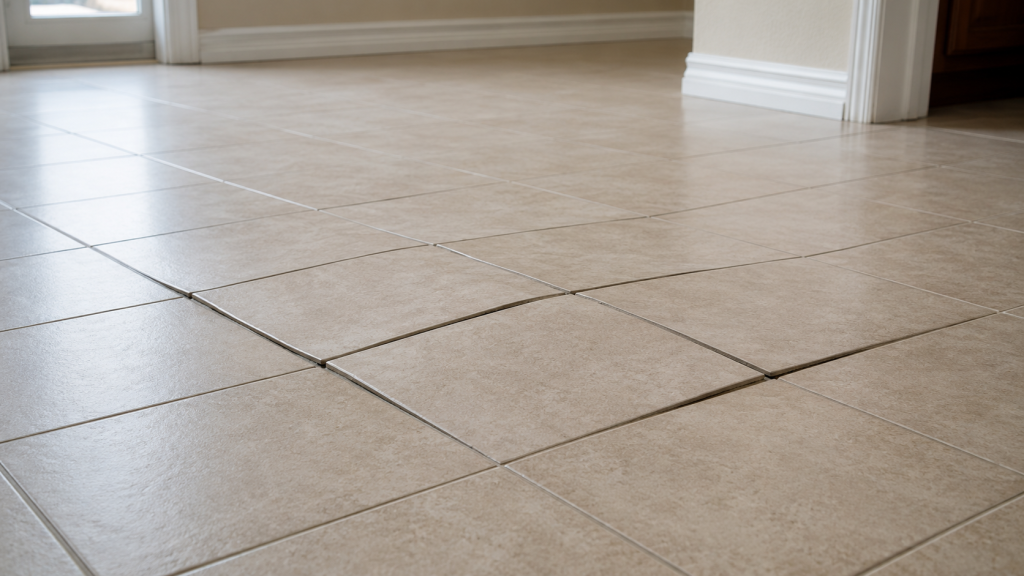
Floor tile lifting means the tile has lost normal contact or bond with the surface beneath it, or movement has pushed it upward. One loose tile may be a localized bond problem, while several tiles tenting or lifting together can point to broader movement, moisture, or expansion stress.
Pressing a raised tile back down does not correct the underlying cause. Before attempting repair, look at how many tiles are affected, whether the area moves, whether moisture is present, and whether cracking, hollow sounds, or grout failure appear nearby.
| What you notice | Possible cause | How concerning? | What to check |
|---|---|---|---|
| One tile slightly loose | Local bond or support problem | Often localized | Whether surrounding tiles remain stable |
| Tile rocks underfoot | Bond failure or inadequate support | More concerning | Whether movement is increasing |
| One edge lifting | Local bond loss, movement, or moisture | Sometimes | Nearby grout, moisture, and floor movement |
| Several tiles tenting upward | Expansion stress or broader movement | Concerning | Whether tiles form a raised ridge |
| Tile lifting near a wall | Restricted movement or perimeter moisture | Sometimes | Wall contact, grout cracking, moisture |
| Tile lifting after a leak | Moisture-related substrate change | Concerning | Whether supporting materials became wet |
| Tile lifting plus hollow sound | Bond or support problem | More concerning | Whether tile also rocks or shifts |
| Tile lifting plus cracks | Movement, substrate damage, or bond failure | Concerning | Whether cracking extends beyond one tile |
| Large area suddenly lifting | Broad expansion or bond failure | High concern | Whether the problem is spreading |
Raised or loose tile can create a trip hazard, and broken edges can be sharp. Avoid walking directly on an unstable area when possible.
If older tile, sheet flooring, mastics, adhesives, or underlayments may contain asbestos, do not sand, grind, scrape, cut, drill, or demolish suspect materials. Obtain appropriate evaluation or testing before they are disturbed.
What Floor Tile Lifting Looks Like
Floor tile lifting can appear in several ways.
You may notice:
- One edge sitting higher than surrounding tile
- A tile rocking slightly underfoot
- Grout separating around a loose tile
- Tile sounding loose when tapped
- A tile partially separated from the surface below
- Several tiles forming a raised ridge
- Multiple tiles suddenly tenting upward
A slightly loose tile is different from true tenting.
One loose tile may have a localized bond or support problem. Tenting usually involves adjacent tiles pushing upward together, creating a noticeable peak or ridge across the floor.
The pattern matters because it helps separate an isolated failure from a broader movement problem.
Why Floor Tiles Lift
Tile can lift when the bond beneath it fails or when forces within the floor assembly push the tile upward.
Possible causes include:
- Bond failure
- Inadequate mortar contact
- Movement beneath the tile
- Expansion stress
- Inadequate movement accommodation
- Moisture-related substrate changes
- Poor surface preparation during installation
- Deteriorated underlayment
- Substrate cracking
- Structural movement
One raised tile does not identify the cause by itself.
A loose tile in an otherwise stable floor suggests something different from several tiles tenting across a room after a temperature or moisture change.
One Loose Tile vs Several Lifting Tiles
How many tiles are affected is one of the simplest diagnostic clues.
One loose tile
Possible causes include:
- Local bond failure
- Inadequate support beneath the tile
- Impact damage
- Contamination beneath the tile during installation
- A small localized substrate problem
If surrounding tiles remain stable and the floor does not move, the repair may eventually remain limited to that area.
Several lifting tiles
Multiple tiles are more likely to involve:
- Broad movement
- Expansion pressure
- Installation problems
- Moisture
- Underlayment failure
- Substrate movement
The more widespread the lifting, the less likely it is that replacing one tile will solve the problem.
What Is Tile Tenting?
Tile tenting occurs when neighboring tiles push upward, often creating a peaked line or raised ridge.
It can happen suddenly.
Possible contributors include:
- Expansion stress
- Restricted movement
- Temperature changes
- Moisture-related movement
- Inadequate movement accommodation
As pressure builds, adjacent tiles may push against one another until one or more lose bond and rise.
Tenting is different from a single loose tile because it usually points toward forces acting across a larger area.
Do not place heavy objects on the raised section to force it flat. Pressure does not correct the cause and can crack additional tile.
Expansion Stress and Restricted Movement
Tile assemblies and buildings experience small dimensional changes over time.
When normal movement is restrained, stress can build in the finished floor.
Possible clues include:
- Lifting near walls
- Tiles pushing tightly against one another
- Cracked grout
- Tenting across a line
- Problems appearing after temperature changes
- Lifting following moisture changes
Perimeters, transitions, and other movement-accommodation details can matter.
Do not cut tile at walls or modify the perimeter based only on a guess. The actual cause should be identified before the installation is altered.
Bond Failure Beneath the Tile
Tile relies on a strong, appropriate bond to the surface beneath it.
Bond failure may involve:
- Inadequate mortar contact
- Poor surface preparation
- Dust or contamination
- Unsuitable installation materials
- Installation errors
- Moisture-related deterioration
Possible clues include:
- Tile rocking
- Localized lifting
- A hollow sound
- Grout cracking around a loose tile
A loose tile can sometimes separate cleanly from the supporting surface, but determining exactly why usually requires seeing the assembly after proper removal.
Do not treat a loose tile as an adhesive-only problem until movement and moisture have been ruled out.
Floor Tile Lifting After a Leak
Moisture may contribute to tile lifting even though ceramic and porcelain tile themselves tolerate water well.
The bigger concern is what happens beneath the tile.
Moisture can affect:
- Plywood or OSB
- Underlayment
- Adhesives
- Other supporting materials
Wood-based materials may swell or move after wetting. Some supporting layers can deteriorate or lose bond.
If lifting began after a plumbing or appliance leak, correct the moisture source first and determine whether the floor beneath the tile was affected.
Do not simply reset the tile over materials that are still wet or unstable.
Tile Lifting Over a Wood Subfloor
Wood-framed floors can create problems for tile when the supporting assembly moves too much.
Possible contributors include:
- Plywood or OSB swelling
- Panel movement
- Inadequate stiffness
- Damaged underlayment
- Moisture
- Installation assembly problems
Tile is rigid. It cannot compensate for a supporting floor that flexes, swells, or deteriorates beneath it.
If lifting occurs with bounce, soft areas, cracked grout, or repeated tile failure, the supporting floor deserves closer evaluation before tile is replaced.
Tile Lifting Over Concrete
Concrete floors present a different set of possible causes.
Contributors may include:
- Slab movement
- Slab cracking
- Moisture conditions
- Bond failure
- Surface contamination
- Expansion stress
A concrete slab may appear solid while localized bond problems or moisture conditions affect the tile above it.
One loose tile over concrete does not prove a foundation problem.
Broader lifting, repeated failure, or cracking that follows the same path may justify closer evaluation of the slab and tile assembly.
Tile Lifting Near Walls or Doorways
Walls, doorways, and transitions can be useful diagnostic locations because different materials and movement conditions meet there.
Possible causes include:
- Restricted movement
- Transition details
- Changes in floor construction
- Perimeter pressure
- Moisture entry
- Concentrated traffic
A single loose tile near a doorway may still be localized.
Repeated lifting, cracked grout, or a raised line extending away from the doorway makes a broader movement issue more likely.
Tile Lifting With Cracking
Cracking plus lifting is more concerning than one stable cosmetic crack.
The combination may point toward:
- Movement
- Bond failure
- Substrate damage
- Expansion stress
If the lifted tile is also cracked, look at whether nearby grout or adjacent tiles show similar damage.
A larger pattern suggests something beneath the finished surface may be contributing.
Tile Lifting With a Hollow Sound
A hollow sound can indicate differences in support or bond beneath a tile, but hollow sound alone does not prove failure.
When the tile also moves or lifts, however, the hollow sound becomes more meaningful because physical failure is already present.
Pay attention to whether neighboring tiles also sound different or show movement.
Do not replace tiles solely because they sound hollow if they remain stable and otherwise undamaged.
If the tile sounds hollow but is not yet moving, our guide to hollow sounding tile explains when that sound can be monitored and when it becomes more significant.
Tile Lifting With Cracked Grout
Cracked grout around a lifting tile often reflects movement.
The movement may be occurring:
- Between tiles
- Between tile and substrate
- Within the supporting floor
- Across a larger section of the installation
Repeatedly regrouting around a tile that still rocks or lifts is unlikely to last.
Correct the movement or bond problem before treating the grout as the main repair.
If grout repeatedly cracks around the same tile, see our guide to why grout keeps cracking and what that pattern can reveal about movement beneath the floor.
Can You Press a Lifted Tile Back Down?
No, not as a lasting repair.
Pressing the tile down does not correct:
- Failed bond
- Moisture
- Expansion pressure
- Substrate movement
- Damaged underlayment
Avoid improvised fixes such as:
- Heavy furniture or weights
- Screws through the tile
- Adhesive injection without diagnosis
- Forcing the tile downward
These approaches can break tile, damage nearby material, or hide a problem that still exists underneath.
Can One Lifted Tile Be Repaired?
Often, if the problem is truly localized and the supporting surface remains sound.
A localized repair may be reasonable when:
- One tile is affected
- No ongoing moisture exists
- Surrounding tiles remain stable
- The floor does not move
- No widespread tenting is present
- The underlying cause can be corrected
The tile itself should not be treated as the only problem until the support and bond conditions are understood.
Do not remove or replace tile solely to experiment with the diagnosis.
When Replacement Tile May Lift Again
Repeated lifting in the same location strongly suggests the underlying cause remains.
Possible reasons include:
- Substrate movement
- Recurring moisture
- Expansion pressure
- Bonding problems
- Floor flexing
- Transition stress
If a replacement tile lifts again, stop treating the tile itself as the whole problem.
Another replacement is likely to fail unless the condition underneath is corrected.
What Homeowners Can Check Safely
Use observation rather than destructive inspection.
Check:
- Is one tile affected or several?
- Does the tile rock?
- Is one edge raised?
- Is there a peaked or tented line?
- Is grout cracked nearby?
- Does the tile sound different from surrounding tile?
- Are cracks present?
- Was there a recent leak?
- Is the floor over concrete or wood framing?
- Is lifting concentrated near a wall or transition?
- Is the affected area spreading?
- Does the floor move underfoot?
These observations can help distinguish a localized loose tile from a larger floor-system problem.
Signs the Problem May Be More Serious
Broader evaluation makes sense when you notice:
- Several tiles lifting
- Sudden tenting
- Lifting spreading across a room
- Significant floor movement
- Sagging
- Soft supporting material
- Persistent moisture
- Large areas sounding loose
- Repeated failure after repair
- Cracking across multiple tiles
- Other structural movement nearby
These signs suggest that something beyond one tile may be involved.
Common Mistakes
Avoid these responses to floor tile lifting:
- Pressing lifted tiles back down
- Putting heavy objects on tented tile
- Replacing tile without finding the cause
- Regrouting around moving tile
- Assuming hollow sound alone proves failure
- Ignoring leaks
- Ignoring floor movement
- Cutting tile at walls without diagnosis
- Demolishing old flooring without considering asbestos-containing materials
Diagnosis before repair reduces the chance of repeating the same failure.
When Professional Evaluation Makes Sense
One slightly loose tile does not automatically require a large professional project.
Qualified evaluation is more appropriate when there is:
- Widespread lifting or tenting
- Multiple loose tiles
- Repeated lifting in the same location
- Significant floor movement or sagging
- Persistent moisture
- Soft or damaged subflooring
- Suspected slab movement
- Large areas of bond failure
- Sudden large-scale tenting
- An unclear cause before a larger repair
- Other signs of structural movement
- Suspected asbestos-containing flooring, mastic, adhesive, or underlayment
A flooring professional can assess the tile assembly. Significant structural movement, slab concerns, moisture problems, or hazardous materials may require other specialists.
Final Thoughts
Floor tile lifting can be a localized bond problem or a sign of broader movement, moisture, expansion stress, or substrate failure. One loose tile may allow a limited repair, while several tiles tenting, rocking, or lifting together deserve a wider diagnosis.
Before pressing a tile down or replacing it, determine why it moved. If the problem is spreading, repeatedly returns, or appears with floor movement, moisture, or substrate damage, address the underlying condition before repairing the finished tile.