
GFCI Outlet Not Resetting: Safe Checks Before Calling an Electrician
GFCI outlet not resetting usually means the outlet is not ready to restore power, the outlet has no power feeding it, or the GFCI is still detecting a condition that could be unsafe. It may be reacting to moisture, a plugged-in device, a downstream outlet problem, a worn GFCI, or a hidden wiring issue.
If a GFCI outlet will not reset, do not keep pressing the button over and over. The outlet may still be detecting a fault, moisture, damaged equipment, or a wiring problem that needs attention.
This guide is for beginner-safe checks only. Do not open the outlet, remove the cover, touch wires, test live wiring, bypass the GFCI, or open your electrical panel. Your job is to observe, unplug, check for obvious warning signs, and know when to call an electrician.
| What you notice | Safe first check | What it may mean | What to do next |
|---|---|---|---|
| Reset button will not stay in | Unplug everything | Fault, moisture, or bad device | Stop if it trips again |
| No power at the outlet | Check nearby outlets | Upstream power issue or tripped protection | Call if power does not return |
| Outlet is wet, hot, buzzing, or discolored | Do not press reset | Possible unsafe condition | Stop using it immediately |
| Other outlets are also dead | Note which ones are affected | Downstream or circuit issue | Call an electrician |
GFCI Outlet Not Resetting: Start With Safety
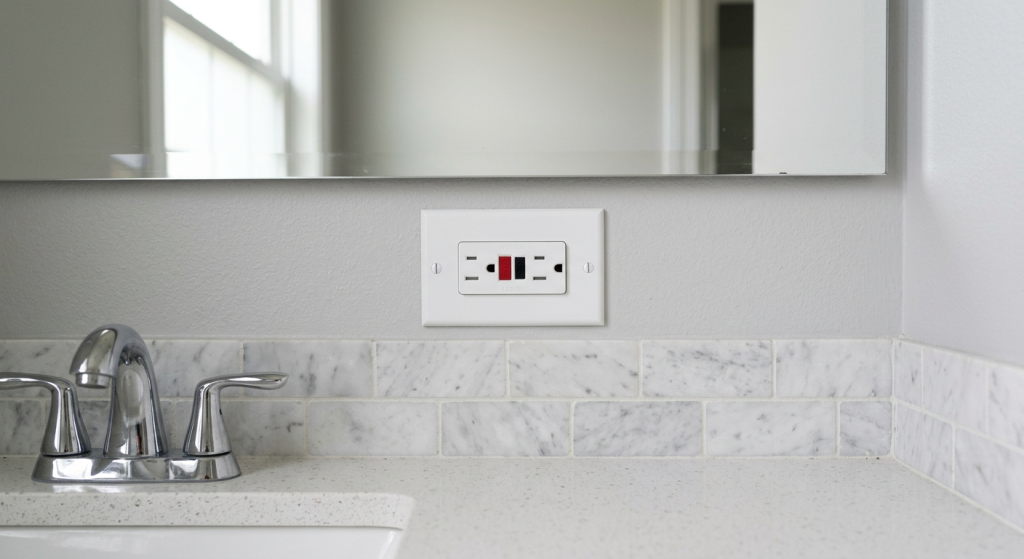
A GFCI outlet is designed to reduce shock risk by shutting off power when it senses that electricity may be taking an unsafe path. This is why GFCI protection is common in bathrooms, kitchens, garages, basements, laundry areas, crawl spaces, and outdoor locations.
When the outlet will not reset, it may be refusing to restore power for a reason. The problem could be as simple as a damp plug or a bad appliance. It could also be a sign that the GFCI has no incoming power, another outlet on the same protected run has a problem, or the wiring needs professional attention.
The safest mindset is simple: do not force it. Pressing the reset button repeatedly does not fix the cause. It only repeats the same unsafe condition.
Stop using the outlet immediately if you notice:
- Burning smell, smoke, sparks, or popping
- Heat, buzzing, crackling, or vibration
- Brown, black, or melted-looking marks
- Water on or near the outlet
- A reset button that will not hold after safe checks
- More than one outlet or area affected
If any of these warning signs are present, leave the outlet alone and call a licensed electrician. Do not remove the cover to inspect the inside.
Unplug Devices and Check for Moisture First
The first safe check is to unplug everything from the GFCI outlet. Also unplug anything from nearby outlets that may be protected by the same GFCI. One GFCI outlet can protect other outlets farther along the same circuit, so the problem may not be plugged directly into the GFCI face.
After everything is unplugged, look for obvious moisture. Do not touch wet plugs, wet cords, or an outlet face that appears damp. Moisture is one of the most common reasons GFCI protection trips or refuses to reset.
In bathrooms, the issue may come from steam, splashing, damp countertop appliances, or a hair dryer used near water. In kitchens, look near the sink, coffee maker, dishwasher area, or small appliances. Outdoors, rain, melting snow, sprinklers, pressure washing, damp extension cords, or holiday lights can all create trouble.
Let damp areas dry fully before trying anything else. If the outlet face, plug, or nearby wall is wet, do not press reset. If water may have entered the outlet box or wall, that is beyond a beginner-safe check.
Safe checks before pressing reset:
- Unplug every device from the GFCI and nearby protected outlets
- Look for obvious water, damp cords, or wet plugs
- Let the area dry fully if moisture is visible
- Check cords for cuts, crushed spots, or burn marks
- Confirm the outlet is cool and not discolored
- Press reset only once if everything looks dry and safe
If the GFCI resets and stays on, plug in one small known-good device, such as a simple lamp or phone charger that works elsewhere. If one specific device causes the GFCI to fail again, stop using that device on the outlet.
If this problem happens outdoors or after rain, this guide on outdoor GFCI outlet keeps tripping explains how moisture and weather can cause repeat GFCI problems.
Check Whether the GFCI Has Power or Protects Other Outlets
Sometimes a GFCI outlet not resetting is not caused by the outlet face itself. The GFCI may not have power feeding it. A GFCI cannot reset normally if the power supply to it is interrupted.
Start with simple observations. Are other outlets in the bathroom, kitchen, garage, basement, or outdoor area also dead? Did the problem start after using a tool, appliance, hair dryer, space heater, outdoor lights, or wet equipment? Did it happen after rain or after cleaning?
Also check whether there is another GFCI nearby. In some homes, one GFCI outlet protects several regular-looking outlets. For example, a garage GFCI may protect an outdoor outlet. A bathroom GFCI may protect another bathroom. A basement or laundry-area GFCI may protect outlets that do not look connected at first glance.
You can look for reset buttons on nearby GFCI outlets, but do not open anything. If another GFCI in the area is clearly tripped, and it is dry, cool, and undamaged, pressing reset once may restore power. If it trips again, stop.
A plug-in outlet tester may be a homeowner-safe observation tool only when the outlet is dry, cool, undamaged, and not showing warning signs. It may help show whether power is present or whether a simple wiring warning appears. But a tester does not make the outlet safe to repair, and it should not be used on a wet, hot, buzzing, sparking, or damaged outlet.
If the outlet will not reset with nothing plugged in, that is a stronger reason to call an electrician. With the load removed, the problem is more likely to involve the GFCI itself, a downstream outlet, missing power, moisture inside the system, or wiring that should not be handled as a beginner project.
When Pressing Reset Is Not Enough
A GFCI that resets after an obvious cause is removed may be fine. For example, a wet outdoor cord that was unplugged and allowed to dry may explain the issue. But a GFCI that refuses to reset or repeatedly fails after safe checks needs attention.
The reset button is not a repair tool. It is a safety control. If the outlet continues to reject the reset, the protection may still be detecting a problem.
Common possibilities include moisture that has not dried, a bad appliance, a damaged cord, a downstream outlet issue, a worn-out GFCI, no incoming power, or a hidden wiring problem. None of those require a homeowner to open the outlet.
Pay attention to timing. If the GFCI will not reset immediately after rain, outdoor work, bathroom steam, or a spill, moisture is a likely suspect. If it fails only when one device is plugged in, that device or cord deserves suspicion. If it fails with nothing plugged in and no visible moisture, the issue may be behind the outlet or elsewhere on the circuit.
Pressing reset is not enough when:
- The button will not stay in with everything unplugged
- The outlet trips again right after reset
- The problem returns after the area dries
- Other outlets lose power at the same time
- The outlet looks old, loose, cracked, or damaged
- You cannot identify a clear, safe cause
Do not keep pressing the button to “make it catch.” Repeated reset attempts can hide the pattern and delay a proper repair. If the GFCI is doing its job, forcing power back on is not the goal.
If the outlet resets but trips again, this guide on why a GFCI outlet keeps tripping can help you understand when repeated trips point to a bigger issue.
What Homeowners Should Not Touch
Beginner-safe troubleshooting should stay outside the outlet. You can unplug devices, look for obvious moisture, note which outlets lost power, and identify whether a certain device causes the problem. You should not go deeper than that.
Do not remove the outlet cover. Do not pull the GFCI out of the wall. Do not touch terminal screws, wires, or anything inside the electrical box. Do not test live wiring with a meter unless you are trained to do so. Do not replace the GFCI, replace a breaker, open the electrical panel, change wiring, or increase circuit amperage.
Also do not bypass GFCI protection. This means you should not replace the GFCI with a regular outlet, use an adapter to avoid protection, or move wet-use equipment to an unprotected outlet just to keep it running.
A GFCI is commonly installed where shock risk is higher. Bathrooms, kitchens, laundry areas, garages, basements, and outdoor areas are exactly the places where bypassing protection can be dangerous.
Hidden wiring problems are not beginner DIY repairs. If the cause is inside the outlet box, inside the wall, in a downstream outlet, or at the panel, it belongs with a licensed electrician.
When to Call an Electrician
Call a licensed electrician when the GFCI will not reset after everything is unplugged, the area is dry, and there are no obvious safe causes. Also call if the reset button feels loose, the outlet looks damaged, the problem keeps returning, or other outlets are affected.
This is especially important for outdoor outlets, garage outlets, bathrooms, kitchens, laundry areas, basements, sump pump areas, and any location where moisture may be involved.
Call an electrician if you see or suspect:
- Burning smell, sparks, heat, buzzing, or discoloration
- Water intrusion near the outlet, wall, or exterior cover
- Repeated failure after unplugging all devices
- No reset with nothing plugged in
- More than one outlet or room affected
- An old, loose, cracked, or unreliable GFCI
When you call, describe what you observed. Mention where the GFCI is located, what was plugged in, whether moisture was involved, whether the button clicks or refuses to hold, and whether other outlets lost power. That gives the electrician useful information without requiring you to open anything.
Final Thoughts
A GFCI outlet not resetting is a safety signal, not just a stubborn button. The cause may be moisture, a plugged-in device, a damaged cord, no power feeding the outlet, a downstream issue, a worn GFCI, or hidden wiring.
Start with safe checks only: unplug devices, look for moisture, check nearby outlets, and press reset only if the outlet is dry, cool, undamaged, and not showing warning signs. Do not keep pressing reset, and never bypass GFCI protection. If the outlet will not reset with nothing plugged in, call a licensed electrician.