
Outdoor GFCI Outlet Keeps Tripping: Rain, Moisture, or Fault?
Outdoor GFCI outlet keeps tripping usually means the outlet is reacting to moisture, a wet cord, a damaged outdoor device, water intrusion, or another safety issue on the protected circuit. Outdoor GFCI protection is designed to shut off power when it detects a possible ground-fault risk, which is especially important where rain, sprinklers, snow, damp soil, and wet tools may be involved.
If an outdoor GFCI outlet keeps tripping after rain or moisture exposure, do not keep resetting it. Water and electricity are a serious safety concern, and repeated tripping means something still needs attention.
This guide covers beginner-safe checks only. Do not open the outlet, remove covers, touch wires, test live wiring, bypass the GFCI, or repair outdoor wiring yourself.
| What you notice | Safe first check | What it may mean | What to do next |
|---|---|---|---|
| Trips after rain | Look for obvious moisture | Water exposure or water intrusion | Let the area dry; call if it repeats |
| Trips with lights or tools plugged in | Unplug outdoor devices | Wet cord, bad plug, or faulty device | Stop using that item |
| Trips with nothing plugged in | Check nearby outdoor outlets | Downstream issue or hidden fault | Call an electrician |
| Hot, buzzing, sparking, or discolored outlet | Do not reset it | Possible serious electrical problem | Stop using it immediately |
Outdoor GFCI Outlet Keeps Tripping: Start With Safety
An outdoor GFCI outlet has a difficult job. It may serve tools, lights, decorations, pumps, grills, chargers, or yard equipment while sitting in a location exposed to weather. Even when the outlet is under a cover, moisture can still reach cords, plugs, seals, or connected equipment.
A GFCI does not trip just to be inconvenient. It trips when it senses a condition that could create a shock hazard. Outdoors, that warning deserves extra attention because wet surfaces can make electrical problems more dangerous.
Pressing reset once after a clear, safe cause has been removed may be reasonable. Pressing reset over and over is not. If the outlet trips again, assume it is still finding a problem until proven otherwise by a qualified person.
Stop using the outlet immediately if you notice:
- Burning smell, smoke, sparks, or popping
- Heat, buzzing, crackling, or vibration
- Brown, black, or melted-looking marks
- Water inside or around the outlet area
- Storm damage, broken covers, or exposed parts
- More than one outlet losing power
If any of these warning signs are present, do not touch the outlet beyond staying away from it. Do not unplug items while standing in water or handling wet cords. Keep the area clear and call a licensed electrician.
Check for Rain, Moisture, and Wet Outdoor Cords
Moisture is one of the most common reasons an outdoor GFCI trips. Rain can blow sideways into a cover, melting snow can drip into a plug connection, and sprinklers can soak cords or outdoor equipment. Even heavy humidity and wet soil can contribute when cords, plugs, or devices are not in good condition.
Start by thinking about timing. Did the GFCI trip during a storm, after irrigation ran, after pressure washing, or after holiday lights were left out in wet weather? Did the problem begin after a new tool, extension cord, pond pump, fountain, or outdoor decoration was plugged in?
Unplug outdoor devices only if you can do it safely and the plugs and ground are dry. If cords are wet, damaged, or lying in standing water, do not handle them. Let the area dry and call for help if there is any doubt.
Outdoor cords and devices should be rated for outdoor use. Indoor extension cords, worn holiday lights, cracked plugs, and old tool cords can allow moisture where it does not belong. That does not mean you need to turn this into a shopping project, but it does mean outdoor-rated cords, weather-resistant equipment, and proper covers matter.
Safe moisture checks homeowners can make:
- Look for visible water, damp plugs, or soaked cords
- Check whether sprinklers are spraying the outlet area
- Let wet areas dry fully before pressing reset
- Remove outdoor devices from use if their cords are damaged
- Avoid using indoor cords or indoor decorations outside
- Stop if the outlet trips again after everything dries
Do not assume a dry-looking outlet is safe inside. If the cover was open during rain or the area shows signs of water intrusion, the problem may be behind the outlet face or inside the box.
If the same type of tripping happens indoors or in another room, this guide on why a GFCI outlet keeps tripping can help you compare the warning signs.
Look at the Outlet Cover, Plug, and Connected Devices
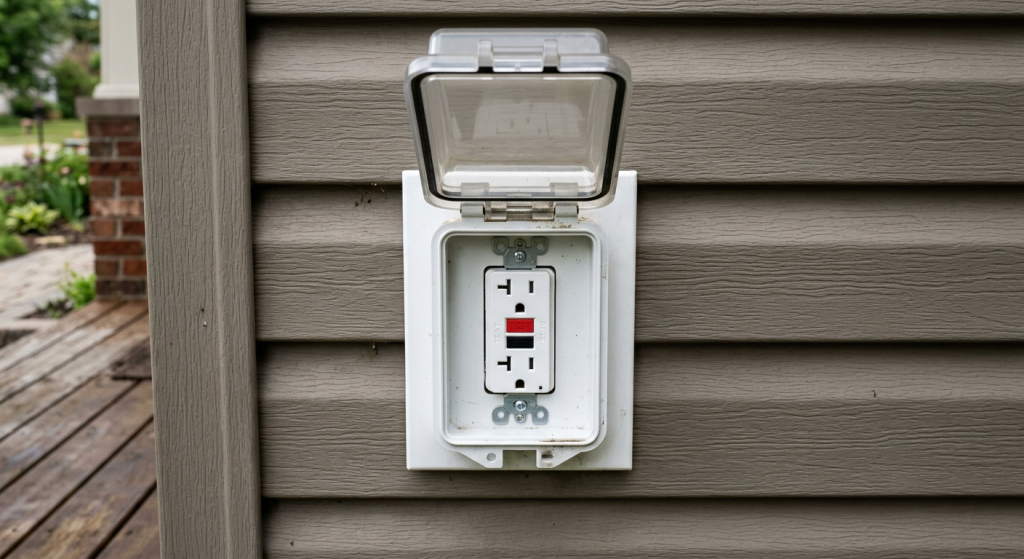
Outdoor GFCI problems often come from the parts around the outlet, not just the outlet itself. A cracked cover, loose flap, missing gasket, or cover that does not close over a plugged-in cord can let weather reach the connection.
Look from the outside only. You are checking for obvious visible problems, not opening anything. If the cover is broken, hanging loose, cloudy with trapped moisture, or unable to close when something is plugged in, the outlet may not be well protected from weather.
Also look at what is plugged in. Outdoor tools, extension cords, patio lights, fountain pumps, low-voltage lighting transformers, and holiday decorations can all cause trouble when wet, damaged, or overloaded. A device may work indoors but trip a GFCI outdoors because moisture is affecting the cord, plug, or housing.
Unplug everything from the outdoor GFCI and any nearby protected outlets if it is safe to do so. Once the outlet is dry, cool, undamaged, and not showing warning signs, press reset once. Then try one small known-good device. If the GFCI holds with that device but trips when one outdoor item is plugged in, stop using that outdoor item.
A plug-in GFCI or outlet tester may be homeowner-safe only when the outdoor outlet is dry, cool, undamaged, and not showing warning signs. A tester can help with basic observation, but it does not make wet, damaged, or hidden wiring safe to diagnose.
When Resetting the Outdoor GFCI Is Not Enough
Resetting is not enough when the GFCI trips repeatedly, will not hold after everything is unplugged, or fails again once the area dries. That usually means the cause is still present or the problem is not visible from the outside.
Outdoor GFCI outlets can also protect other outlets downstream. A problem may be at another exterior outlet, in a garage, near a deck, in a shed feed, or at equipment connected somewhere else. The GFCI may trip even when nothing is plugged directly into the outlet you are looking at.
Aging GFCI devices can also become unreliable. Outdoor conditions are harder on electrical parts than indoor conditions. Heat, cold, moisture, insects, corrosion, sun exposure, and repeated use can all contribute to failure over time.
But even if the GFCI is old, this article is not a replacement tutorial. Replacing an outdoor GFCI involves wiring, weather protection, proper enclosure conditions, and safety checks. That is work for someone qualified.
Resetting is not enough when:
- The GFCI trips immediately after reset
- It trips with nothing plugged in
- It trips again after the outlet and cords dry
- A nearby outlet or garage outlet is also dead
- The cover is damaged or water may be inside
- You cannot identify a safe, obvious cause
Do not keep resetting an outdoor GFCI that trips repeatedly. Repeated tripping is information. It tells you the outlet, device, moisture condition, downstream outlet, or wiring needs attention before the outlet should be used again.
If the outlet will not reset at all, this guide on GFCI outlet not resetting explains the safe checks homeowners can make before calling an electrician.
What Homeowners Should Not Touch
Outdoor electrical problems can look simple from the outside, but the risk can be serious. Water, metal tools, damp ground, and damaged cords can make a small outlet problem dangerous.
Homeowner-safe troubleshooting should stay limited to observation and basic unplugging when conditions are dry and safe. You can look for visible moisture, check whether the cover is damaged, unplug dry devices, and note what was in use when the GFCI tripped. You should not go deeper.
Do not remove the outdoor outlet cover. Do not open the box. Do not pull the GFCI out of the wall or post. Do not touch wires, screws, terminals, or anything inside the outlet. Do not test live wiring, replace the outlet, replace a breaker, open the electrical panel, or change the circuit.
Also do not bypass GFCI protection. Never replace a tripping outdoor GFCI with a regular outlet, use adapters to avoid protection, or move wet-use equipment to an unprotected outlet just to keep it running. Outdoor GFCI protection exists because shock risk is higher around moisture.
Hidden outdoor wiring problems are not beginner DIY repairs. If the issue is inside the box, behind siding, underground, in conduit, at another outlet, or at the panel, call a licensed electrician.
When to Call an Electrician
Call a licensed electrician when an outdoor GFCI keeps tripping after safe checks, when the cause is not obvious, or when anything about the outlet looks damaged. Outdoor circuits may involve weatherproof boxes, covers, conduit, buried wiring, downstream outlets, or equipment that is not visible from the outlet face.
You should also call if the outlet will not reset with nothing plugged in. Once devices are removed, a repeated trip points more strongly toward the GFCI, moisture inside the system, a downstream issue, or hidden wiring.
Call an electrician if you see or suspect:
- Burning smell, sparks, heat, buzzing, or discoloration
- Water inside the cover, box area, or wall opening
- Repeated tripping after rain or sprinkler exposure
- Failure with nothing plugged into the outlet
- Storm damage, cracked covers, or loose outlet parts
- More than one outlet or area affected
When you call, explain where the outdoor GFCI is located, what was plugged in, whether rain or sprinklers were involved, whether the outlet reset at all, and whether nearby outlets lost power. That gives the electrician useful details without requiring you to open anything.
Final Thoughts
An outdoor GFCI outlet keeps tripping because something needs attention. Rain, moisture, wet cords, damaged plugs, outdoor tools, holiday lights, old covers, downstream outlets, aging GFCI devices, and hidden wiring can all be involved.
Start with safe checks only. Unplug dry devices, look for obvious moisture or damage, let the area dry, and reset only if the outlet is dry, cool, undamaged, and not showing warning signs.
Do not keep resetting it, and never bypass GFCI protection. When the cause is not simple and visible, stop using the outlet and call a licensed electrician.