hardwood floor water damage: what to do first
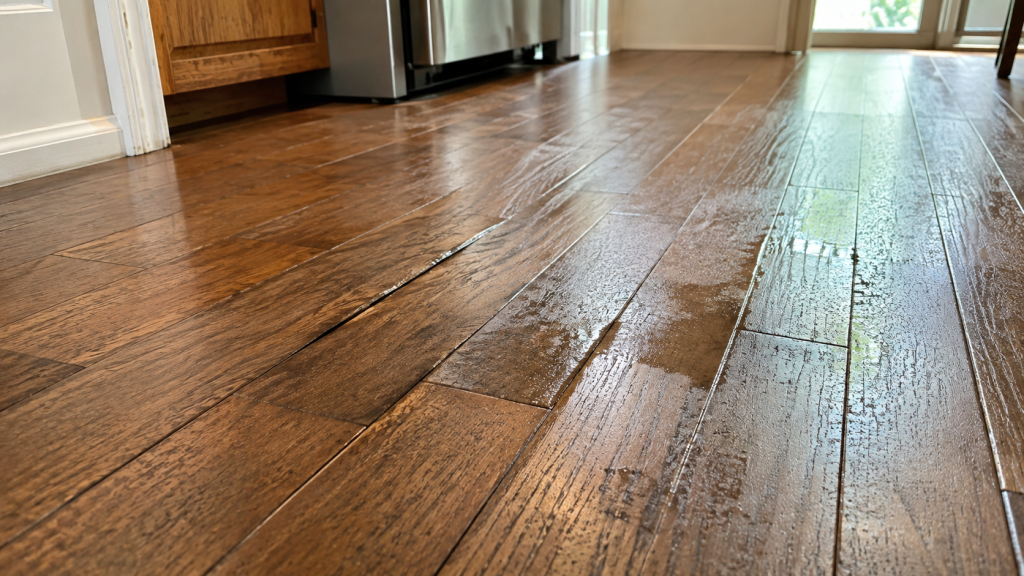
Hardwood floor water damage does not automatically mean the floor needs replacement. The outcome depends on how much water was involved, how long it remained, whether it reached the subfloor, and whether the boards have permanently changed shape.
Stop the water source first, then assess the extent of the moisture. Avoid making irreversible repair decisions while the floor is still wet because cupping, staining, and other changes may look different after the floor system has dried and stabilized.
| What you notice | What it may mean | Urgency | First step |
|---|---|---|---|
| Small spill with no visible change | Limited surface exposure | Low | Remove the water promptly and monitor |
| Dark stain after a leak | Finish or wood affected by moisture | Moderate | Stop the source and assess the surrounding area |
| Slight cupping | Moisture imbalance through the boards | Moderate | Address moisture and allow conditions to stabilize |
| Boards lifting from the floor | Severe movement or loss of attachment | High | Stop the source and arrange closer evaluation |
| Water appearing between boards | Moisture beneath or within the floor | High | Determine how far the water traveled |
| Soft subfloor or floor movement | Subfloor damage may be present | High | Avoid covering the area and get a qualified evaluation |
| Wet floor near electrical equipment | Possible electrical hazard | High | Keep clear of wet electrical components |
| Floodwater or sewage exposure | Potential contamination | High | Avoid direct contact and seek professional cleanup help |
If water has reached receptacles, cords, appliances, or other electrical equipment, do not handle wet electrical components. Keep people away from the affected area and get qualified help when energized equipment may be involved.
First: Stop the Water Source
Before judging the hardwood, stop additional water from entering the floor system.
Safe first actions may include:
- Stop using the leaking appliance or fixture.
- Shut off an accessible water supply if you can do so safely.
- Move movable furniture and belongings away from the wet area when safe.
- Keep people away from wet electrical equipment.
Do not reach through standing water to unplug an appliance or operate electrical equipment.
For a leak you cannot safely stop, call the appropriate plumbing, appliance, or water-damage professional. The longer water continues entering the floor, the greater the chance that it reaches the subfloor and surrounding materials.
What Water Can Do to Hardwood Flooring
Hardwood naturally absorbs and releases moisture. Excess water can change both its appearance and dimensions.
Possible effects include:
- Finish whitening or cloudiness
- Dark staining
- Swelling
- Cupping
- Crowning
- Gaps after drying
- Raised boards
- Buckling
- Damaged tongues or fasteners
- Subfloor damage
The floor’s appearance immediately after a leak does not always predict its final condition.
Some boards may gradually move closer to their original shape as moisture conditions normalize. Other damage, including deep staining, severe deformation, broken boards, or loss of attachment, may remain.
Small Spill vs Significant Water Exposure
Small spill
A small spill that is cleaned promptly may cause little or no lasting damage, particularly if water did not remain in seams or reach underneath the flooring.
Afterward, monitor for:
- Finish changes
- Raised board edges
- Staining
- New gaps
- Clicking or movement
If the floor remains flat, dry, and stable, further repair may not be necessary.
Larger or prolonged leak
A larger leak can travel far beyond the visible wet spot.
Water may move:
- Between boards
- Beneath the hardwood
- Into plywood or OSB
- Under cabinets
- Toward walls
- Into neighboring rooms
Do not assume the affected area ends where the surface stops looking wet.
Hardwood Floor Water Damage After an Appliance Leak
Dishwashers, refrigerators, washing machines, and water heaters can leak slowly or release significant amounts of water at once.
Appliance leaks can be difficult to judge from above because water may travel beneath cabinets or flooring before becoming visible.
After stopping the source, look for:
- Damp board joints
- Staining near the appliance
- Raised or cupped boards
- Wet baseboards
- Water appearing farther from the appliance
- Movement underfoot
Do not attempt appliance repairs while electrical components are wet. If water has reached an energized appliance or nearby electrical equipment, keep clear and get qualified help.
Dark Stains After Water Exposure
Dark staining does not automatically mean the hardwood is structurally ruined.
Discoloration may involve:
- Moisture affecting the finish
- Moisture penetrating the wood
- Reactions involving the wood and nearby metal
- Prolonged wetting
- Pre-existing finish damage becoming more visible
The depth and cause of the stain help determine whether later refinishing or board replacement may be appropriate.
Staining alone does not tell you whether the subfloor is damaged. Check the broader moisture conditions before focusing on cosmetic repair.
Hardwood Floor Cupping After Water Damage
Cupping occurs when the edges of a board rise higher than its center.
It commonly reflects a moisture imbalance through the thickness of the wood. Water beneath the floor or greater moisture at the underside of the boards can contribute to that shape.
Some cupping may lessen as the moisture source is corrected and conditions gradually stabilize. Severe or prolonged cupping may leave permanent deformation.
Do not sand a still-cupped floor simply to make it look flat. The wood can continue changing shape as it dries, creating a different uneven surface later.
If the board edges are rising higher than the centers, our guide to hardwood floor cupping explains what that shape means and which moisture conditions commonly cause it.
Crowning After Water Damage
Crowning is the opposite shape: the center of the board sits higher than its edges.
It can be associated with moisture conditions, but it can also occur when a previously cupped floor is sanded before its moisture condition has stabilized.
Because the shape alone does not identify the full cause, diagnose the moisture conditions before considering refinishing.
Hardwood Floor Buckling After Water Damage
Buckling is more severe than slight cupping.
Boards may lift significantly away from the subfloor, arch upward, or lose their normal attachment.
This can indicate substantial moisture-related movement or damage to the attachment below the flooring.
Buckled areas deserve closer inspection because the problem may involve more than the visible boards. Do not try to force lifted flooring back into place without first correcting the moisture source and evaluating what happened underneath.
If boards are lifting substantially away from the subfloor, see our guide to hardwood floor buckling for the likely causes and repair options.
Water Beneath Hardwood Flooring
A hardwood surface can feel dry while moisture remains below it.
Water may remain in:
- Hardwood boards
- Underlayment
- Plywood
- OSB
- Adhesives
- Baseboards
- Drywall
- Nearby framing
Possible clues include:
- Water appearing between boards
- Persistent musty odor
- Continued cupping or movement
- Soft spots
- Damp trim
- Repeated moisture at seams
Surface dryness alone is not proof that the full floor system has dried.
What to Check in Plywood or OSB Subflooring
If water reached the subfloor, its condition becomes part of the repair decision.
Warning signs include:
- Swelling
- Softness
- Raised panel seams
- Delamination
- Discoloration
- Sagging
- Persistent odor
- Excessive movement
Do not reinstall or cover the area simply because the hardwood above begins looking better.
Significant softness, sagging, delamination, or movement may indicate damage that needs qualified evaluation before the finish flooring is repaired.
Can Hardwood Dry Back to Normal?
Sometimes.
A hardwood floor has a better chance of recovering when:
- Water exposure was limited
- The water was clean
- The source was stopped promptly
- The boards remain structurally intact
- Moisture conditions gradually return toward normal
Some cupping may lessen as moisture equalizes through the floor.
However, drying does not guarantee a complete cosmetic recovery. Permanent staining, finish damage, severe deformation, split boards, or buckling may remain.
Avoid relying on a fixed drying timeline. Floor construction, wood species, finish, subfloor, airflow, amount of water, and surrounding conditions all affect how the floor responds.
Do Not Sand or Refinish Too Soon
Refinishing decisions should wait until the floor has dried appropriately and its moisture condition has stabilized.
Wood changes dimensions as it gains and loses moisture. A cupped floor can appear uneven while drying and then change again as moisture levels equalize.
Sanding too early can remove more material from raised areas. If those boards later change shape, the finished surface may become crowned or uneven.
First correct the water source and determine whether the floor is still changing. Refinishing should address a stable floor, not temporarily distorted wet wood.
When Individual Boards May Need Replacement
Localized board replacement may be appropriate when damage is permanent but limited.
Replacement becomes more likely when boards are:
- Split
- Severely buckled
- Permanently distorted
- Loose
- Structurally damaged
- Contaminated
- Delaminated in an engineered wood floor
Localized repairs also depend on whether matching material is available.
Species, board width, grade, color, finish, and age can make new boards look different from the existing floor. That may affect whether a small repair or a broader refinishing decision makes more sense later.
What if the Water Was Contaminated?
Sewage, floodwater, toilet waste, contaminated groundwater, and other potentially contaminated water require a different response from a clean household spill.
Avoid direct contact and do not make salvage decisions based only on whether the wood looks undamaged.
Contamination can affect hardwood, subflooring, walls, and other materials in the floor system. Professional water-damage or restoration evaluation is appropriate for these situations.
Do not attempt contaminated-water cleanup beneath flooring as a beginner DIY project.
What About Mold?
Prolonged dampness can support growth on moisture-sensitive materials.
Potentially affected materials include:
- Hardwood
- Plywood or OSB
- Drywall paper
- Baseboards
- Framing
- Dust and debris
A small clean-water event addressed promptly is different from a large hidden wet area that remained damp for an unknown period.
Professional evaluation makes sense when there is extensive visible growth, widespread hidden moisture, prolonged dampness, or water damage affecting a large area.
Signs the Damage Is More Serious
The likelihood of a larger repair increases when you find:
- Severe buckling
- Widespread cupping
- Persistent water beneath the floor
- Large darkened areas
- Soft or swollen subflooring
- Structural movement
- Strong persistent musty odor
- Wet walls or baseboards
- Damage extending into multiple rooms
- Contaminated water exposure
These signs suggest that the problem may extend beyond the hardwood finish.
What to Do Before Deciding on Repair
Use this sequence before deciding whether to refinish, repair, or replace anything:
- Stop the water source.
- Determine whether the water was clean or contaminated.
- Identify how far the moisture spread.
- Check the hardwood for staining, cupping, crowning, lifting, or buckling.
- Determine whether moisture reached beneath the boards.
- Check accessible subfloor conditions where appropriate.
- Allow the floor system to dry and stabilize appropriately.
- Correct the original moisture problem.
- Decide whether the floor needs no further work, localized board repair, later refinishing, or larger replacement.
The repair decision becomes much clearer after the moisture source is controlled and the floor has stopped changing.
Common Mistakes
Avoid these common responses to wet hardwood:
- Assuming all wet hardwood needs replacement
- Assuming a dry-looking surface means the subfloor is dry
- Sanding cupped flooring before it stabilizes
- Replacing boards before correcting the leak
- Covering wet or damaged subflooring
- Applying excessive heat to force drying
- Ignoring water around electrical equipment
- Treating contaminated water like a clean spill
- Disturbing suspect older flooring or adhesives without considering asbestos
If older flooring, tiles, sheet goods, mastics, or adhesives may contain asbestos, do not sand, scrape, grind, cut, or demolish suspect material. Stop disturbing it and obtain appropriate evaluation or testing before proceeding.
Questions to Ask Before Choosing the Next Step
Before committing to a repair, ask:
- What caused the water?
- Was it clean or contaminated?
- How long was the floor wet?
- How large is the affected area?
- Are boards stained?
- Are boards cupped, crowned, or buckled?
- Is moisture still present underneath?
- Is the subfloor plywood, OSB, or another material?
- Are walls or baseboards wet?
- Is there softness, sagging, or structural movement?
- Has the floor stabilized after drying?
- Is the damage localized or widespread?
These answers help separate cosmetic finish damage from problems that affect the boards, subfloor, or larger floor system.
When Professional Help Makes Sense
Not every spill on hardwood requires a flooring contractor.
Qualified help is appropriate when there is:
- A major or prolonged leak
- Water around electrical equipment
- Floodwater or sewage
- Severe buckling
- Widespread cupping
- Significant subfloor swelling or softness
- Structural movement or sagging
- Hidden moisture across a large area
- Visible rot
- Extensive mold growth
- Damage across multiple rooms
- An unclear extent of hidden water
- Suspected asbestos-containing flooring, mastic, or adhesive
The appropriate professional depends on the cause. Plumbing, electrical, flooring, water-damage, structural, or hazardous-material specialists may each be appropriate for different parts of the problem.
Final Thoughts
Hardwood floor water damage can range from a minor spill with no lasting effect to severe deformation involving the boards and subfloor. Stop the source first, determine how far the moisture traveled, and give the floor system time to dry and stabilize before making permanent repair or refinishing decisions.
Hardwood may recover from limited wetting, and some damaged areas can be repaired rather than replacing the entire floor. Severe buckling, widespread moisture, damaged subflooring, contamination, or persistent hidden water calls for closer professional evaluation.