
how to clean a porcelain sink without scratching it
Learning how to clean a porcelain sink without scratching it starts with two rules: confirm what type of glazed sink you have, then use the gentlest compatible cleaner and tool that will do the job. For routine cleaning, remove loose debris, rinse the basin, wash it with a mild cleaner and a soft cloth or non-scratch sponge, rinse thoroughly, and dry. Treat stubborn marks by their cause instead of scrubbing harder.
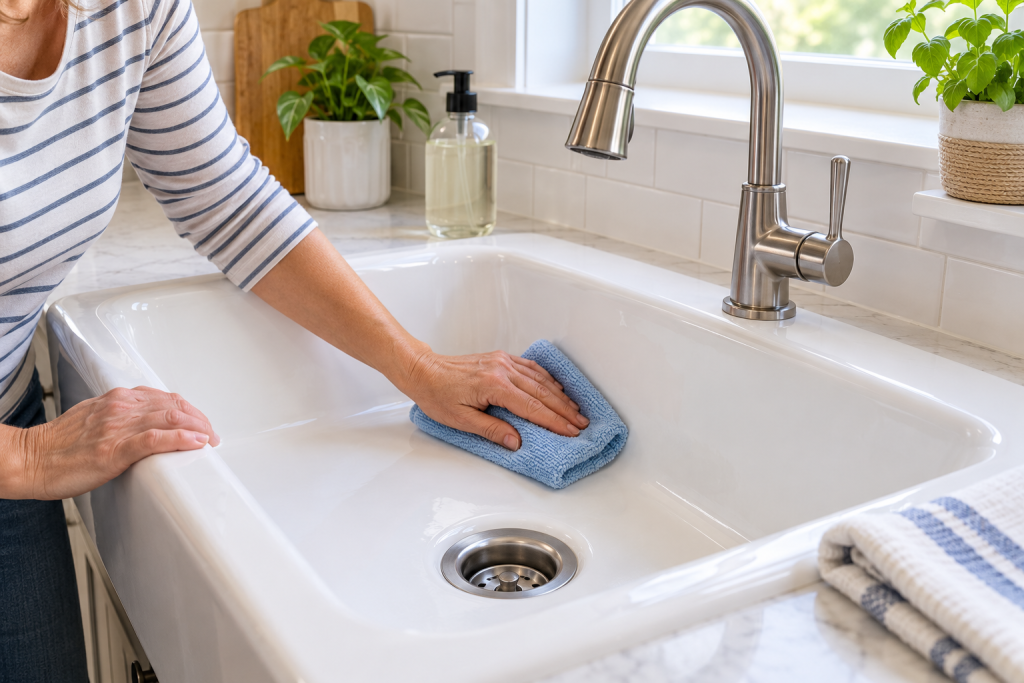
How to Identify a Porcelain or Enameled Sink
Homeowners often use “porcelain sink” as a general term for several glossy, light-colored sink surfaces. Your sink may actually be enameled cast iron, vitreous china, or glazed fireclay.
The distinction matters because these surfaces are made differently and manufacturers do not always approve the same cleaners.
| Sink type | What it is | Cleaning takeaway |
|---|---|---|
| Enameled cast iron | Cast iron covered with a fused, glass-like enamel | Protect the enamel from abrasive cleaning |
| Vitreous china | Ceramic material covered with a fired glaze | Use gentle tools that protect the glazed surface |
| Fireclay | Fired clay with a glazed finish | Follow the maker’s guidance for stronger stain treatments |
If you know the brand and model, check its care instructions before trying anything beyond mild routine cleaning. If you do not know the manufacturer, start conservatively rather than assuming a popular porcelain-cleaning remedy is safe.
A magnet can sometimes help identify cast iron beneath an enamel finish, but it does not tell you which cleaners the manufacturer allows. Appearance alone can also be misleading because several sink materials have a similar glossy white finish.
What You Need
Routine cleaning does not require an aggressive collection of chemicals. Start with:
- Soft microfiber cloths or other soft cleaning cloths
- A soft sponge or a pad specifically labeled non-scratch
- Mild dish soap or another cleaner confirmed as compatible with your sink
- Clean water
- A soft, dry cloth for finishing
For persistent stains or marks, use only an additional cleaner that is appropriate for the specific sink material. Steel wool, wire brushes, harsh scouring pads, and aggressive scraping tools should stay out of the routine cleaning kit.
How to Clean a Porcelain Sink Step by Step
This basic method is appropriate for ordinary food residue, grease, and everyday film when the soap or cleaner you choose is compatible with the sink.
- Clear the sink. Remove dishes, cookware, racks, strainers, and other removable accessories so you can see the entire basin. Look for chipped areas or other obvious finish damage before cleaning.
- Remove loose debris. Pick up food scraps, grit, coffee grounds, and other particles before wiping the surface. Moving gritty debris around under a sponge can create unnecessary abrasion.
- Rinse the basin. Use clean water to loosen residue and wash away remaining loose particles. A wet surface also helps a mild liquid cleaner spread more evenly.
- Apply a compatible mild cleaner. For many glazed sinks, mild dish soap and water are an appropriate starting point. Apply a small amount to a damp soft cloth or sponge rather than reaching immediately for an abrasive stain remover.
- Clean the basin gently. Wipe the bottom and sides using light pressure. Give greasy or dirty areas several gentle passes instead of concentrating heavy pressure on one spot.
- Clean the rim, corners, and drain area. Use the same soft tool around the inside corners, rim, and exposed drain flange. Do not use a knife, metal scraper, or other sharp object to remove residue from tight areas.
- Rinse completely. Flush away loosened grime and all cleaner residue with clean water. Look over the basin while it is wet for areas that may need another gentle pass.
- Dry and inspect the finish. Wipe the basin with a clean, soft cloth. Drying improves the finished appearance and can reduce visible water spotting and mineral residue. Any mark that remains should be identified before you try a stronger treatment.
How to Remove Common Marks Without Scratching
A persistent mark does not automatically mean the sink needs more pressure or a harsher cleaner. Different marks have different causes, and some apparent “stains” are not stains at all.
Ordinary food residue: Soften and remove it with the routine mild-cleaner method first. Repeated gentle cleaning is safer than attacking dried residue with a hard scraper.
Grease or film: A compatible mild detergent is usually the logical first choice because it helps lift oily residue. Rinse thoroughly so soap and loosened grease do not leave another film behind.
Light staining: If ordinary cleaning does not remove discoloration, check the sink manufacturer’s approved stain-cleaning methods. A product that is acceptable for one type of fireclay or vitreous china may not be the preferred choice for enameled cast iron.
Hard-water or mineral deposits: These often appear as cloudy, chalky, or crusty areas, especially where water regularly dries on the surface. Some fireclay manufacturers allow vinegar-based or other acidic treatments for mineral deposits, but that permission should not be generalized to every porcelain or enamel sink. Use the sink maker’s approved mineral-deposit treatment when possible.
Metal-transfer marks: Gray or black lines can be material left behind when metal cookware or utensils contact a hard glazed surface. On some enameled cast-iron sinks, these marks can resemble scratches even though the enamel itself has not been penetrated. A manufacturer-approved cleaner for metal or pot marks may remove them without aggressive scouring.
Actual scratches or finish damage: A line that remains unchanged after appropriate cleaning may be physical damage rather than transferred material. Look for a visible groove, rough area, missing glaze, or exposed material. Cleaning cannot replace glaze that has been scratched, chipped, or worn away.
When you are uncertain, stop escalating the abrasion. Identifying the mark is more useful than continually increasing scrubbing pressure.
If you are dealing with discoloration on a metal sink instead, see our guide to removing stains from a stainless steel sink without damaging the surface.
Baking Soda, Vinegar, Bleach, and Other Common Cleaners
Advice for cleaning “porcelain” with baking soda, vinegar, bleach, scouring products, or melamine foam is common online, but these products are not universally approved for every glazed sink.
Baking soda: Some fireclay manufacturers specifically permit baking soda for stuck-on residue. That does not make it a universal recommendation for every porcelain-enamel or vitreous-china finish. Because baking soda provides mild abrasive action, verify that the sink manufacturer allows it before using it as a scrub.
Vinegar: Some manufacturers permit vinegar or vinegar-based cleaning for mineral deposits on specific ceramic or fireclay sinks. Other products may have different care requirements. If you have an enameled sink and cannot confirm compatibility, use an approved mineral-deposit cleaner rather than assuming vinegar is harmless.
Bleach: Certain fireclay manufacturers permit diluted bleach treatments under their own care instructions. That is product-specific guidance, not permission to bleach every porcelain sink. Follow the sink manufacturer’s instructions and the bleach product label rather than inventing a concentration or soaking time.
Never mix household bleach with vinegar, ammonia, or other household cleaners. Do not combine cleaning products in an attempt to make a stronger porcelain cleaner.
Abrasive powders, scouring creams, and melamine-type erasers: Compatibility varies. Some manufacturers permit particular products on particular sinks, while others specifically caution against abrasives because they may scratch or dull the finish. Treat the sink’s care instructions as the deciding factor.
What Can Scratch or Dull a Porcelain Sink?
A hard glazed surface can still lose its appearance through repeated abrasive treatment or physical impact. Common risks include:
- Steel wool and wire brushes
- Harsh or inappropriate scouring pads
- Abrasive cleaners not approved for the sink
- Scraping dried residue with metal or sharp tools
- Repeatedly grinding away at one small mark
- Dragging cookware or other metal objects across the basin
- Using cleaners specifically excluded by the manufacturer
Protecting the finish is mostly about reducing unnecessary abrasion. Remove grit before wiping, use soft or non-scratch tools, rinse cleaner residue thoroughly, and clean staining materials before they remain against the glaze for long periods.
A manufacturer-approved basin rack can help keep cookware from rubbing directly against some sinks. Do not assume every rubber sink mat is suitable, however. Certain manufacturers discourage them because material trapped beneath the mat can discolor the enamel. Keep any approved sink accessory clean as well.
When Cleaning Will Not Fix the Problem
Some discoloration and roughness come from the finish itself rather than dirt sitting on top of it.
A chip removes part of the glazed coating and may expose the material underneath. Worn enamel or glaze can look dull, uneven, or permanently discolored. Crazing appears as a network of fine cracks in the glazed surface. Deeper scratches can also physically cut or abrade the finish.
Once the surface itself is damaged, stronger cleaners will not recreate the missing glaze. Continuing to scour the area may make its appearance worse.
If you see extensive chipping, widespread crazing, exposed underlying material, or a finish that continues deteriorating despite proper cleaning, treat it as a sink-condition issue rather than a cleaning problem. Repair, refinishing, and replacement are separate decisions from routine porcelain care.
For broader sink-care guidance across several common materials, see how to clean a kitchen sink without damaging the finish.
Common Porcelain Sink Cleaning Mistakes
The most consequential mistakes usually come from escalating too quickly.
- Scrubbing gritty debris around the basin instead of removing it first
- Assuming every white glazed sink has identical cleaning requirements
- Using steel wool or a harsh pad on a stubborn mark
- Treating metal transfer as a deep scratch without first trying an approved cleaner
- Repeatedly spot-scrubbing discoloration that may actually be damaged glaze
- Mixing household cleaning chemicals
- Leaving cleaner residue or staining material sitting in the basin unnecessarily
When ordinary cleaning fails, change the diagnosis before you change the amount of force.
Frequently Asked Questions
Can you use baking soda on a porcelain sink?
Sometimes. Some fireclay manufacturers specifically allow baking soda for stuck-on residue, but that does not establish compatibility with every enameled or glazed sink. Check the care instructions for your sink before using baking soda as a scrub, particularly if protecting a glossy finish is the priority.
Can vinegar damage a porcelain sink?
There is no single rule for every sink sold as “porcelain.” Some ceramic and fireclay manufacturers allow vinegar-based cleaners for mineral deposits. Other finishes have different care requirements. Confirm compatibility with your sink before applying an acidic cleaner, and never combine vinegar with bleach.
Can bleach be used on a porcelain sink?
Bleach is permitted by some manufacturers on specific fireclay or ceramic sinks, but it should not be treated as a universal porcelain cleaner. Follow the sink manufacturer’s instructions and the cleaner label. Never mix bleach with ammonia, vinegar, or other household cleaners.
How do you remove black or gray marks from a porcelain sink?
First, determine whether the mark is surface residue or physical damage. Metal cookware can leave gray or black transfer marks on some hard glazed sinks that resemble scratches. Start with routine cleaning, then use a manufacturer-approved product for metal or pot marks if applicable. Do not reach automatically for a harsher scouring pad.
Why does my porcelain sink still look stained after cleaning?
The remaining area may be mineral buildup, metal transfer, a persistent stain, or damage to the glaze itself. If the surface is chipped, crazed, worn, deeply scratched, or permanently discolored, stronger cleaning will not restore the original finish. Identify the condition before trying another product.
Final Thoughts
The safest way to clean a porcelain sink is to remove grit first, use a compatible mild cleaner with a soft or non-scratch tool, rinse thoroughly, and dry the surface. Most importantly, do not respond to every stubborn mark by scrubbing harder.
If routine cleaning leaves a mark behind, identify whether you are dealing with staining, mineral deposits, metal transfer, or actual finish damage. That distinction protects the glaze and tells you whether a different cleaner—or something other than cleaning—is the appropriate next step.