how to clean laminate countertops safely
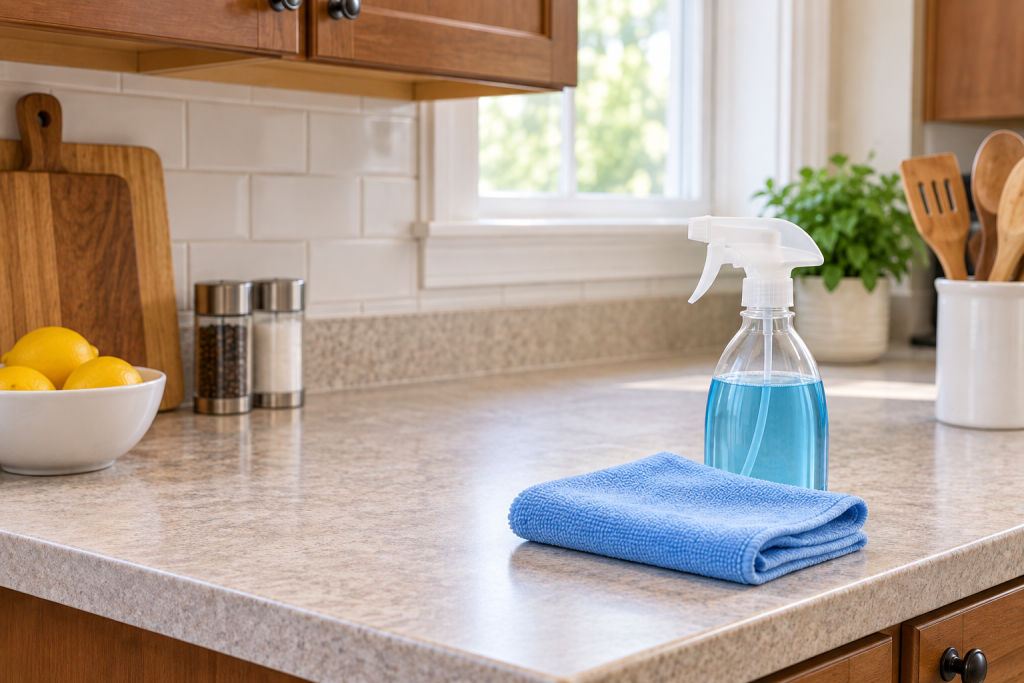
If you are learning how to clean laminate countertops, start with a soft cloth, a mild compatible cleaner, and limited moisture. Most everyday spills, grease, and food residue come off without abrasive scrubbing or strong chemicals. Wipe rather than soak the surface, rinse away cleaner when required, and dry seams and edges promptly.
| What you are cleaning | Safe starting approach | Main risk to avoid |
|---|---|---|
| Everyday crumbs and spills | Soft cloth with mild cleaner | Abrasive scrubbing |
| Light grease | Mild dish soap if compatible | Using a strong degreaser first |
| Sticky residue | Repeated gentle wiping | Sharp scraping tools |
| Stains | Start mild, then follow manufacturer guidance | Unverified solvents or abrasives |
| Seams and edges | Minimal moisture and prompt drying | Standing water and swelling |
Why Laminate Countertops Need Gentle Cleaning
A typical laminate countertop has a decorative laminate surface bonded to a supporting substrate. The laminate face handles normal kitchen use well, but seams, edges, cutouts, and damaged areas deserve extra care because moisture can reach the material underneath.
That is why safe cleaning is less about scrubbing power and more about controlling abrasion, chemicals, and water.
A dark mark on an intact surface may be removable soil. A raised seam, swollen edge, lifted laminate, or worn-through surface is different. Those conditions indicate physical damage that cleaning will not reverse.
If your kitchen also has a butcher block island or wood countertop, see how to clean butcher block countertops and maintain the existing finish correctly.
What You Need
Routine laminate cleaning usually requires only a few basic supplies:
- microfiber or another soft, nonabrasive cloth
- mild dishwashing liquid or a manufacturer-approved cleaner
- warm water
- soft sponge, if appropriate for the finish
- clean cloth for removing residue
- dry towel
Avoid reaching automatically for scouring pads, abrasive powders, steel wool, or hard scraping tools. Laminate manufacturers commonly recommend nonabrasive cleaning for everyday care.
How to Clean Laminate Countertops Safely
Step 1: Remove crumbs and loose debris
Brush or wipe away crumbs, grit, and other loose material before wet cleaning. Removing abrasive debris first reduces the chance of dragging it across the countertop while you wipe.
Step 2: Prepare a mild compatible cleaner
Use a mild dishwashing solution or other cleaner permitted by the laminate manufacturer. Follow the cleaner’s directions rather than making the solution stronger for extra cleaning power.
If you know the countertop manufacturer, check its care guidance before using anything more aggressive than a mild routine cleaner.
Step 3: Wipe the countertop with a damp cloth
Dampen the cloth rather than flooding the surface. Wipe food residue, fingerprints, and everyday grime with gentle pressure.
Pay particular attention around seams, sink cutouts, backsplash joints, and exposed edges. Do not leave puddles sitting in these areas.
Step 4: Give greasy or sticky areas another gentle pass
For grease or sticky residue, apply another small amount of compatible cleaner and wipe again. Using a clean section of the cloth helps lift grease instead of spreading it over a larger area.
Repeated gentle wiping is preferable to immediately switching to an abrasive pad or an aggressive chemical.
Step 5: Remove cleaner residue if needed
Some laminate-care instructions call for the surface to be wiped or rinsed with clean water after cleaning. Others depend on the directions for the particular cleaner.
Remove residue as directed. Cleaner left behind can create streaks, film, or, with some chemicals, surface damage.
Step 6: Dry the surface, especially seams and edges
Finish with a clean, dry, nonabrasive towel. Do not leave standing moisture around seams, edges, joints, or areas where the laminate is chipped or lifted.
Drying is especially important where water could work beneath the laminate and reach the substrate.
Handle Grease and Stains Without Aggressive Scrubbing
Grease and sticky residue
Mild dish soap can be effective for ordinary kitchen grease when it is compatible with the laminate. For heavier buildup, make several gentle passes rather than assuming a stronger cleaner is necessary.
If a mild method does not work, check the countertop manufacturer’s approved-cleaner guidance before moving to a stronger degreaser. A cleaner that is safe for another kitchen surface is not automatically appropriate for laminate.
Avoid using a sharp blade or scraper on hardened residue unless the specific laminate manufacturer provides a method that permits it. Scratching the decorative surface creates a problem that cleaning cannot undo.
If grease has also built up on nearby cabinet fronts, see how to clean greasy kitchen cabinets safely without damaging the finish.
Common food and beverage stains
Coffee, tea, sauces, food coloring, and other spills should be addressed first with the same mild cleaner used for routine care.
Some laminate manufacturers provide stronger methods for persistent staining. Those instructions can include cleaners or solvents that should not be assumed safe for every laminate product or finish.
If a stain remains after normal cleaning, identify the laminate manufacturer when possible and follow its stain-specific care instructions. Avoid experimenting with increasingly aggressive chemicals.
Baking soda and other mild abrasives
Baking soda is sometimes included in manufacturer guidance for particular laminate products, but it should not be treated as a universal countertop scrub.
Its abrasive action can affect a decorative finish if excessive pressure or scrubbing is used. Other abrasive powders and scouring products can scratch or dull laminate as well.
Use a baking-soda method only when the care instructions for your surface allow it, and follow those directions rather than improvising a stronger paste or scrubbing harder.
Vinegar and acidic cleaners
Vinegar is not necessary for routine laminate cleaning and should not be assumed universally compatible. Manufacturer recommendations differ, and some laminate-care instructions caution against acidic cleaners.
If the manufacturer specifically permits a mild vinegar solution for your surface, follow those directions. Otherwise, a mild approved detergent is the safer default.
Disinfecting laminate countertops
Cleaning removes soil; disinfecting is a separate task.
When disinfection is needed, choose a disinfectant that is compatible with your laminate surface and follow the disinfectant label. The label determines how the product should be applied and how long the surface must remain wet to achieve its disinfecting claim.
Do not invent a contact time, and never mix cleaning or disinfecting products. Afterward, follow the laminate and disinfectant instructions for any required rinsing and drying.
Protect Seams, Edges, and the Laminate Finish
Moisture control matters most where the surface is no longer continuous. Water can penetrate vulnerable seams or damaged areas and cause the underlying substrate to swell.
Do not:
- allow water or cleaner to pool around seams
- soak countertop edges or joints
- use steel wool or harsh scouring pads
- scrub with abrasive powders unless specifically approved
- use strong solvents without laminate-specific guidance
- use steam cleaning unless the surface manufacturer explicitly permits it
- mix household cleaning chemicals
- put very hot cookware directly on the laminate
Heat protection is not technically a cleaning step, but it prevents damage that can later look like a stain or dull spot. Use a trivet or other appropriate heat barrier rather than placing hot cookware directly on the surface.
Manufacturer guidance is especially important for stronger stain removers. A solvent or bleach-based method approved for one laminate product should not be carried over automatically to another.
Know When Cleaning Will Not Fix the Problem
Cleaning can remove soil from an intact surface. It cannot rebuild the countertop.
Signs that you are dealing with damage rather than dirt include:
- swollen substrate around a seam or edge
- laminate lifting away from the base
- delamination
- burn marks
- deep scratches or gouges
- chips
- a surface worn through to another layer
- failed or separating seams
Do not respond to these problems by scrubbing harder or applying progressively stronger chemicals. Repair or replacement decisions are separate from cleaning.
For routine maintenance, wipe spills before they dry, clean grease before it becomes heavy buildup, use cutting boards instead of cutting directly on the counter, and dry standing water promptly. Paying attention to seams and edges is particularly useful around sinks and other frequently wet areas.
Frequently Asked Questions
What is the best way to clean laminate countertops?
The safest approach is a soft, nonabrasive cloth with a mild cleaner approved for laminate, followed by removal of any required cleaner residue and prompt drying. When learning how to clean laminate countertops, start with the least aggressive method that will remove the soil.
Can I use dish soap on laminate countertops?
Mild dishwashing liquid is recommended for routine cleaning by several major laminate manufacturers. Follow the care instructions for your particular surface and avoid using so much soap that it leaves a film.
Is vinegar safe on laminate countertops?
Do not assume vinegar is safe for every laminate. Manufacturer guidance varies, and some products caution against acidic cleaners. Use vinegar only when your laminate manufacturer’s instructions permit it.
Can baking soda scratch laminate countertops?
It can act as an abrasive. Some manufacturers allow carefully controlled use for certain difficult stains, but excessive scrubbing can affect the decorative surface. Do not treat baking soda as a universal laminate cleaner.
How do I remove a stain that mild cleaner will not remove?
Check the manufacturer’s stain-removal instructions for the specific laminate. Some products permit stronger cleaners for particular stains, but solvent, bleach, or abrasive recommendations are not universal and should not be transferred from one laminate brand or finish to another.
Final Thoughts
Start mild, use soft cleaning tools, and keep moisture under control. Everyday laminate countertop cleaning rarely requires heavy scrubbing, and seams and edges should be dried promptly after cleaning.
For stubborn stains, follow the laminate manufacturer’s instructions before moving to stronger chemicals or abrasive methods. If the surface is swollen, lifting, burned, chipped, or worn through, cleaning is no longer the solution.