
how to get rid of roaches: a low-risk homeowner approach
How to get rid of roaches starts with removing the food, water, and shelter that support them, then using targeted bait and monitoring instead of relying only on sprays. Focus on where activity is concentrated, clean the resources roaches are using, reduce clutter, place an appropriately labeled bait where suitable, and watch whether activity declines before adding more treatment.
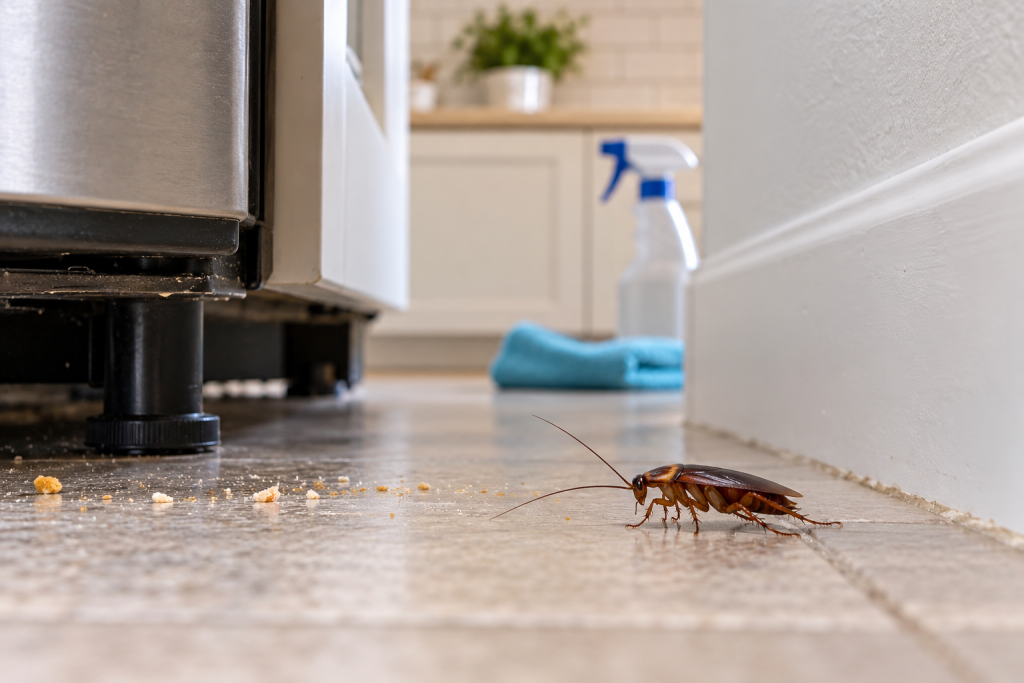
Start by Finding Where Roaches Are Active
Before cleaning or applying a product, note where you are actually seeing roaches.
Common activity areas include:
- Kitchens
- Beneath sinks
- Behind or beside appliances
- Cabinets and pantries
- Bathrooms
- Laundry areas
- Basements
- Utility rooms
- Garages
Repeated activity in one location can point toward food, water, shelter, or an entry route nearby.
Look for patterns rather than trying to identify the exact species. Keep the inspection accessible. Do not dismantle appliances, open electrical equipment, or enter unsafe spaces to follow activity.
Remove Easy Food Sources
Roaches can feed on very small amounts of residue, so reducing easy food is a major part of control.
Focus on the places where food repeatedly collects:
- Crumbs and food particles
- Grease around cooking areas
- Sticky spills
- Food beneath accessible appliances
- Open pantry goods
- Pet food
- Trash and recycling
- Dirty dishes left for long periods
- Food residue inside cabinet corners
Store dry food securely, clean spills reasonably soon, and keep trash contained. Remove food residue from recycling where practical.
Pet food can also support activity. Store it securely and avoid leaving excess food available longer than necessary for normal feeding.
Reduce Moisture
Roaches also need water, and persistent moisture can make a limited problem easier for them to sustain.
Check for dripping faucets, leaks beneath sinks, appliance leaks, condensation, wet sponges or cloths, standing water, and damp utility areas.
Dry accessible wet areas and correct simple leaks within normal homeowner maintenance.
Persistent leaks or hidden moisture should be treated as a home-maintenance issue rather than repeatedly dried without fixing the source.
Do not restrict a pet’s necessary drinking water. Keep the surrounding area reasonably clean and dry instead.
Reduce Clutter and Shelter
Roaches favor protected spaces where they can remain undisturbed.
Cardboard, paper bags, stacked boxes, crowded cabinets, and storage packed tightly against walls can create hiding areas and make inspection more difficult.
Reduce unnecessary accumulation where practical, especially near kitchens, utility areas, garages, and other active zones.
You do not need to discard useful possessions. Organize storage so that you can inspect wall edges, cabinet corners, appliance gaps, and the floor.
Clean Likely Feeding and Hiding Areas
Once you know where activity is concentrated, clean those areas deliberately rather than treating the entire home as one large pest zone.
Wipe grease, remove crumbs, clean cabinet corners, manage trash residue, and remove food spills.
If you can safely reach beneath or beside an appliance without moving heavy equipment or exposing electrical components, clean accumulated food debris there as well.
Do not remove appliance panels or work inside energized equipment to chase roaches.
Use Roach Bait as a Targeted Tool
An appropriate roach bait can be useful because it is designed to be eaten rather than sprayed broadly through the room.
Bait does not necessarily produce immediate results. Roaches need to encounter and feed on it, so placement and accessibility matter.
Choose a product labeled for the pest and intended location. Follow the label for amount, placement, replacement, and storage.
Keep bait away from food-contact surfaces, water sources, and places where children or pets can reach it.
Detailed bait formats and product choices are separate buying decisions. The key here is targeted use rather than broad spraying.
If you need help comparing bait formats and deciding which type fits your situation, see our guide to choosing the best roach bait for your home.
Avoid Spraying Around Active Bait
Do not spray contact insecticide directly around active bait placements unless product directions specifically support that use.
Sprays may kill or repel roaches before they interact with the bait, and contamination can make bait less attractive.
Do not mix products, increase concentrations, or create homemade pesticide combinations. Use each product only as its label directs.
Where Bait May Be Placed
Placement should follow known activity and the product label.
Depending on the product, suitable locations may include:
- Near active wall edges
- Beneath sinks
- Near cabinet corners
- Behind appliances where safely accessible
- Near cracks or crevices where activity is observed
Keep bait out of electrical equipment and away from exposed food, dishes, food-preparation surfaces, and standing water.
Use Monitoring to Check Whether Activity Is Declining
Monitoring helps show whether the control plan is working and whether another area needs attention.
Labeled sticky monitors or similar monitoring traps can help show:
- Where activity is strongest
- Whether numbers are declining
- Whether another area is active
Use monitoring as a trend indicator rather than a precise population count.
If captures or sightings decrease, continue the approach. If activity stays high or spreads, reassess food, water, hiding areas, placement, and entry routes.
Why Roaches May Keep Coming Back
Persistent activity can mean:
- Food or water remains available
- Clutter still provides shelter
- Bait is poorly placed
- Bait has dried out or become contaminated
- Another room or hidden area remains active
- Entry points remain open
- Roaches are moving from neighboring or shared spaces
More pesticide is not automatically the answer. Continued activity should trigger another inspection.
Seal Practical Entry Points
Once you know where activity is occurring, basic exclusion can help reduce movement and recurrence.
Inspect accessible gaps around pipes, utility penetrations, cabinet edges, doors, trim, and other visible openings.
Seal only openings appropriate to close. Do not seal required ventilation, drainage, equipment clearances, or other functional openings.
In apartments, townhomes, and other attached housing, roaches may move between units through shared building spaces. Building management or coordinated pest control may be necessary.
For a broader exclusion plan beyond the current roach problem, see our whole-home guide on how to keep bugs out by sealing common entry points and reducing food, moisture, and shelter.
What Not to Do
Do not:
- Spray pesticides randomly throughout the home
- Spray directly around active bait
- Mix pesticide products
- Use homemade pesticide mixtures
- Increase pesticide concentrations
- Inject pesticide into walls
- Apply pesticides inside electrical equipment
- Put pesticides on food-contact surfaces unless the label permits it
- Place pesticide where children or pets can reach it
- Rely on foggers or bug bombs as the foundation of control
Store unused products securely in their original containers.
What About Roach Foggers or Bug Bombs?
Total-release foggers spread pesticide through a large indoor area rather than targeting the places where roaches are feeding and hiding.
They are a poor foundation for a low-risk control plan. The pesticide may not effectively reach protected hiding places, while large areas of the home can be exposed unnecessarily.
Foggers can also create contamination concerns and fire or explosion hazards if misused around flames, pilot lights, or electrical ignition sources.
They do nothing to correct crumbs, grease, water leaks, clutter, or entry routes.
How Long Does Roach Control Take?
Roach control is rarely instant.
Activity may continue while roaches encounter bait and while food, water, and shelter conditions are being corrected.
Watch the trend rather than expecting all sightings to stop immediately. Fewer sightings and lower monitoring counts suggest improvement.
If activity stays heavy or increases, reassess the plan instead of simply applying more pesticide. Follow the product label for bait replacement and monitoring intervals.
A Practical Low-Risk Roach Control Sequence
Step 1: Identify active areas
Note where sightings or monitoring catches are concentrated.
Step 2: Remove accessible food
Clean crumbs, grease, spills, pet-food residue, trash, and other easy food sources.
Step 3: Correct moisture
Address dripping faucets, leaks, condensation, and standing water you can safely reach.
Step 4: Reduce clutter
Organize cardboard, paper, boxes, and storage that create protected hiding spaces.
Step 5: Clean feeding areas
Focus on cabinet corners, cooking residue, trash areas, and accessible spaces around appliances.
Step 6: Use an appropriate labeled bait
Place it only where the label permits and where children, pets, food, and water will not be exposed.
Step 7: Avoid spraying around bait
Do not disrupt the baiting process with incompatible sprays or chemical combinations.
Step 8: Monitor activity
Watch whether sightings and captures begin to decline.
Step 9: Seal practical entry points
Close suitable accessible gaps once you understand where activity is occurring.
Step 10: Reassess if activity remains heavy
Check for another food, water, shelter, placement, or building-source problem before increasing treatment.
When Professional Help May Be Appropriate
Consider professional pest evaluation when activity is heavy or widespread, roaches are appearing frequently during the day, several rooms are affected, or sanitation and baiting do not reduce activity.
Professional help can also make sense when roaches appear to come from inaccessible structural spaces, affected areas cannot be reached safely, or the home shares walls or utility pathways with neighboring units.
Final Thoughts
The most effective low-risk way to get rid of roaches is to make the home less supportive of them while using targeted control where needed. Reduce food and water, limit hiding places, clean active areas, use labeled bait carefully, and monitor the results.
If activity does not decline, reassess the source and location rather than reaching immediately for broader pesticide use. Heavy, widespread, or persistent activity is a good reason to bring in professional help.