
how to remove paint from concrete
Learning how to remove paint from concrete starts with identifying whether the paint is fresh or cured and, when possible, whether it is water-based or oil-based. Fresh paint may respond to relatively mild cleanup, while dried paint often requires careful scraping, a compatible paint remover, or repeated treatment.
Start with the least aggressive method likely to work. Concrete is porous, so older paint can penetrate below the surface and leave discoloration even after most of the coating has been removed.
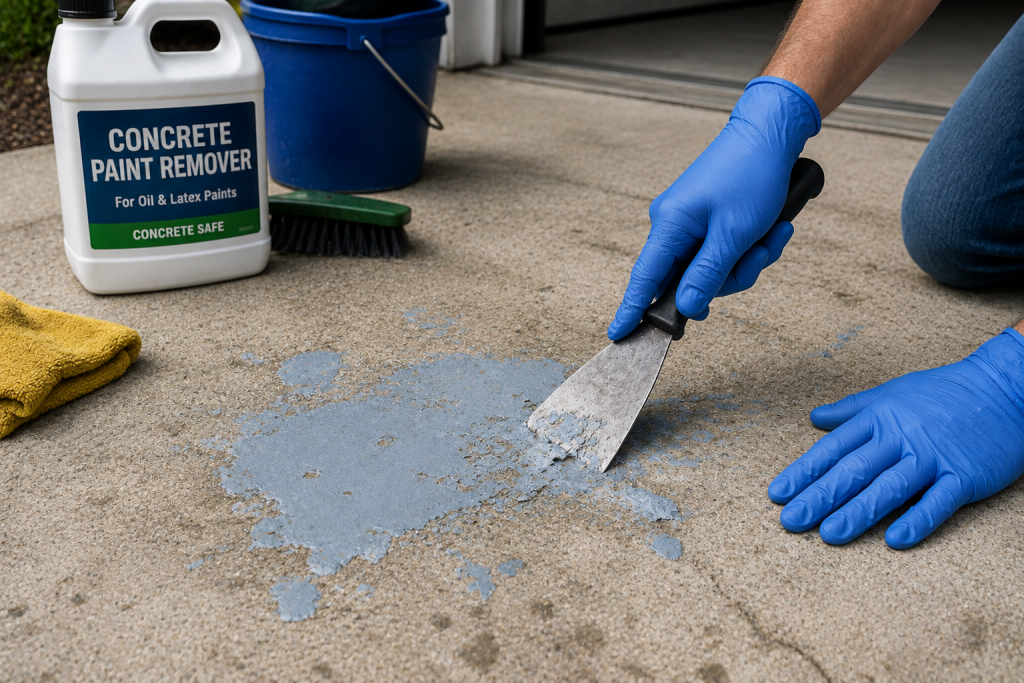
Safety note: Wear gloves and eye protection as directed when using cleaners or paint removers, and provide ventilation in enclosed areas. Keep ignition sources away from flammable products. Never use gasoline as a cleaner or mix cleaning or stripping chemicals unless their labels specifically permit it. Keep people and pets away from wet or chemically treated surfaces.
| Paint condition | Best first step | What to expect |
|---|---|---|
| Fresh water-based paint | Lift excess paint, then use compatible mild cleanup | Best chance of removing most residue |
| Fresh oil-based paint | Remove excess and follow compatible cleanup guidance | May require a suitable remover |
| Small dried drip | Gentle scraping first | Often manageable with targeted treatment |
| Larger dried spill | Scraping plus concrete-safe paint remover | May need repeated treatment |
| Overspray | Target individual spots with a mild compatible method | Avoid stripping unaffected concrete |
| Sealed or coated concrete | Check finish compatibility first | Strong removers may damage the finish |
What to Do First With Fresh Paint
Fresh paint is usually easier to remove because it has not fully bonded to the surface or penetrated as deeply into the concrete.
Keep people and pets away from the spill, especially if the paint makes the surface slippery. Protect nearby doors, siding, landscaping, vehicles, and finished surfaces before you begin cleanup.
Do not immediately flood a fresh spill with water. First lift or blot up as much wet paint as possible without spreading it across a larger section of concrete.
Once the excess is gone, choose the cleanup method based on the paint type and its instructions.
Step 1: Identify the Paint if Possible
Knowing the paint type helps you avoid using an unnecessarily aggressive cleaner.
Check the original container, label, or project materials if they are available. The main distinction for a fresh spill is usually whether the paint is water-based or oil-based.
For fresh water-based paint, the manufacturer’s cleanup directions may allow water and a mild cleaner or detergent. Work before the paint cures, but avoid washing pigment across surrounding concrete.
Fresh oil-based paint may require a different cleanup product. Remove as much wet material as possible first, then use only a cleaner or remover that is compatible with both the paint and concrete.
Do not improvise with gasoline, fuel, or homemade solvent mixtures.
If you cannot identify the paint, begin cautiously with the least aggressive method and test a compatible product in an inconspicuous location when its instructions call for testing.
Step 2: Remove Excess Paint
For a wet spill, lift paint rather than rubbing it into the concrete.
Use disposable material or another appropriate tool to collect as much free paint as practical. Work from the outside of the spill toward the center so you do not enlarge the affected area.
For dried paint, remove loose flakes before adding cleaner. Small drips or raised spots may respond to gentle scraping.
Use scraping tools carefully. Metal tools can gouge, scratch, or leave marks on some concrete finishes and can easily damage coatings or sealers.
The goal is to remove material that comes away reasonably easily, not to force every trace off mechanically.
Step 3: Clean or Soften the Remaining Paint
After excess paint is removed, address the residue with a method appropriate for the paint and surface.
For fresh water-based paint, a mild cleaning method may be enough if the paint instructions permit it. Apply only enough liquid to clean the affected area while controlling runoff.
For dried paint or stubborn residue, a paint remover labeled as suitable for concrete may be needed.
Before applying one, confirm:
- It is approved for concrete.
- It is suitable for the type of paint or coating involved.
- It will not damage an existing sealer or floor coating.
- You understand the required protective equipment.
- You can provide the necessary ventilation.
- You know how the residue must be collected or rinsed.
Allow the product to work only for the time specified on its label. A longer dwell time is not automatically more effective and may increase the chance of surface damage.
Never combine different removers or cleaning chemicals unless their instructions specifically allow it.
Step 4: Scrub or Scrape Carefully
Once the paint has softened, use a suitable brush or scraper to loosen it.
A stiff-bristle brush can help remove softened residue from textured or porous bare concrete. Use controlled pressure rather than trying to scour the surface aggressively.
For isolated drips, targeted scraping may be more appropriate than treating a large area with chemicals.
Repeated moderate treatments are often preferable to one aggressive attempt. This is especially true on decorative, aged, or slightly deteriorated concrete.
If the surface begins to scratch, lose its finish, or break apart, stop and reconsider the method.
Step 5: Rinse and Let the Concrete Dry
If the cleaner or paint remover instructions require rinsing, remove the residue using the specified method.
Control paint chips, chemical residue, and contaminated rinse water. Do not allow them to flow into storm drains, soil, or landscaping where prohibited. Follow local disposal requirements for collected paint residue and cleanup materials.
After cleanup, let the concrete dry completely before judging the result.
Wet concrete often appears darker, which can exaggerate remaining stains or make the cleaned area look uneven. Once dry, decide whether another treatment is justified.
How to Remove Dried Paint From Concrete
Dried paint usually requires more work than a fresh spill because it has bonded to the surface and may have penetrated into pores.
Use this sequence:
- Remove loose flakes or raised paint carefully.
- Gently scrape small areas where appropriate.
- Apply a concrete-safe paint remover if needed.
- Allow only the permitted dwell time.
- Scrub or scrape the softened paint as directed.
- Remove or rinse residue according to the product instructions.
- Let the concrete dry fully.
- Repeat the treatment if appropriate.
Avoid escalating immediately to aggressive mechanical removal. Grinding or similar powered preparation can damage concrete and create dust from both the concrete and the old coating.
Older or unknown paint deserves extra caution. Avoid sanding, grinding, or otherwise creating dust from an unidentified old coating. Large areas of unknown paint may be better evaluated professionally before removal.
How to Remove Paint Overspray From Concrete
Overspray is often easier to manage as a targeted problem rather than treating the entire concrete surface.
First determine whether the droplets are fresh or fully cured. Fresh water-based overspray may respond to a mild compatible cleanup method, while cured droplets may need gentle scraping or a concrete-safe remover.
Work on the affected spots rather than stripping a broad area unnecessarily.
Take extra care on decorative, colored, sealed, or coated concrete. A removal method that eliminates the overspray may also change the surrounding finish.
If product directions recommend testing first, use a small inconspicuous area.
Can You Pressure Wash Paint Off Concrete?
Pressure washing may help after paint has been loosened or softened, but it should not automatically be the first step.
Fully cured paint may resist water pressure, particularly when it has bonded well or penetrated porous concrete. In those situations, appropriate chemical or mechanical loosening may need to happen first.
Excessive pressure can also etch or damage concrete, especially if the surface is already:
- Scaling
- Spalling
- Pitted
- Soft or deteriorated
- Decoratively finished
Pressure washing also creates a runoff problem. Paint chips, pigments, cleaners, and remover residue need to be contained rather than washed into surrounding soil or drains.
Follow the pressure-washer and cleaner instructions without using aggressive pressure as a substitute for proper paint removal.
Removing Paint From Sealed or Coated Concrete
Sealed concrete and coated garage floors require more caution than untreated concrete.
Penetrating sealers, acrylic sealers, epoxy coatings, polyurea systems, and other finishes can react differently to cleaners and paint removers. A strong solvent or stripper may dull, soften, discolor, or remove the existing finish along with the unwanted paint.
Identify the existing finish when possible and check its cleaning recommendations before proceeding.
If you are unsure what type of sealer may be present, Best Concrete Driveway Sealer explains how penetrating and film-forming sealers differ.
Avoid aggressive scraping on coated surfaces. A successful paint removal is not much help if it leaves a damaged coating underneath.
If sealing the concrete is planned after paint removal, follow the preparation and moisture guidance in How to Apply Concrete Sealer rather than applying sealer over newly cleaned or damp concrete.
Common Paint-Removal Mistakes
Paint removal becomes more difficult when the cleanup method damages the surface.
Avoid these common mistakes:
- Spreading a fresh spill instead of lifting excess paint
- Flooding fresh paint with water before collecting the bulk of it
- Using a chemical remover that is not suitable for concrete
- Ignoring an existing sealer or coating
- Leaving a remover on longer than permitted
- Mixing stripping chemicals or cleaners
- Using gasoline or other highly flammable fuels as cleaners
- Scraping aggressively enough to gouge the concrete
- Using excessive pressure on weak concrete
- Creating dust from unknown older paint
- Allowing contaminated runoff to enter drains or landscaping
- Expecting one aggressive treatment to restore perfect color
If you are also dealing with oily automotive contamination, How to Remove Oil Stains From Concrete covers the different cleanup process for petroleum-based stains.
When Paint Will Not Come Off Completely
Concrete is porous, so pigment or binder can remain below the visible surface after the bulk of the paint is gone.
Older spills may leave a shadow or color difference even after several appropriate treatments. A stained area may also weather differently from the surrounding concrete.
At that point, additional aggressive cleaning may cause more harm than the remaining discoloration.
If the concrete itself is cracked, scaling, or deteriorating, paint removal will not correct those defects. Concrete Driveway Repair: What Homeowners Should Know can help separate surface cleanup from repair problems.
For widespread surface wear on otherwise suitable concrete, Driveway Resurfacing: When It Makes Sense explains when resurfacing may be worth considering instead of repeated cosmetic cleaning.
When to Call a Professional
Professional removal may be the safer choice when:
- A large concrete area is covered with old or unknown paint
- You cannot identify an existing sealer or coating
- Chemical stripping would be extensive
- Mechanical grinding or other aggressive preparation appears necessary
- The concrete is decorative, valuable, or easily damaged
- The surface is already scaling or deteriorated
- Contaminated runoff will be difficult to contain
- You are concerned about hazards associated with an unknown older coating
Professional help can also reduce the risk of turning a manageable paint stain into etched concrete, a damaged coating, or a larger disposal problem.
Final Thoughts
For fresh paint, remove the excess before it spreads and use the mildest cleanup method compatible with the paint and concrete. For dried paint, start with gentle scraping and a concrete-safe remover, then repeat moderate treatment when needed rather than jumping immediately to aggressive methods.
Older paint may leave staining even after most of the coating is gone. Protect the concrete, control residue and runoff, and stop when further removal would require hazardous chemicals, aggressive mechanical preparation, or work on an unknown old coating.