
How to Test a GFCI Outlet Safely
Learning how to test a GFCI outlet is simple, but it needs to stay safety-first. To test a GFCI outlet safely, use the built-in TEST button, confirm the outlet loses power, press RESET, and confirm power returns. Stop and call an electrician if the outlet does not respond correctly, will not reset, trips again right away, feels hot, smells burnt, buzzes, sparks, looks damaged, or has moisture nearby.
This guide is only about testing an intact GFCI outlet from the outside. It does not cover outlet repair, outlet replacement, wiring, breaker work, or opening electrical devices. For most homeowners, the goal is not to diagnose the whole circuit. The goal is to confirm that the GFCI protection appears to respond the way it should.
How to Test a GFCI Outlet Safely
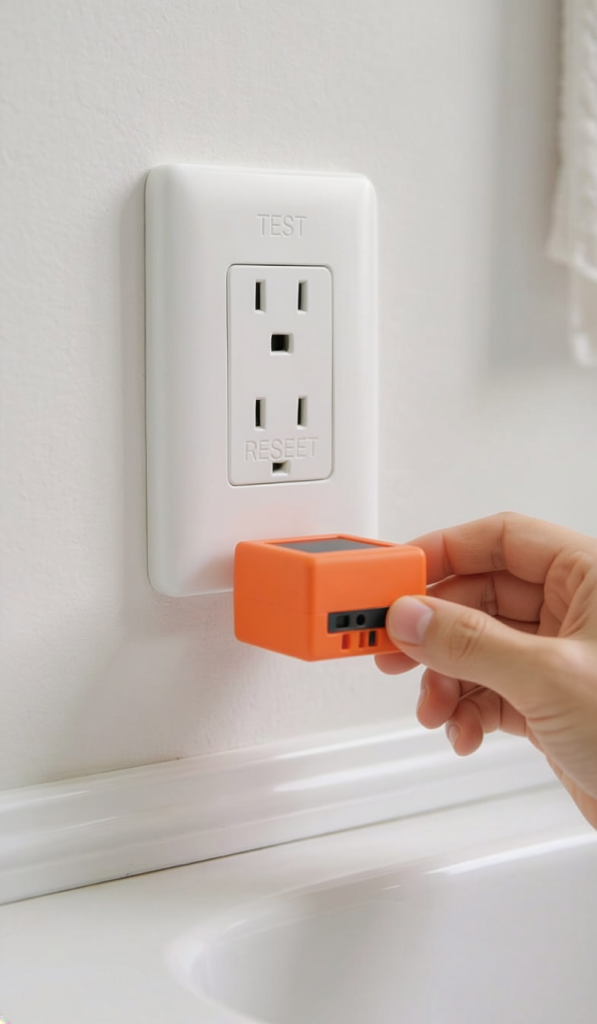
A GFCI outlet is usually easy to spot because it has two small buttons on the front. One is labeled TEST. The other is labeled RESET. Some outlets also have a small indicator light.
The safest basic GFCI outlet test uses only those front buttons and a simple plug-in item, such as a small lamp or nightlight. The outlet and the area around it should be dry before you begin. Your hands should also be dry.
Do not test an outlet that looks damaged or unsafe. A cracked face, burn mark, loose outlet, buzzing sound, or wet surface is enough reason to stop. Testing should never involve forcing a plug, prying anything open, or touching anything behind the outlet face.
The main idea behind how to test a GFCI outlet is simple: the TEST button should shut off power, and the RESET button should bring power back. If that does not happen, treat the result as a warning sign, not as a repair project.
What a GFCI Outlet Is Supposed to Do
GFCI stands for ground fault circuit interrupter. In plain English, it is a safety device that can shut off power quickly when it senses certain electrical leakage conditions.
That matters most in areas where water and electricity may be close together. A GFCI outlet is not there to make electricity harmless. It is there to reduce shock risk when something goes wrong.
GFCI protection may be built into the outlet you see, another GFCI outlet upstream, or sometimes another protective device elsewhere in the home. That means one GFCI can sometimes affect more than one outlet. For this beginner guide, you only need to focus on testing the outlet face you can safely access.
GFCI outlets are commonly found in places such as:
- Bathrooms
- Kitchens and countertop areas
- Garages
- Basements and utility areas
- Laundry areas
- Outdoor outlets and covered exterior locations
Older homes may not have GFCI outlets everywhere current standards would expect them. Some homes also have outlets that are protected by a GFCI device located somewhere else. If you are unsure whether an outlet is properly protected, ask a licensed electrician to check it.
Simple GFCI Test Steps Homeowners Can Use
Before testing, choose a small plug-in device that is easy to see turn on and off. A nightlight or small lamp works well. Avoid using expensive electronics for this check.
Make sure the outlet area is dry and clear. Do not test during a leak, after water has splashed near the outlet, or while standing on a wet surface.
Use these basic steps to test a GFCI outlet:
- Press RESET on the GFCI outlet so it is in its normal working position.
- Plug in a small lamp, nightlight, or simple plug-in device.
- Confirm the device turns on.
- Press the TEST button on the GFCI outlet.
- Confirm the device turns off.
- Press RESET again and confirm the device turns back on.
That is the safe homeowner version of how to test a GFCI outlet. The outlet should cut power when you press TEST, then restore power when you press RESET.
Some outlets make a small click when the buttons are pressed. Some have indicator lights that change. Button feel and light behavior can vary by model, so focus on the basic result: power off after TEST, power on after RESET.
If the plug-in device never turns on, do not assume the GFCI is the only issue. The outlet may not have power, the device may not work, or there may be another issue upstream. Stay out of the wiring and move to the safest next step: call an electrician if the outlet matters or the result is unclear.
| Test result | What it may mean | Safest next step |
|---|---|---|
| Device turns off after TEST and back on after RESET | The GFCI appears to respond normally | Keep testing it regularly |
| Device stays on after TEST | The outlet may not be tripping correctly | Stop using it and call an electrician |
| Outlet will not reset | There may be a fault, no power, damage, or another issue | Do not force it; call an electrician |
| Outlet trips again right away | Something may be wrong with the outlet, connected load, or circuit | Unplug devices and call an electrician |
What If the GFCI Outlet Does Not Reset?
A GFCI outlet that will not reset can be frustrating, but this is where homeowners should avoid guessing. The reset button is not a tool for forcing the outlet back into service. If it will not reset normally, something may need professional attention.
First, unplug anything connected to that outlet. Then try pressing RESET once with dry hands while standing in a dry area. If it still will not reset, stop.
Do not hold the button in. Do not tape it down. Do not keep pressing TEST and RESET over and over. Repeated tripping or failure to reset is information. It means the outlet is not giving you a normal result.
A failed reset does not automatically tell you the exact cause. It could involve the GFCI device, another outlet connected to it, moisture, a connected appliance, loss of power, age, or another electrical problem. A safe guide should not try to diagnose that from the outside.
This is also why testing a GFCI is different from repairing one. Testing checks the response. Repairing requires electrical knowledge, safe tools, and often opening electrical parts, which is not part of this homeowner-safe process.
If the outlet will not reset after a test, this guide on GFCI outlet not resetting explains safe checks homeowners can make before calling an electrician.
Using a Plug-In GFCI Tester Safely
A plug-in outlet tester with a GFCI test button can be a helpful homeowner tool, but it should be used only from the outlet face. It is not a repair tool, and it does not replace an electrician.
For a basic GFCI outlet test, you plug the tester into the outlet and read the indicator lights according to the tester’s instructions. Some testers also have a GFCI button that can trip a working GFCI-protected outlet. After the tester trips the outlet, you press RESET on the GFCI outlet to restore power.
These testers can be useful because they are simple, compact, and easy to keep in a household tool drawer. They are often used as a quick check before plugging in devices in garages, bathrooms, kitchens, or outdoor covered outlets.
Before buying a plug-in tester, look for:
- Clear indicator lights that are easy to read
- Simple printed instructions on the tester or packaging
- A built-in GFCI test button
- A recognized safety listing from a qualified testing organization
- A design that is easy to grip and remove from the outlet
- Good current reviews and specifications for homeowner use
Do not buy a tester because it promises to solve electrical problems. Buy it because it helps you run a simple outside-the-outlet check. If the tester shows an unexpected result, treat that as a reason to stop and call an electrician.
A plug-in tester can support how to test a GFCI outlet, but it should not encourage deeper DIY electrical work. Do not use it as a reason to open the outlet, remove covers, inspect wires, or test exposed parts.
Warning Signs That Mean Stop Testing
Some outlet problems are not “try again” situations. If something looks, smells, sounds, or feels wrong, stop using the outlet until it is checked.
Stop testing and call an electrician if you notice:
- Burning smell, scorch marks, melting, or discoloration
- Buzzing, crackling, sparking, or popping
- A hot outlet face or plug
- Moisture, leaks, dampness, or standing water nearby
- A loose, cracked, broken, or damaged outlet
- A GFCI that trips repeatedly or will not reset
Do not touch wet outlets or cords. Do not plug anything into a damaged outlet. Do not try to dry an outlet from the inside. Do not remove the cover plate to “take a look.” Those steps move beyond safe homeowner testing.
If the outlet is outdoors, also check the area around it. A weather cover that is broken, missing, or not closing properly can allow moisture to reach the outlet area. That is another reason to stop and get professional help.
It is also smart to stop if you feel unsure. Electrical problems can look simple from the outside while still involving hidden issues inside the box, circuit, or connected wiring. A cautious stop is better than pushing through a test you do not feel confident doing.
What Not to Touch or Try
A safe GFCI test happens from the outside of an intact outlet. That line matters.
You can press the TEST button. You can press RESET. You can plug in a small lamp or a plug-in tester if the area is dry and the outlet looks normal. That is enough for a basic homeowner check.
Do not remove the outlet from the wall. Do not pull on the outlet. Do not touch wires. Do not try to identify live wires. Do not use a multimeter on exposed electrical parts. Do not open the electrical panel. Do not replace breakers. Do not bypass GFCI protection.
Also avoid using the GFCI as a switch for daily convenience. The buttons are for testing and resetting, not for routine on-and-off control of appliances.
If a GFCI outlet keeps tripping, there is a reason. It may be reacting to a connected device, moisture, a fault, age, or another electrical issue. The safe move is to unplug devices and get help, not to defeat the protection.
This is the late-stage safety rule for how to test a GFCI outlet: once the result is abnormal, the test is over. The next step is professional evaluation.
Final Thoughts
Knowing how to test a GFCI outlet is a useful homeowner skill because it helps you confirm that an important safety device responds from the outside. The safe pattern is simple: press TEST, confirm power shuts off, press RESET, and confirm power returns.
Keep the process dry, simple, and limited to the outlet face. A small lamp or plug-in GFCI tester can help, but neither one turns this into a repair job.
If the outlet fails the test, will not reset, trips repeatedly, or shows any warning sign, stop using it and call an electrician. That keeps this task where it belongs: a beginner-safe safety check, not a DIY electrical repair.
For a simple maintenance schedule, this guide on how often to test GFCI outlets explains when to make testing part of your regular homeowner routine.