
how to unclog a shower drain with standing water
How to unclog a shower drain with standing water starts with removing enough water to see and safely access the drain, then clearing visible hair before trying a simple mechanical tool. Put on gloves, inspect the drain cover, remove accessible debris, and try a hair-removal tool or small plunger if appropriate. Consider a small manual snake only when no chemical cleaner is present, and the cable advances normally.
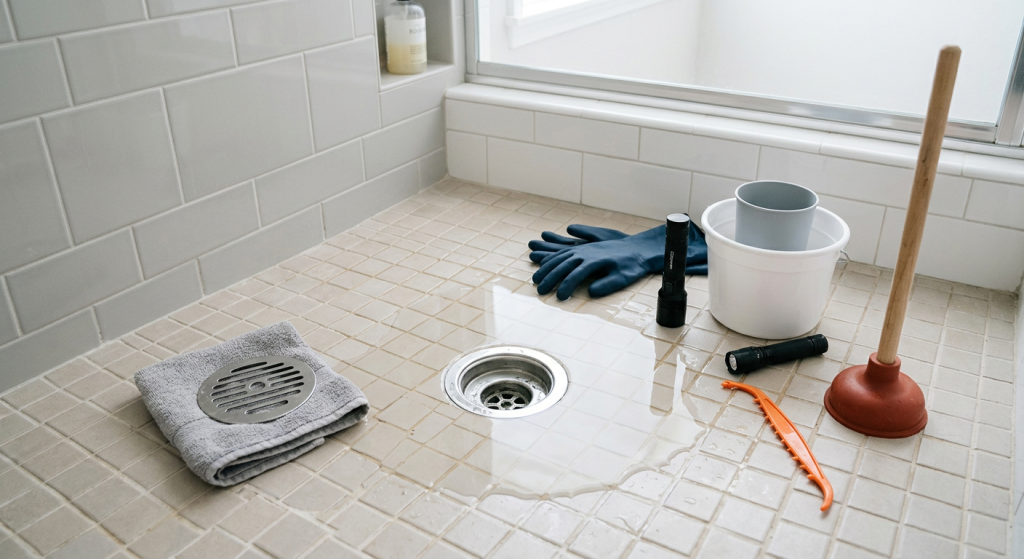
| Situation | What It May Mean | Safe First Step |
|---|---|---|
| Standing water but drain still moves slowly | Partial restriction | Remove excess water and inspect the drain |
| Visible hair near drain | Hair may be blocking the opening | Pull accessible hair upward |
| Water moves after plunging | Restriction may be loosening | Let it drain and test briefly |
| Drain remains fully blocked | Restriction may be deeper | Reassess before using another tool |
| Other drains are slow | Problem may extend beyond the shower | Stop treating it as a local clog |
| Chemical drain cleaner is present | Water may be hazardous | Do not plunge, snake, or touch the water |
Start With Standing-Water Safety
Standing water makes shower-drain work harder to see and increases the chance of splashing contaminated water.
Put on gloves before starting. Remove shampoo bottles, razors, soap, and other loose items from the shower floor so they do not fall into the water or interfere with your work.
Keep towels nearby to contain ordinary splashes.
Do not kneel in or reach into water that appears contaminated. If dark or sewage-like water is backing up through the shower drain, stop DIY work and avoid contact with it.
Chemical drain cleaner creates another important boundary. If you know or suspect that drain cleaner has already been poured into the standing water, do not put your hands into it or begin mechanical drain clearing.
How to Unclog a Shower Drain With Standing Water Safely
Work from the drain opening outward. You do not need to remove every drop of water before starting, but reducing the water level makes the drain easier to inspect and helps limit splashing.
Step 1: Remove Excess Standing Water
Use a cup or small container to scoop water from the shower into a bucket.
Remove enough to expose the drain area and give yourself room to work. The shower floor does not need to be completely dry.
Reducing the water level helps you see the drain cover, identify visible hair, and form a better seal if you later use a plunger.
Avoid using powered wet-cleaning equipment when electrical conditions around the work area are uncertain. A cup, container, and bucket are sufficient for this step.
Step 2: Inspect and Clean the Drain Cover
Use a flashlight to look closely at the drain cover.
Hair and soap residue can accumulate directly on or beneath the cover and restrict flow before the blockage extends much farther into the drain.
Remove loose material you can safely reach.
If the drain cover is designed for normal homeowner removal and its hardware turns easily, removing it may provide better access.
Do not force rusted screws, corroded fasteners, or a stuck drain cover. Damaging the hardware will not clear the clog and may create an additional repair.
Step 3: Remove Visible Hair and Debris
If hair is visible at the opening, pull it upward rather than pushing it deeper.
Wear gloves and remove only material that can be reached safely.
A simple plastic hair-removal tool can be useful for hair located just inside the drain. Insert the tool gently, follow its intended use, and withdraw captured material.
Do not aggressively probe the drain.
Avoid improvised wire hooks, screwdrivers, knives, or other sharp tools. They can damage drain components, become stuck, or push the obstruction farther down the line.
After removing accessible material, give the drain a chance to empty.
If the standing water begins moving noticeably faster, allow it to drain before deciding whether another tool is necessary.
Step 4: Try a Small Sink or Drain Plunger
If visible hair has been removed but the shower still drains poorly, a small plunger may help with a localized soft restriction.
Leave enough water to cover the plunger cup. Position the plunger over the drain and form as good a seal as the shower drain shape allows.
Use controlled strokes rather than violent plunging.
Watch the water. If it begins draining, stop and allow the shower to empty so you can reassess the flow.
Do not continue simply by plunging harder if nothing changes.
Most importantly, do not plunge if chemical drain cleaner is present in the standing water. Plunging can splash chemically contaminated liquid onto your skin, eyes, clothing, or surrounding surfaces.
Step 5: Consider a Small Manual Drain Snake
If accessible hair is gone and plunging is unsuccessful or unsuitable, a small manual hand snake may be appropriate for some shower drains.
Use one only when no chemical drain cleaner is present, and the drain configuration provides an appropriate access path.
Feed the cable with gentle manual pressure.
It should advance without requiring aggressive force. If it repeatedly encounters hard resistance, will not move normally, or becomes stuck, stop.
Do not try to overcome resistance by cranking harder or forcing more cable into the drain.
If you are deciding which simple mechanical tool fits the situation, Drain Snake vs Plunger: Which Should Homeowners Use? explains the practical differences.
Do not escalate to a powered drain machine as a beginner homeowner step.
Step 6: Let the Shower Drain
Once water begins moving, give the shower time to empty.
Do not assume that the first movement means the restriction has been completely removed.
A partial opening can allow standing water to disappear while leaving enough hair and residue behind for the drain to slow again.
After the shower empties, remove any additional accessible debris that has moved toward the drain opening.
Step 7: Test With Warm Water
Run warm water briefly and watch how quickly it drains.
The water should move away without immediately pooling around the drain.
Do not use boiling water as an aggressive clearing method. Warm water is useful here primarily as a test of drainage after the mechanical obstruction has been addressed.
If water quickly begins pooling again, the restriction may not be fully cleared.
What if Chemical Drain Cleaner Is Already in the Water?
Chemical drain cleaner changes what is safe to do next.
If it has already been poured into standing water, do not:
- Put your hands into the water
- Plunge the drain
- Insert a drain snake
- Add another drain cleaner
- Add bleach
- Add vinegar
- Add an ammonia-based cleaner
- Add another household cleaning product
Do not assume that adding another chemical will make the first product work better.
Chemical cleaner may remain concentrated in standing water when the drain does not open. Plunging or snaking can then splash that liquid or move it unpredictably.
Avoid contact and follow the product’s safety instructions. If professional drain service becomes necessary, tell the plumber that a chemical drain product was used and identify the product if known.
Chemical drain cleaner should not be the automatic first choice for a shower clog, especially when accessible hair can be removed mechanically.
How to Tell Whether the Clog Is Actually Cleared
A shower drain is not necessarily clear just because standing water finally disappears.
Observe the drain during a brief warm-water test.
If water flows normally without pooling, the restriction may have been successfully removed.
If the shower drains better but remains noticeably slow, some material may still be present.
A drain that works normally for a short time and then quickly slows again may also have remaining buildup farther into the line.
That becomes a recurring clog problem rather than simply a standing-water problem. Why Does My Shower Drain Keep Clogging covers why hair and residue can repeatedly accumulate after temporary clearing.
Avoid repeating increasingly aggressive clearing attempts just because the first attempt produced only partial improvement.
Reduce Hair Buildup After the Drain Is Open
Once the shower is draining normally, clean the drain cover and remove remaining visible hair.
A properly fitting hair catcher can help reduce the amount of hair entering the drain. Clean it regularly so the catcher itself does not become a restriction.
Routine removal of visible hair is easier than waiting until enough material accumulates to leave standing water in the shower.
Keep prevention simple. If the same drain repeatedly blocks despite accessible cleaning and hair control, the restriction may be farther down the line.
Know When the Problem Is Deeper Than the Shower Drain
Some symptoms suggest you are no longer dealing with a simple local shower clog.
Stop escalating DIY drain clearing if:
- Multiple household drains are slow
- Another fixture backs up when water is used
- Dark or dirty water returns through the shower drain
- A sewage-like odor accompanies backup
- A manual snake repeatedly encounters hard resistance
- A snake becomes stuck
- Water leaks below the bathroom
- Clearing attempts provide only very brief improvement
Several slow fixtures can indicate a restriction in shared drainage piping rather than a clog limited to the shower.
Water backing up into another fixture is another reason to stop treating the shower drain as an isolated problem.
If sewage-like water appears, avoid contact and keep other people and pets away from the affected area.
When to Call a Plumber
Qualified plumbing help is appropriate when the shower remains blocked after safe, accessible hair removal and reasonable beginner-level mechanical clearing.
Stop DIY work if a manual snake repeatedly hits hard resistance or becomes stuck, water is leaking below the bathroom, or the problem affects multiple fixtures.
Professional help is also appropriate when sewage-like water backs up through the shower or another fixture. If chemical drain cleaner is sitting in the standing water, avoid further mechanical clearing and tell the plumber which product was used, if known.
Final Thoughts
How to unclog a shower drain with standing water safely comes down to working from the easiest accessible restriction toward the drain without escalating force. Remove enough standing water to see the opening, clear visible hair, and use a simple hair tool, small plunger, or appropriate manual snake only when conditions are safe.
Stop if chemical cleaner is present, a snake meets persistent hard resistance, sewage-like water appears, or other fixtures are affected. Once the water moves again, test the drain briefly rather than assuming the entire restriction has been removed.