Humidifier vs Dehumidifier: which does your home need?
Humidifier vs dehumidifier is a common homeowner question because both products deal with indoor moisture, but they solve opposite problems. A humidifier adds moisture to dry indoor air. A dehumidifier removes excess moisture from damp indoor air.
The easiest way to choose is to look at what your home feels like. Dry air often shows up as static electricity, dry skin, scratchy throats, and shrinking wood trim. Damp air often shows up as musty smells, basement moisture, condensation, and a sticky feeling indoors.
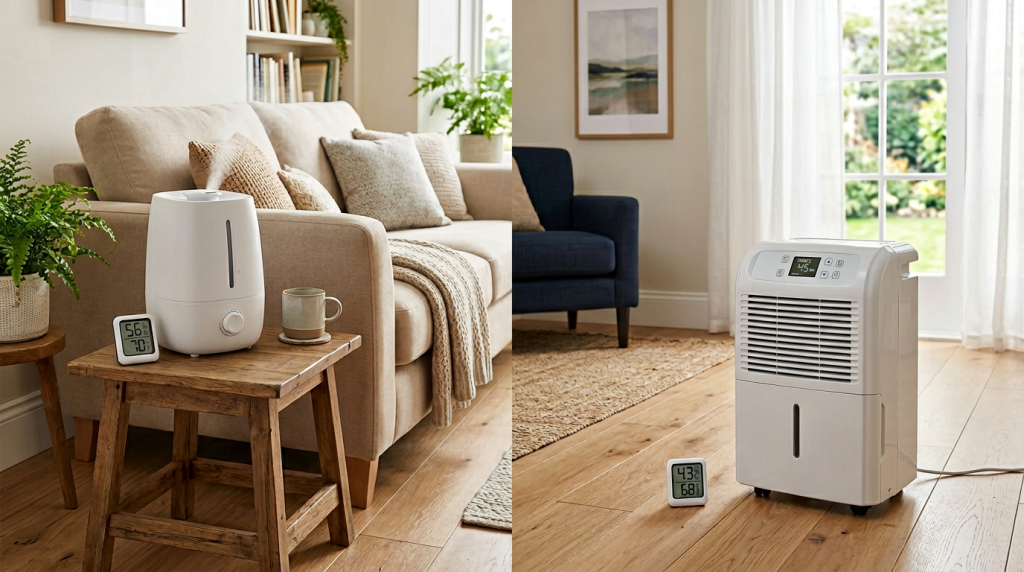
Humidifier vs Dehumidifier: Quick Comparison
| Category | Humidifier | Dehumidifier |
|---|---|---|
| Main purpose | Adds moisture to dry air | Removes excess moisture from damp air |
| Best season | Usually winter | Usually spring, summer, and humid periods |
| Best room types | Bedrooms, nurseries, living rooms, dry heated spaces | Basements, laundry rooms, bathrooms, storage areas, damp rooms |
| Comfort problems solved | Dry skin, static electricity, dry nasal passages, scratchy throat, dry-feeling air | Musty smells, damp air, condensation, sticky rooms, moisture-prone spaces |
| Maintenance needs | Regular cleaning, water changes, filter or wick replacement on some models | Filter cleaning, emptying tank, cleaning bucket, drain hose care |
| Cost | Small portable units are usually affordable; whole-home systems cost more | Portable units vary by size; basement units usually cost more |
| Safety concerns | Over-humidifying, mineral dust, dirty tank, mold growth if not cleaned | Electrical safety, full tank, dirty filter, drainage problems |
| Product fit | Portable, evaporative, ultrasonic, or whole-home humidifier | Portable or basement dehumidifier, with optional drain hose or pump |
What a Humidifier Does
A humidifier adds moisture to indoor air. This is helpful when the air inside your home becomes too dry, especially during heating season.
Cold outdoor air holds less moisture. When that air enters the home and gets heated, the indoor air can feel even drier. This is why many homeowners notice dry skin, static shocks, and scratchy throats in winter.
A humidifier may help when you notice:
- Dry skin or dry lips.
- Static electricity.
- A scratchy throat in the morning.
- Dry nasal passages.
- Wood furniture or trim shrinking slightly.
- Houseplants drying out quickly.
- Air that feels harsh when the heat is running.
A humidifier is not meant to make a room wet or steamy. The goal is balanced indoor humidity, not damp indoor air.
What a Dehumidifier Does
A dehumidifier removes excess moisture from indoor air. This is helpful when a room feels damp, smells musty, or has condensation on windows or cold surfaces.
Basements often need dehumidifiers because they are below grade and surrounded by soil. Even when a basement feels cool, the air can still hold too much moisture.
A dehumidifier may help when you notice:
- Musty odors.
- Damp basement air.
- Condensation on windows.
- Sticky indoor air.
- Damp cardboard boxes.
- Mildew on surfaces.
- A clammy feeling even when the temperature is comfortable.
A dehumidifier does not replace air conditioning. It can make damp air feel more comfortable, but it is not designed to cool the home.
Humidifier vs Dehumidifier: The Simple Difference
The simplest way to compare humidifier vs dehumidifier is this: one adds moisture, and the other removes it.
A humidifier is for air that is too dry. A dehumidifier is for air that is too damp.
Use this basic rule:
- If the air feels dry, consider a humidifier.
- If the air feels damp, consider a dehumidifier.
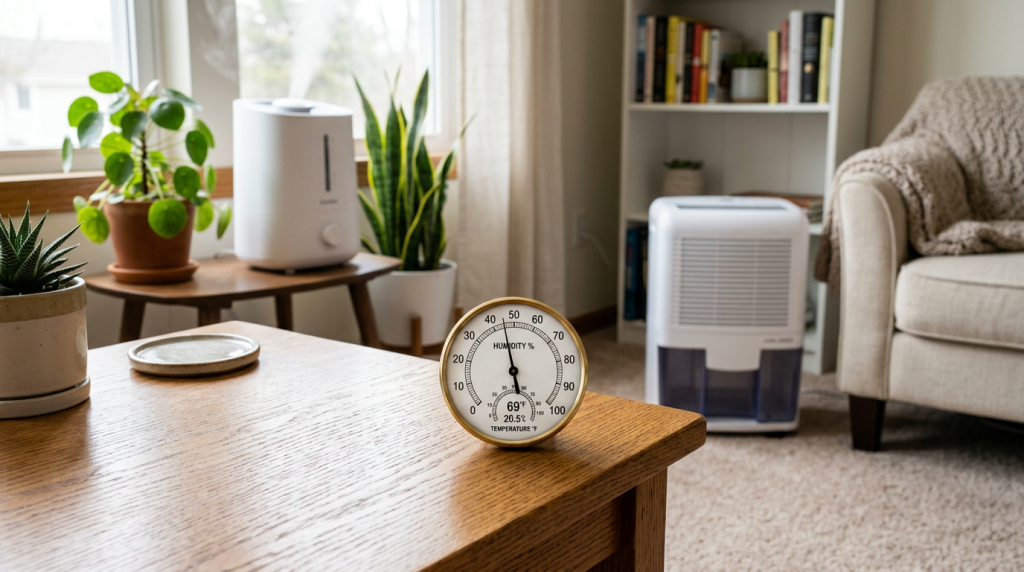
- If you are not sure, use a humidity gauge first.
- If one area has a problem, choose a room-based solution.
- If the whole house has a problem, look at ventilation, HVAC, air leaks, or moisture sources.
A small humidity gauge can help you make the decision with actual numbers instead of guessing based only on how the room feels.
Best Season for Each Product
Humidifiers are most common in winter. Dehumidifiers are most common in warmer, wetter seasons.
That does not mean they can only be used during those times. The right choice depends on the actual humidity inside your home.
In winter, heating systems can make indoor air feel dry. A portable humidifier in a bedroom or living area can help improve comfort.
In spring and summer, outdoor humidity can rise. Basements, laundry rooms, and poorly ventilated areas may start to feel damp. A portable dehumidifier or basement dehumidifier can help control that extra moisture.
Best Room Types
The right product often depends on where the problem is happening.
Humidifiers are usually used in rooms where people spend a lot of time. Dehumidifiers are often used in rooms where moisture collects.
Humidifiers are commonly used in:
- Bedrooms.
- Nurseries.
- Living rooms.
- Home offices.
- Rooms with dry forced-air heat.
- Rooms where static electricity is noticeable.
Dehumidifiers are commonly used in:
- Basements.
- Laundry rooms.
- Bathrooms.
- Storage rooms.
- Crawlspace-adjacent rooms.
- Damp bedrooms.
- Finished lower-level spaces.
For one dry bedroom, a portable humidifier may be enough. For one damp basement, a basement dehumidifier is usually a better fit.
Comfort Problems Each One Solves
Humidity affects comfort more than many homeowners realize.
Air that is too dry can irritate your skin, throat, and nose. It can also make static electricity worse. Air that is too damp can feel heavy, sticky, and stale. It can also make musty smells more noticeable.
A humidifier is usually the better match for:
- Winter dryness.
- Dry skin.
- Static shocks.
- Dry throat.
- Dry nasal passages.
- Air that feels harsh when the heat is running.
A dehumidifier is usually the better match for:
- Basement dampness.
- Musty smells.
- Window condensation.
- Sticky indoor air.
- Damp storage areas.
- Rooms that feel clammy.
- Mildew-prone spaces.
Allergies can be affected by indoor humidity too. Air that is too dry can irritate breathing passages, while air that is too damp can support mold and dust mite problems. The goal is not very dry air or very humid air. The goal is a comfortable middle range.
Winter Dryness
Winter dryness is one of the most common reasons homeowners buy a humidifier.
When the heat runs often, indoor air can feel dry. You may notice dry hands, cracked lips, static electricity, or a scratchy throat when you wake up.
A portable humidifier can help in a bedroom or small living area. Evaporative humidifiers use a wick or filter to help moisture enter the air. Ultrasonic humidifiers create a fine mist. Whole-home humidifiers connect to the HVAC system and are designed to add moisture more broadly across the house.
Each type needs maintenance. A dirty humidifier can create problems instead of solving them.
Basement Dampness
Basement dampness is one of the most common reasons homeowners buy a dehumidifier.
A basement can feel cool but still be too humid. That moisture can lead to musty smells, damp boxes, and a clammy feeling in finished basement rooms.
A portable dehumidifier can work for smaller spaces. A basement dehumidifier may be better for larger areas or steady moisture problems.
For regular use, a drain hose can make the unit easier to live with because you do not have to empty the tank as often. The hose must drain to a safe, suitable location. If the water needs to move upward, that may require a condensate pump.
Condensation on Windows
Condensation is a sign that moisture in the air is meeting a cold surface.
A little window condensation during cold weather can happen in some homes. Heavy or frequent condensation is worth paying attention to. It may mean the indoor humidity is too high, the windows are very cold, ventilation is poor, or air is leaking around the window.
A dehumidifier may help if the air is too damp. Better ventilation may also be needed, especially in bathrooms, kitchens, and laundry areas.
Do not ignore repeated condensation. Over time, moisture around windows can damage paint, trim, drywall, and nearby surfaces.
Musty Smells
A musty smell usually points to excess moisture. It does not always mean there is a major problem, but it should not be ignored.
Basements, storage rooms, and laundry areas are common places for musty odors. A dehumidifier can help if the smell is caused by damp air. Cleaning, better airflow, and removing wet materials may also be needed.
If the smell keeps coming back, look for a moisture source. A dehumidifier can manage air moisture, but it cannot repair a leak, fix poor grading, or stop water from entering the home.
Maintenance Needs
Both products need maintenance. This is where many homeowners get into trouble.
A humidifier holds clean water by design, so the tank, base, wick, filter, or mist outlet must be cleaned regularly. Standing water and mineral buildup can make the unit dirty.
A dehumidifier collects water from the air, so the bucket, filter, and drain parts need attention. A dirty filter can reduce performance. A clogged hose can cause drainage problems.
Basic maintenance items may include:
- Replacement filters.
- Replacement wicks for some evaporative humidifiers.
- A soft brush.
- Mild cleaning supplies.
- Clean towels.
- A humidity gauge.
- A drain hose for dehumidifiers.
- Manufacturer-approved cleaning products when required.
Always follow the product manual. Do not work on live electrical components, bypass safety switches, or modify equipment in unsafe ways.
For a broader list of safe homeowner supplies, see our guide to the best HVAC maintenance tools for homeowners.
Cost Differences
Small portable humidifiers are often inexpensive. Larger room models and whole-home humidifiers cost more.
Portable dehumidifiers can also vary widely in price. Small units are cheaper, while basement dehumidifiers and higher-capacity models usually cost more.
Whole-home systems are a different category. A whole-home humidifier or whole-home dehumidifier may require professional installation and should be matched to the home’s HVAC system.
The cheapest option is not always the best option. A small unit may struggle in a large room. A large unit may be unnecessary in a small bedroom. Match the product to the problem area.
Safety Concerns
The main safety issue with a humidifier is adding too much moisture or failing to clean the unit. Too much humidity can cause condensation and support mold growth. A dirty tank or dirty filter can also create indoor air quality concerns.
Ultrasonic humidifiers may leave white mineral dust if used with hard tap water. Using distilled or properly treated water may help, depending on the unit instructions.
The main safety issues with a dehumidifier are electrical safety, drainage, and placement. The unit should sit level, plug into a proper outlet, and have clear airflow around it. The bucket or drain hose should be checked so water does not overflow or leak.
Do not alter whole-home humidifier plumbing yourself unless you are qualified to do so. Do not open sealed HVAC components, handle refrigerant, bypass safety switches, or work on live electrical parts.
Product Choices That Make Sense
The best product to compare first depends on the problem you are trying to solve. Start with the symptom, the room, and the season.
Compare these product types first:
- For one dry bedroom, compare portable humidifiers.
- For larger dry rooms, compare evaporative humidifiers.
- For quiet mist output, compare ultrasonic humidifiers.
- For dry air throughout the home, ask about whole-home humidifiers.
- For one damp room, compare portable dehumidifiers.
- For a damp basement, compare basement dehumidifiers.
- For frequent dehumidifier use, compare models with drain hose options.
- For guessing less, buy a humidity gauge before choosing a larger unit.
- For ongoing maintenance, compare replacement filters and cleaning supplies.
For most homeowners, the best first purchase is a simple humidity gauge, because it helps confirm whether the room actually needs added moisture, moisture removal, or a closer look at ventilation and HVAC performance.
Avoid “best overall” thinking without context. A good bedroom humidifier may be the wrong choice for a dry whole house. A small portable dehumidifier may not be enough for a large damp basement.
If you are also wondering how moisture control compares with cooling, see our guide to dehumidifier vs air conditioner before buying another appliance.
When the Problem May Be Bigger Than the Product
Sometimes a humidifier or dehumidifier is only part of the answer.
Dry air may be made worse by air leaks, poor insulation, or an HVAC system that brings in too much outdoor air. Damp air may come from water intrusion, poor drainage, plumbing leaks, poor bathroom ventilation, or an oversized air conditioner that does not run long enough to remove moisture.
Look for bigger home issues when you notice:
- Water stains on walls or ceilings.
- Musty smells that return quickly.
- Wet basement walls or floors.
- Condensation in several rooms.
- Mold-like growth on surfaces.
- High humidity throughout the home.
- Dryness throughout the home even with normal humidifier use.
- Rooms that are much more humid or dry than others.
- An AC system that cools quickly but leaves the house sticky.
- Drafts around windows, doors, or attic access points.
A dehumidifier can help manage damp air, but it cannot fix foundation drainage. A humidifier can improve dry air, but it cannot seal air leaks. If the same problem keeps returning, the home may need repair, ventilation changes, or HVAC evaluation.
When to Call a Professional
Some humidity problems are safe for a homeowner to manage with basic products and maintenance. Others need a professional.
Call a qualified professional if the problem involves water intrusion, repeated leaks, electrical concerns, HVAC performance, or whole-home equipment.
Professional help is a good idea when:
- The basement gets wet after rain.
- The AC runs but the home stays humid.
- You see water near HVAC equipment.
- The whole house has ongoing humidity problems.
- A whole-home humidifier is leaking or not working.
- You suspect poor drainage around the foundation.
- You need electrical work or plumbing changes.
- You are considering a whole-home humidifier or dehumidifier.
A professional can check the source of the problem instead of only treating the symptom.
Simple Decision Guide
You do not need to overcomplicate the choice. Start with what you feel and what you see.
Use this simple guide:
- Dry skin, static, scratchy throat: humidifier.
- Musty smell, damp basement, sticky air: dehumidifier.
- Winter dryness in one room: portable humidifier.
- Dry air across the whole home: whole-home humidifier evaluation.
- Damp basement: basement dehumidifier.
- Window condensation: check humidity, ventilation, and cold surfaces.
- High humidity while AC is running: possible HVAC issue.
- Unsure which problem you have: use a humidity gauge.
This keeps the decision practical. Add moisture when the air is too dry. Remove moisture when the air is too damp.
Final Thoughts
A humidifier adds moisture to dry indoor air. A dehumidifier removes excess moisture from damp indoor air. That is the main difference.
For winter dryness, dry skin, static electricity, and dry-feeling heated air, a humidifier may be the better fit. For basement dampness, musty smells, condensation, and sticky indoor air, a dehumidifier is usually the better choice.
The best first step is to identify the problem room and check the humidity level. Then choose the product that matches the issue. If the problem affects the whole house, keeps coming back, or points to water intrusion, ventilation trouble, drainage problems, HVAC sizing, or air leaks, the right next step may be a home repair or professional inspection instead of another appliance.