oven not heating: causes and what to check
Oven not heating problems can sometimes come from a simple mode, temperature, power, or control setting, so check those first before assuming an internal heating component has failed. Electric and gas ovens can fail in different ways, but both require conservative troubleshooting. Start with non-invasive checks and stop before internal electrical, ignition, gas, or control work.
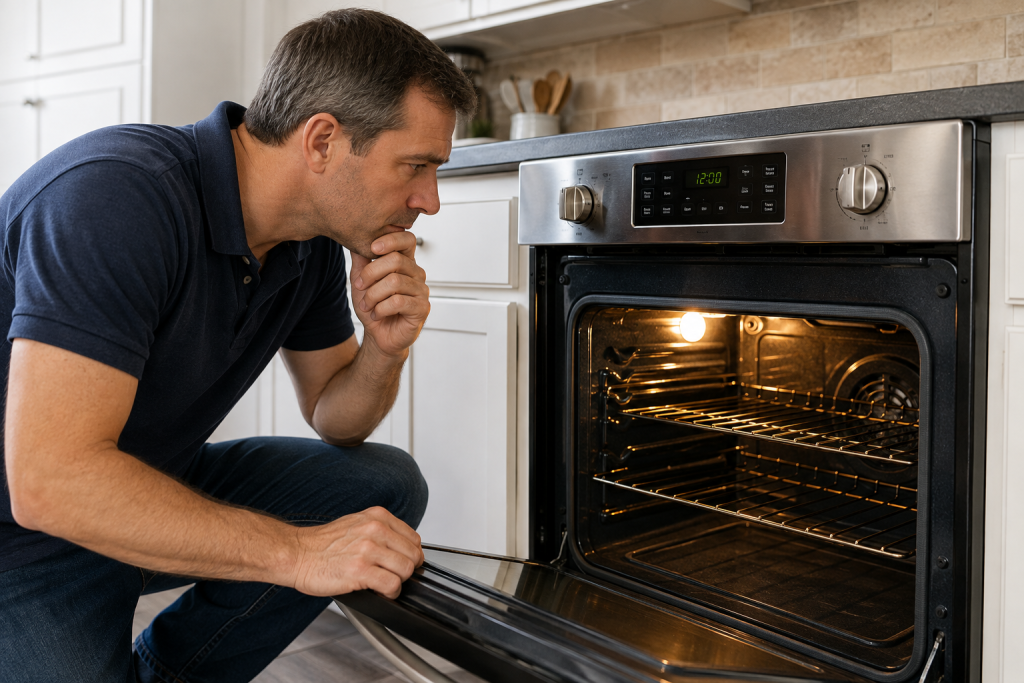
Oven Not Heating? Start With These Checks
| What You Notice | What It May Mean | Safe First Step |
|---|---|---|
| Oven completely dead | Power supply or control problem | Check controls and breaker |
| Display works but no heat | Heating, ignition, supply, or control issue | Confirm mode and temperature |
| Bake does not heat | Bake-side component problem | Compare bake and broil behavior |
| Broil works but bake does not | Bake heating or ignition system may be involved | Arrange service if settings are correct |
| Bake works but broil does not | Broil-side problem | Stop before internal testing |
| Oven heats weakly | Sensor, element, supply, door, or control issue | Check settings and door closure |
| Preheating takes unusually long | Heating component or performance issue | Compare with normal behavior |
| Breaker repeatedly trips | Electrical fault may be present | Stop resetting and arrange service |
| Natural-gas odor | Possible gas leak | Leave the area and contact qualified emergency help |
If you notice sparking, arcing, smoke, a burning electrical odor, melted wiring, an overheated receptacle, or repeated breaker trips, stop using the oven and arrange qualified evaluation.
If you smell natural gas or a sulfur-like rotten-egg odor, stop using the appliance. Do not operate electrical switches or create ignition sources in the affected area. Leave and contact the gas utility or emergency services from a safe location.
Check the Oven Mode and Temperature Setting
Start with the controls.
Depending on the model, an oven may appear not to heat because of:
- The wrong cooking mode
- A temperature set lower than intended
- Delay start
- A programmed cooking timer
- Control lock
- Sabbath mode, if equipped
- Demo mode on some models
Confirm that Bake or another intended cooking mode is selected, the desired temperature is entered, and the cycle has actually started.
Control behavior varies considerably by model, so check the owner’s manual if the display or settings are unfamiliar.
Make Sure the Oven Has Power
An electric oven can sometimes have enough power for a display, light, or controls while still having a supply problem that affects heating.
Safe checks include:
- Confirming that the display or controls respond
- Checking whether other normal functions work
- Looking at the household breaker from a safe location
- Resetting one clearly tripped breaker once when there are no signs of overheating, damage, water, or burning odor
If the breaker trips again, stop resetting it and stop using the oven. Repeated tripping may indicate an appliance or household electrical problem that needs professional diagnosis.
Do not open electrical panels beyond normal breaker operation, open junction boxes, or use voltage-testing equipment.
What If the Oven Is Completely Dead?
A completely unresponsive oven may have a household power problem, tripped breaker, damaged power connection, failed control, or another internal electrical fault.
Check the normal controls and household breaker first.
If an accessible cord, plug, receptacle, or connection area appears burned, melted, discolored, or otherwise damaged, do not continue troubleshooting. An electrician or qualified appliance technician should evaluate the problem depending on where the damage originates.
Check Whether Bake and Broil Behave Differently
Comparing bake and broil can help narrow the problem without opening the oven.
In many electric ovens, bake and broil use different heating elements or heating circuits. One function working while the other fails can therefore point toward the nonworking side of the heating system.
Gas ovens may also use different burners or ignition arrangements for bake and broil depending on the model.
The pattern is useful for diagnosis, but it does not prove which individual part has failed. Avoid internal testing and use the result to describe the problem accurately when arranging service.
Inspect an Electric Oven Heating Element After It Cools
If your electric oven has a visible heating element, you can inspect it after the oven is turned off and completely cool.
Look without touching for:
- Blistering
- Cracks
- Burned areas
- Visible breaks
- Obvious separation in the element
Do not remove the element or touch damaged areas. Do not test it electrically.
Some ovens conceal heating elements beneath panels. Do not remove those panels for beginner diagnosis.
A heating element can also fail without visible damage, so a normal appearance does not prove it is working correctly.
What If the Electric Oven Broils but Does Not Bake?
If broil operates but bake does not, the bake side of the oven deserves attention.
Possible causes may include:
- A failed bake element
- Wiring associated with the bake circuit
- A control problem
- A sensor or other internal component issue
Do not perform resistance measurements, energized tests, wiring checks, or element replacement procedures.
If the controls are set correctly and the pattern repeats, appliance service is appropriate.
What If Bake Works but Broil Does Not?
The opposite pattern can point toward the broil side of the system.
Possible causes may include the broil element, its circuit, or a control-related problem depending on the oven.
Again, use the symptom to narrow the service diagnosis rather than opening the appliance or testing components yourself.
What If a Gas Oven Is Not Heating?
A gas oven can fail to heat because of an ignition-system problem, burner issue, gas-supply problem, sensor or safety component, or electronic control fault.
These are not appropriate areas for beginner internal troubleshooting.
Do not:
- Loosen gas fittings
- Adjust burners
- Test gas valves
- Probe ignition circuits
- Bypass safety components
- Attempt gas-line repair
If there is a gas odor, leave the area and contact the gas utility or emergency services from a safe location.
If there is no gas odor but the oven consistently fails to ignite or heat, arrange qualified appliance service.
What If the Gas Oven Clicks or Tries to Ignite but Does Not Heat?
Repeated ignition attempts without normal burner ignition should not be treated as something to keep testing.
Possible causes may involve:
- An ignition component
- The burner
- Gas supply
- A control or safety component
If the oven repeatedly attempts ignition without lighting normally, or you notice delayed ignition, popping, flame rollout, or abnormal flame behavior, stop using it and arrange qualified service.
Do not attempt to adjust the burner or ignition system yourself.
Could the Temperature Sensor Be the Problem?
Many modern ovens use a temperature sensor to help the control regulate heat.
A sensor or related control problem may contribute when:
- The oven heats but the temperature seems significantly wrong
- Preheating behaves abnormally
- Heating cycles seem unpredictable
These symptoms do not automatically mean the sensor has failed. Heating components, controls, door sealing, and power problems can create similar results.
Do not perform sensor resistance testing or access its wiring.
Could the Door Be Affecting Heating?
A door that does not close normally can contribute to poor heating performance.
With the oven cool, check for:
- Cookware or racks interfering with closure
- An obviously damaged gasket
- A visibly bent or misaligned door
- A hinge that appears damaged
- Debris preventing normal closure
Do not disassemble the door or replace hinges as part of this diagnosis.
A small gasket imperfection does not usually explain a completely cold oven by itself, but significant door problems can contribute to poor temperature performance.
Routine home appliance maintenance, including keeping oven spills and accessible door-seal areas clean, can help prevent simple maintenance problems from being mistaken for appliance failure.
What If the Oven Heats but Does Not Get Hot Enough?
Partial heating can have several possible causes.
These may include:
- Incorrect settings
- A manufacturer-supported calibration issue
- Door-seal problems
- A temperature sensor issue
- A weak or failed heating component
- A control problem
- An electrical supply issue
Start by confirming the selected mode and temperature and checking that the door closes properly.
If your oven offers a user calibration adjustment, follow only the manufacturer’s instructions. Do not use a universal temperature correction or assume calibration is the cause.
Persistent underheating usually deserves professional diagnosis.
What If the Oven Takes Too Long to Preheat?
There is no single normal preheat time for every oven.
Preheating varies with oven size, design, selected temperature, cooking mode, and model.
If your oven suddenly takes substantially longer than it normally did, possible causes may include:
- An incorrect setting
- One heating component not operating
- Poor door closure
- A power-supply problem
- A sensor or control fault
Rule out settings and door issues first. If the change persists, professional diagnosis may help identify whether one part of the heating system has stopped contributing.
Could the Circuit Breaker Be the Problem?
Electric ovens often use a dedicated electrical circuit.
If the breaker is clearly tripped and there are no signs of burning, water, damaged wiring, or overheating, one normal reset may be reasonable.
If it trips again:
- Stop resetting it.
- Stop using the oven.
- Arrange qualified electrical or appliance evaluation.
Repeated breaker trips are not a normal operating condition.
Do not remove panel covers, inspect internal breaker wiring, or perform voltage measurements.
What If the Oven Smells Burned or Electrical?
A burning electrical smell is a stop-use condition.
Keep the oven off if you notice:
- Smoke
- Sparking or arcing
- Scorching
- Melted wiring
- A damaged cord
- An overheated plug, receptacle, or connection
- A persistent electrical burning odor
Do not keep operating the oven to see whether the smell returns.
An appliance technician may be appropriate when the problem appears internal to the oven. An electrician may be needed when the household circuit, receptacle, junction connection, or supply wiring appears involved.
When an Oven Not Heating Needs Professional Service
Arrange appliance service when accessible checks are normal, but the oven still does not heat properly.
Professional diagnosis is appropriate when:
- Settings and basic power checks are correct but no heat is produced.
- Bake or broil consistently fails.
- A visible heating element appears damaged.
- Gas ignition behaves abnormally.
- The oven repeatedly fails to reach temperature.
- An internal sensor, heating, ignition, control, or wiring problem is suspected.
- Diagnosis would require service-panel removal or disassembly.
An electrician may be more appropriate when breakers repeatedly trip or household electrical connections appear damaged or overheated.
Gas-system problems require a qualified gas or appliance professional. Gas odor requires the immediate safety response described earlier rather than routine appliance troubleshooting.
If the oven is older and the heating problem is part of a growing repair history, consider how long ovens typically last and the appliance’s overall condition before committing to a major repair.
Common Oven Troubleshooting Mistakes
Avoid these common mistakes:
- Overlooking the selected cooking mode
- Assuming a working display proves the heating supply is normal
- Repeatedly resetting a tripping breaker
- Continuing to use an oven with a burning electrical smell
- Touching a hot or damaged heating element
- Repeatedly attempting to ignite a malfunctioning gas oven
- Removing service panels too early
- Performing live voltage tests
- Replacing parts before identifying the failed system
- Treating gas odor as an ordinary appliance problem
Oven Not Heating FAQ
Why is my oven not heating?
An oven not heating may have a simple setting or power problem, or an issue involving a heating element, gas ignition system, temperature sensor, control, wiring, or power supply. Start with the cooking mode, temperature setting, basic power, and bake-versus-broil behavior before arranging service.
Why does my oven turn on but not get hot?
A working display does not necessarily prove that the oven’s heating system is functioning. The problem may involve an electric heating component, gas ignition system, electrical supply, sensor, or control depending on the model.
Why does broil work but bake does not?
Bake and broil may rely on different heating components or circuits. If broil works but bake consistently does not, the bake-side heating system may have a problem. Avoid internal testing and arrange professional diagnosis.
Can a tripped breaker cause an oven not to heat?
Yes. A tripped breaker can interrupt oven operation. One normal reset may be appropriate when there are no signs of electrical damage or overheating. If it trips again, stop resetting it and arrange a qualified evaluation.
When should I call a professional for an oven that will not heat?
Call for service when basic setting and power checks are normal but heating remains absent or unreliable, when bake or broil consistently fails, or when an internal heating, ignition, sensor, control, or wiring problem is suspected. Electrical damage, repeated breaker trips, abnormal gas ignition, or gas odor require prompt qualified help.
Final Thoughts
For an oven not heating, work through the safest checks first: confirm the cooking mode and temperature, check basic power, compare bake and broil behavior, inspect only visible cooled components, check door closure, and note whether the oven heats weakly or remains completely cold.
Stop before internal heating, ignition, gas, control, or wiring diagnosis. Repeated breaker trips, electrical burning symptoms, abnormal gas ignition, or natural-gas odor are reasons to stop using the oven and move directly to qualified professional help.