when to dethatch a lawn
If you are trying to decide when to dethatch lawn areas around your home, the answer depends on two things: whether the lawn actually has too much thatch and whether the grass is growing strongly enough to recover afterward. Dethatching should not be an automatic spring chore. A healthy lawn with a normal thatch layer usually benefits more from being left alone.
If thatch has become thick and spongy, dethatching can help restore better contact between the grass, soil, water, and nutrients. The best timing depends on grass type, climate, current lawn stress, and what other treatments you are planning.
| Lawn condition | Dethatch now? | Why |
|---|---|---|
| Thin normal thatch layer | No | Some thatch is normal and does not need removal |
| Thick, spongy thatch | Possibly | Excess thatch may interfere with normal lawn performance |
| Compacted soil | Usually no | Aeration addresses compaction more directly |
| Newly seeded lawn | No | Young grass needs time to establish |
| Drought-stressed lawn | No | Dethatching adds stress when recovery is already difficult |
| Actively growing lawn | Possibly | Active growth improves the lawn’s ability to recover |
| Dormant lawn | No | Dormant grass cannot repair dethatching damage quickly |
What Is Thatch?
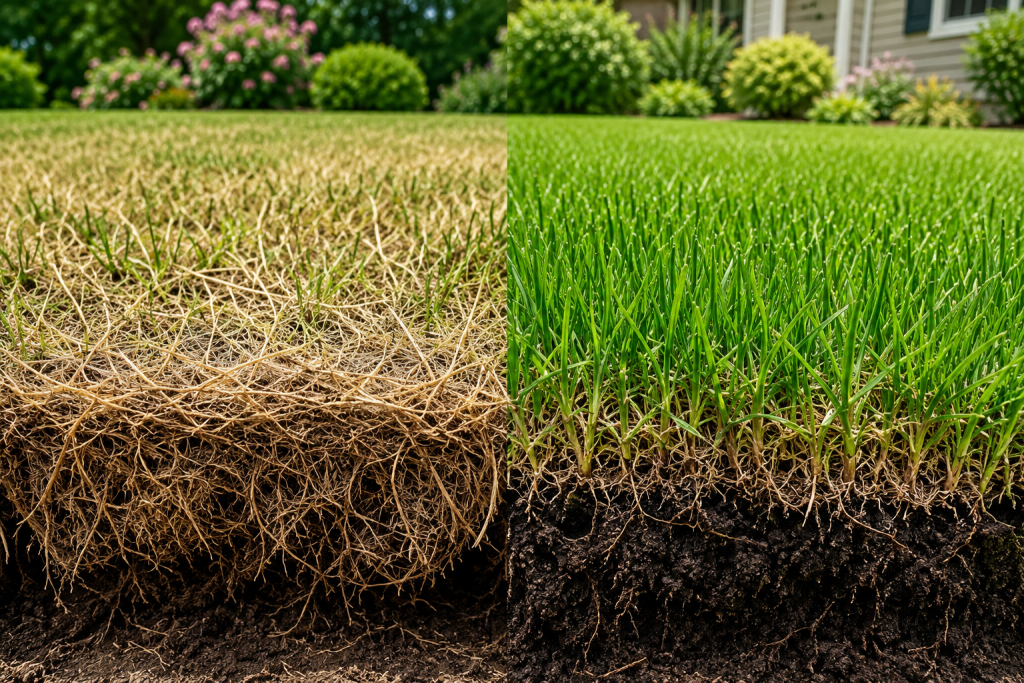
Thatch is the layer of living and dead stems, roots, and other organic material that builds up between green grass and the soil surface.
A modest amount of thatch is normal. It does not mean the lawn is unhealthy, and it does not need to be removed simply because you can see or feel it.
The problem starts when that layer becomes excessive. Thick thatch can make the lawn feel unusually springy or spongy underfoot and may interfere with water reaching the soil efficiently. Roots can also become concentrated higher in the turf instead of growing into the soil below.
That is why dethatching should be based on lawn condition rather than the season alone.
How to Tell If Your Lawn Needs Dethatching
Do not judge the lawn only by the amount of brown material visible from above. Dead grass blades on the surface are not necessarily the same as a problematic thatch layer.
A better approach is to inspect a small section where the grass meets the soil. Look at the layer between the green vegetation and the actual soil surface.
Possible signs of excessive thatch include:
- A noticeably thick, dense layer above the soil
- A lawn that feels unusually soft or spongy when walked on
- Water that has difficulty moving through the turf layer
- Grass that appears poorly rooted into the soil
- Persistent lawn problems despite otherwise reasonable mowing and watering
If the layer is relatively thin and the lawn is growing well, dethatching may accomplish little besides stressing healthy grass.
Other problems can also look like thatch trouble. Compacted soil, poor drainage, improper watering, mowing stress, disease, or weak turf can produce similar symptoms. Identify the problem before choosing the treatment.
When to Dethatch Cool-Season Grass
Cool-season grasses grow most actively during cooler parts of the year. For many of these lawns, early fall provides favorable conditions for dethatching because the grass is actively growing while extreme summer heat is easing.
That recovery window matters. Dethatching temporarily disrupts the turf, so the lawn needs enough active growing time afterward to fill back in.
Spring dethatching can sometimes be appropriate, especially when excessive thatch is clearly affecting an otherwise healthy lawn. However, spring should not automatically be treated as dethatching season.
Spring timing can become complicated because homeowners may also be considering:
- Crabgrass prevention
- Fertilizing
- Overseeding
- Weed control
- Aeration
- Routine mowing changes
Stacking several disruptive treatments close together can slow recovery. If you plan to seed thin areas, for example, you also need to consider how dethatching fits with the seeding schedule and any herbicides being used.
The HRA guide on how to overseed a lawn covers targeted spring seeding in more detail. If fertilizing is also part of your plan, see spring lawn fertilizer timing for cool-season grass before adding another treatment.
For many cool-season lawns, waiting until a strong early-fall growth period makes more sense than forcing dethatching into an already busy spring schedule.
For a broader look at how dethatching fits with mowing, fertilizing, overseeding, weed control, and other seasonal tasks, see the Spring Lawn Care Guide for Homeowners.
When to Dethatch Warm-Season Grass
Warm-season lawns follow a different growth cycle. Their strongest growth generally occurs during warmer weather, so dethatching is usually better timed after the lawn has fully resumed active growth.
Depending on grass type and local climate, that often means late spring into early summer rather than early spring.
The key is not a particular calendar date. The lawn should be green, actively growing, and capable of recovering after the turf is disturbed.
Avoid dethatching warm-season grass too early while it is still dormant or only beginning to green up. Also avoid waiting until severe heat or drought has placed the lawn under stress.
Local growing seasons vary considerably. A warm-season lawn in a long southern growing season may reach an appropriate recovery period much earlier than the same type of grass in a cooler transition area.
Watch the lawn’s condition rather than copying a date from a different climate.
When Not to Dethatch a Lawn
Even when a lawn has excess thatch, timing can make the difference between useful maintenance and unnecessary damage.
During dormancy
Do not dethatch dormant turf. Grass that is not actively growing has limited ability to repair the disruption.
Wait until the lawn has resumed strong seasonal growth.
During drought stress
A lawn already struggling from a lack of moisture should not be subjected to aggressive dethatching.
Signs such as persistent wilting, dull color, or dry soil suggest that recovery conditions are poor. Resolve the moisture problem and allow the grass to regain strength first.
During severe heat
Hot weather increases stress and can make recovery more difficult, particularly for cool-season lawns.
If the lawn is already slowing down because of summer heat, postpone dethatching until more favorable growing conditions return.
On newly seeded grass
New grass needs time to develop roots and become firmly established. Dethatching too soon can pull up seedlings and damage immature turf.
If you recently seeded an area, focus on establishment before considering aggressive mechanical work.
When the turf is already thin or weak
A weak lawn does not automatically need dethatching. Removing more plant material may make a thin lawn look worse and leave additional open space.
First determine why the grass is struggling. If bare areas are the main problem, the HRA guide to spring overseeding for bare spots can help you decide whether targeted repair is more appropriate.
When the soil is very wet
Avoid running dethatching equipment over saturated or unstable ground. Wet conditions can increase soil disturbance and damage turf.
Wait until the lawn is firm enough to work without creating ruts or unnecessary compaction.
After other stressful lawn treatments
Consider what has happened to the lawn recently. Heavy renovation work, aggressive weed treatments, seeding, or other disruptive maintenance may be reasons to postpone dethatching.
Follow herbicide and lawn-treatment labels for any restrictions involving mowing, watering, seeding, or other lawn work. Avoid improvising combinations of treatments.
Dethatching vs Aeration
Dethatching and aeration are often discussed together, but they address different lawn problems.
Dethatching targets excessive thatch above the soil.
Aeration targets compacted soil.
Core aeration removes small plugs of soil to create openings through compacted ground. Dethatching removes or loosens excessive organic material near the turf surface.
If your lawn feels hard underfoot, drains poorly because the soil is dense, or struggles in heavily trafficked areas, compaction may be the more important issue.
If the lawn has a thick, spongy layer between the grass and soil, dethatching may be more relevant.
See dethatching versus core aeration for a closer comparison. If compaction appears to be the main problem, the guide on when to aerate a lawn explains how to choose a better seasonal window.
Can You Dethatch and Aerate at the Same Time?
A lawn can have both excessive thatch and compacted soil, but that does not mean both treatments should automatically be done together.
Each job disrupts the turf. Combining them can increase stress and extend the recovery period, especially if the lawn is already weak or weather conditions are unfavorable.
Before doing both, ask:
- Is the thatch layer genuinely excessive?
- Is the soil actually compacted?
- Is the grass actively growing?
- Are temperatures favorable for recovery?
- Is the lawn adequately watered without being saturated?
- Are you also planning seeding, fertilizing, or weed treatments?
If only one problem is present, address that problem rather than adding another major lawn task.
When both problems are significant, timing should give the grass the best possible recovery conditions. Avoid treating a calendar-based lawn checklist as a reason to perform several aggressive jobs at once.
What to Expect After Dethatching
A lawn often looks rougher immediately after dethatching. Loose material may be pulled to the surface, and areas that were hidden beneath heavy thatch can appear thin.
That temporary appearance is one reason timing is important. Healthy, actively growing turf has a better opportunity to recover than dormant or stressed grass.
After dethatching, focus on normal recovery rather than immediately adding every possible lawn treatment. Monitor soil moisture, avoid unnecessary traffic, and give the grass time to respond.
If dethatching reveals substantial bare areas, decide whether those areas genuinely need seeding rather than automatically reseeding the entire property.
Powered dethatchers can throw debris and create significant noise. Follow the equipment manufacturer’s instructions, wear appropriate eye and hearing protection, and avoid operating powered lawn equipment on unsafe slopes or unstable ground.
Final Thoughts
Dethatch only when the lawn has an excessive thatch layer and is entering a period of strong active growth. For many cool-season lawns, early fall offers a favorable recovery period, while warm-season lawns are generally better treated during active late-spring or early-summer growth. Local climate and lawn condition matter more than a fixed calendar date.
If the lawn has normal thatch, is dormant, newly seeded, drought-stressed, heat-stressed, or otherwise weak, leaving it alone is usually the better decision. Diagnose the problem first, then choose dethatching, aeration, or another treatment based on what the lawn actually needs.