
bathroom cleaning checklist & maintenance schedule: what to clean and how often
A practical bathroom cleaning checklist should combine routine cleaning with simple checks for developing problems. For many homes, that means handling water and visible messes as needed, doing the main cleaning weekly, and reviewing less-visible areas periodically. Adjust the schedule for how many people use the bathroom, how quickly moisture dries, the materials in the room, illness in the household, and the care instructions for your fixtures and finishes.
Cleaning safety: Never mix cleaning products. In particular, never mix bleach with ammonia or acids, including vinegar, because dangerous gases can form. Do not mix drain cleaners with other products. Use one product at a time, follow its label for ventilation, protective equipment, surface compatibility, rinsing, and contact time, and keep cleaning water away from outlets and electrical equipment.
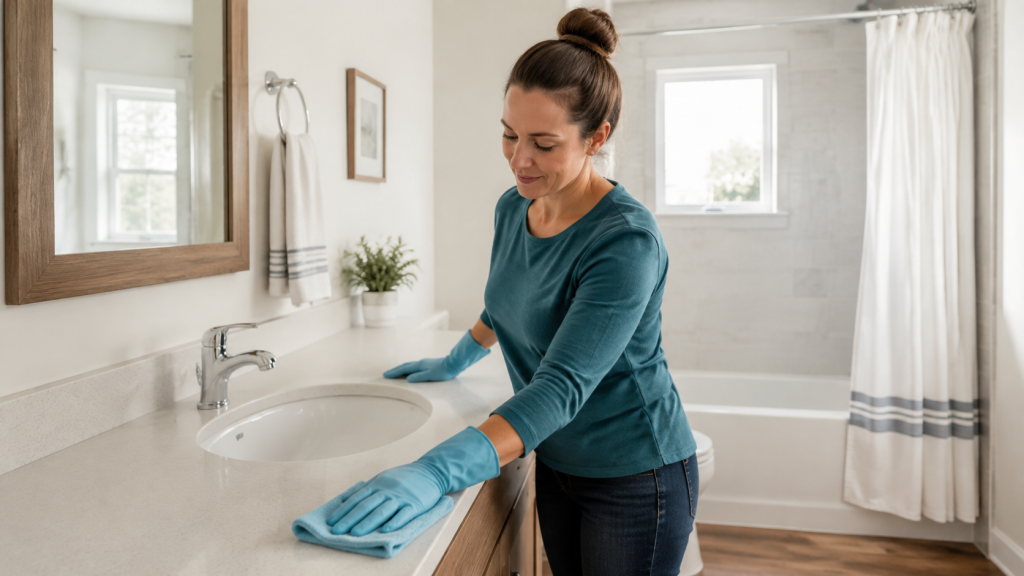
Bathroom Cleaning Checklist at a Glance
Use this schedule as a practical starting point rather than a rigid rule. A busy family bathroom may need attention sooner, while a lightly used guest bathroom may go longer between some tasks.
| When | What to clean or check | Important note |
|---|---|---|
| After use / daily as needed | Address sink or counter splashes, standing water, wet textiles, and obvious messes; ventilate after bathing; squeegee compatible shower surfaces if useful | Focus on moisture and visible soil. Most surfaces do not need full cleaning every day. |
| Weekly | Clean sink, counter, faucet exterior, mirror, toilet, tub/shower, glass as needed, floor and corners; handle towels, bath mat, and trash; quickly check for drips, pooling, persistent dampness, or unusual condensation | Address signs of leaks or moisture whenever you notice them, not only on cleaning day. |
| Monthly | Clean less-visible corners, accessible areas around fixtures, storage surfaces, frequently handled accessories, shower curtain or liner as needed, and accessible ventilation grille | Move tasks earlier if buildup or heavy use makes it necessary. |
| Every few months / periodically | Deliberately review visible grout, caulk, shower-door seals, fixture condition, shower-head buildup, and manufacturer-recommended maintenance needs | Inspect based on condition and product instructions rather than an automatic replacement schedule. |
Adjust the schedule to your bathroom
Clean more often when:
- Several people share one bathroom.
- Young children create frequent splashes or messes.
- The bathroom takes a long time to dry after bathing.
- Hard-water or soap deposits build up quickly.
- Someone in the household is sick, and more frequent cleaning or appropriate disinfection is warranted.
A guest bathroom that receives little use may not need a complete weekly scrub. It still needs periodic dusting, toilet and sink checks, fresh towels, and attention to leaks, moisture, or other changes that might otherwise go unnoticed.
After-Use and Daily Bathroom Habits
A few short habits can reduce the amount of buildup waiting for you on cleaning day.
- Wipe significant splashes from the sink, counter, floor, or fixture surfaces.
- Remove standing water where it collects instead of leaving it against caulk, grout, cabinets, or flooring.
- Hang towels and bath mats where they can dry rather than leaving them bunched on the floor.
- Use the bathroom exhaust fan during bathing and afterward as appropriate for the fan and room. If the bathroom still remains damp for long periods, treat that as a condition to investigate rather than assuming the fan alone solves it.
- Wipe visible toothpaste, cosmetics, hair, or toilet messes when you notice them.
- Squeegee compatible shower glass or smooth shower walls after use if water spotting or mineral buildup is a recurring problem.
These habits help control moisture and soil, but they cannot guarantee that mold will not develop. Persistent dampness, water intrusion, and surfaces that repeatedly fail to dry need more attention than routine wiping.
Weekly Bathroom Cleaning Checklist
For most regularly used bathrooms, a weekly whole-room cleaning is a workable starting point. The most efficient method is to clear the room first, work generally from higher surfaces toward the floor, and avoid recontaminating clean areas.
- Gather supplies and remove loose items.
Put away toiletries and other counter clutter. Remove used towels and the bath mat if they are being laundered. Empty or prepare the trash, and bring in only the cleaners and tools appropriate for the surfaces you plan to clean. - Read the cleaner labels before you start.
Check where each product can be used and whether it requires gloves, ventilation, rinsing, or a specific amount of time on the surface. Never apply a different cleaner over residue from another product. If products will be used sequentially on the same surface, follow both manufacturers’ directions for removing residue and preparing the surface before switching. If the directions do not make safe sequential use clear, do not switch products on that surface; consult the product or surface manufacturer instead. - Start with mirrors and higher, cleaner surfaces.
Clean the mirror and wipe dust or light soil from shelving, ledges, and other suitable surfaces. Working downward helps keep dust, hair, and droplets from landing on a freshly cleaned floor. - Clean the sink, counter, and faucet exterior.
Remove toothpaste, soap residue, cosmetics, hair, and ordinary soil with a cleaner suitable for the counter and sink material. Wipe faucet handles and the exterior with a soft cloth or nonabrasive sponge that will not damage the finish. Dry metal finishes when appropriate to reduce spotting. - Clean the tub or shower surfaces.
Address ordinary body-oil residue, soap film, and visible soil using a product approved for the wall, pan, tub, tile, grout, glass, or other surface involved. Give products any label-required working time, then rinse or wipe as directed. Keep specialist stain removal, grout restoration, mineral removal, and mold treatment separate from routine weekly cleaning. For a more detailed routine, see our guide on how to clean a shower. - Clean the toilet with dedicated tools.
Clean the bowl with a toilet product intended for that use. Then wipe the seat, lid, flush handle or button, tank exterior, outside of the bowl, and accessible area around the base with products suitable for those surfaces. Do not use the toilet brush, sponge, or cloth on the sink, faucet, or other bathroom surfaces. - Finish laundry and trash.
Replace towels and the bath mat when clean and dry. Empty the trash and clean the container if there are spills or residue inside it. - Clean the floor last.
Pick up hair and loose debris before wet cleaning. Work around the toilet base, vanity edges, and corners where dust and hair collect. Use a floor cleaner compatible with the flooring, and avoid leaving excess water at cabinet bases, trim, wall edges, or floor penetrations. - Let wet areas dry safely.
Leave the shower or tub area arranged so air can circulate, and avoid creating a slippery floor. Return loose items only after the surfaces beneath them are dry.
Cleaning versus disinfecting
Cleaning removes dirt and much of the contamination present on a surface. Disinfecting uses a product designed to kill specified microorganisms and is a separate step when it is needed.
Clean the surface before disinfecting, and follow the disinfectant label’s preparation instructions. Then use the disinfectant only on approved, compatible surfaces and keep the surface visibly wet for the full labeled contact time.
You generally do not need to disinfect every bathroom surface every day. Additional disinfection may be appropriate when someone is ill or when someone in the household has a weakened immune system or otherwise faces a higher risk of becoming sick.
Monthly and Periodic Bathroom Cleaning
Less-visible areas do not necessarily need weekly attention, but they should not be ignored indefinitely.
Shower curtain or liner: Check the care label before washing, wiping, or otherwise cleaning it. Materials vary, and not every liner or decorative curtain tolerates the same products or wash cycle. Replace it when damage or deterioration makes continued cleaning impractical.
Corners and fixture edges: Clean behind movable countertop items and accessible areas around the toilet, vanity, tub, and shower enclosure. Look for dirt, moisture marks, or deterioration while you are there.
Ventilation grille: Dust or clean an accessible fan grille only in the manner allowed by the fan manufacturer and only when you can reach it safely. Do not remove electrical components, reach into energized equipment, or service fan wiring as part of routine bathroom cleaning.
Shower head: Look for visible mineral buildup, uneven spray, or blocked spray openings. Routine inspection is enough for this checklist; cleaning or replacement can be handled separately when needed.
Grout, caulk, and shower-door seals: Look for gaps, cracks, separation, persistent discoloration, or areas allowing water to escape. Cleaning may improve surface appearance, but it will not repair failed material.
Storage and accessories: Wipe shelves, drawer pulls, toothbrush holders, soap dishes, dispensers, and other frequently handled or residue-prone items as needed.
There is no reason to replace caulk or seal grout automatically on a fixed annual schedule. Grout type, sealer type, surface condition, installation details, product instructions, and actual water exposure all affect maintenance needs.
Simple Bathroom Maintenance Checks
Cleaning time is a useful opportunity to notice small problems before they become harder to ignore. Keep these checks visual and noninvasive.
- Look for drips or pooling. Check around faucets, the toilet, shower-door edges, and other visible connections for water that returns after you wipe the area dry.
- Watch for staining or dampness. New discoloration near floors, walls, cabinets, ceilings, or fixture edges can indicate moisture that deserves investigation.
- Inspect visible caulk. Gaps, separation, missing sections, or material pulling away from adjoining surfaces can allow water where it does not belong.
- Check grout condition. Note cracks, missing material, or areas that continue to deteriorate rather than treating every discoloration as a cleaning problem.
- Look at shower-door seals and sweeps. Worn or displaced seals may allow water to escape the enclosure.
- Pay attention to drying time. A bathroom that repeatedly stays wet or heavily condensed long after bathing may need its ventilation and moisture source evaluated.
- Notice loose fixtures. A toilet, faucet, shower fitting, grab bar, or other fixture that moves when it should be secure deserves attention. Do not rely on a loose grab bar for support; arrange repair before using it for assistance.
Caulk and grout are not substitutes for a properly functioning waterproofing system. If moisture keeps returning after surface cleaning or minor visible maintenance, the source of the water needs to be identified rather than covered over.
Keep plumbing checks observational. Persistent leakage, suspected damage inside a wall or floor, or a repair requiring finished surfaces to be opened belongs with an appropriate plumbing, water-damage, or building professional.
Match the Cleaner to the Bathroom Surface
Bathroom materials that look similar can have very different care requirements. Check the fixture or surface care instructions before using a stronger chemical or abrasive tool.
| Surface | Safer starting approach | Watch for |
|---|---|---|
| Acrylic and fiberglass/composite surfaces | Use a soft cloth or nonabrasive sponge with a cleaner approved for the specific tub, shower, or surround | Abrasive pads and harsh cleaners can scratch, dull, or otherwise damage some surfaces |
| Porcelain and enamel finishes | Use products approved for that exact fixture or finish and rinse as directed | Do not assume a strong toilet-bowl or rust cleaner is suitable for an enameled tub or sink |
| Ceramic or porcelain tile and grout | Choose a cleaner compatible with both the tile and the grout; remove residue and rinse when required | Acids, aggressive chemicals, abrasive tools, and residue-producing products can affect some tiles, grout, sealers, or slip resistance |
| Natural stone | Use a neutral or stone-specific cleaner matched to the actual stone and sealer | Vinegar and other acids can etch acid-sensitive stone such as marble, limestone, or travertine |
| Glass and coated shower glass | Use a soft cloth, compatible mild cleaner, and squeegee when allowed | Abrasives can scratch glass or damage easy-clean coatings; coated glass may have its own approved-cleaner list |
| Metal faucet and trim finishes | Start with a soft, damp cloth and dry the finish; use only cleaners approved for that finish when more cleaning is needed | Bleach, acids, caustic cleaners, harsh abrasives, and some bathroom cleaners can damage particular finishes |
Vinegar is therefore not a universal bathroom cleaner. A product that is acceptable for one faucet, glass coating, or tile installation may be prohibited on another surface.
Testing an unfamiliar product in a hidden area can reveal some visible compatibility problems, but a test does not override the surface manufacturer’s restrictions. If the care instructions prohibit a chemical or abrasive, do not use it simply because a small test spot appeared unharmed.
For tub-specific care, learn how to clean a bathtub without damaging the finish.
When Cleaning Is No Longer the Right Fix
Stop treating a condition as a cleaning problem when there are signs of continuing water intrusion, material failure, or a repair outside routine maintenance.
Get appropriate help when you find:
- Mold that repeatedly returns, appears widespread, may be hidden, follows significant water damage, or covers more than about 10 square feet.
- Drywall, wood, flooring, trim, cabinetry, or other material that has become soft, swollen, crumbling, delaminated, or structurally damaged.
- Significant water staining or damage that continues to spread.
- Persistent unexplained dampness or a suspected leak inside a wall, floor, ceiling, or other concealed area.
- A loose fixture, damaged connection, or leak that cannot be addressed without opening finished surfaces or modifying plumbing.
- A loose or damaged grab bar or other support fixture. Do not rely on it for support until it has been properly repaired.
- Water repeatedly escaping a shower enclosure despite ordinary cleaning and visible seal maintenance.
- An exhaust fan or other ventilation problem that requires electrical diagnosis, wiring work, component removal, or unsafe overhead access.
Surface cleaning can improve what you see. It cannot correct a hidden leak, failed waterproofing, damaged substrate, unsafe electrical condition, or widespread moisture problem.
Bathroom Cleaning Checklist FAQs
How often should you clean a bathroom used by one person?
Weekly is a reasonable starting point for the main sink, toilet, shower or tub, mirror, and floor, but a low-use bathroom may stay clean longer. Handle splashes, standing water, and visible messes as they occur, then adjust the full cleaning schedule based on actual soil and moisture rather than the calendar alone.
Does a guest bathroom need cleaning every week?
Not necessarily. A rarely used bathroom may need dusting and routine checks more than frequent scrubbing. Check the toilet, sink, towels, floor, and room condition before guests arrive, and periodically look for leaks or moisture even when nobody has been using the room.
Do you need to disinfect every bathroom surface?
No. Routine cleaning is appropriate for many everyday situations. Clean before disinfecting, and use disinfection when there is a specific reason for it, such as illness or increased vulnerability to infection in the household. Follow the disinfectant label for approved surfaces, preparation, and contact time.
What is the best order for cleaning a bathroom?
Clear clutter first, then work generally from higher and cleaner surfaces toward lower and dirtier areas. Clean the mirror, sink and counter, shower or tub, and toilet before finishing with the floor. Keep toilet-cleaning tools separate so you do not spread contamination back to other surfaces.
Final Thoughts
A useful bathroom routine is one you can maintain: address water and visible messes promptly, handle the main cleaning on a schedule that matches actual use, and review less-visible materials and fixtures periodically.
When buildup keeps returning unusually fast, surfaces stay damp, or materials begin to deteriorate, shift from cleaning to finding the underlying cause. Early attention to those visible changes can prevent a routine housekeeping issue from becoming a larger repair.