
types of house siding: materials, costs, pros and cons
The main types of house siding include vinyl, fiber cement, wood, engineered wood, brick veneer, stone veneer, stucco, and metal. Each protects a home’s exterior differently and comes with its own trade-offs in cost, maintenance, durability, appearance, moisture performance, and climate suitability. There is no single siding material that is automatically the right choice for every house.
Types of House Siding at a Glance
This table gives a broad comparison rather than exact pricing. Material quality, house design, labor rates, wall condition, and installation details can all change the final cost and performance.
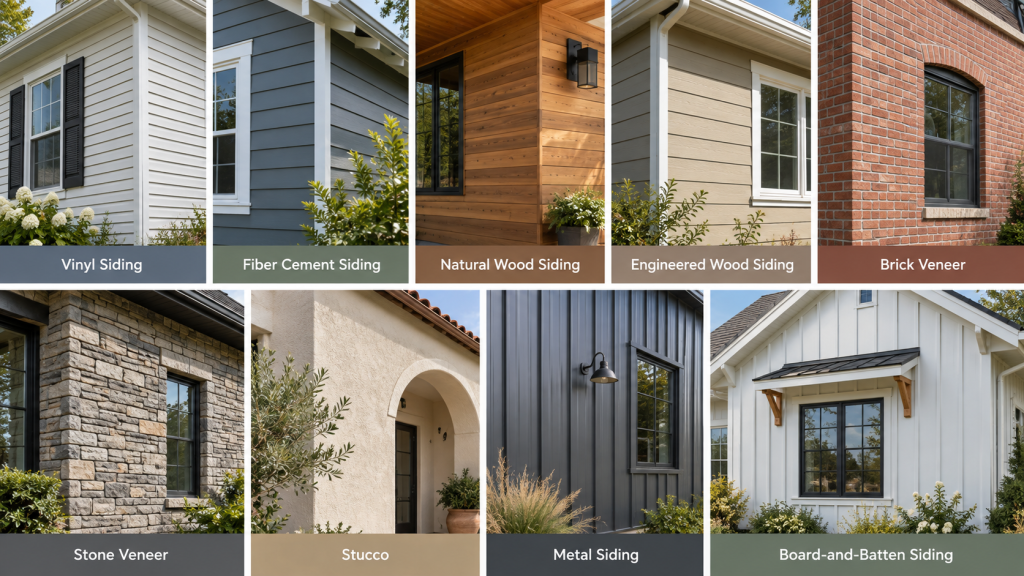
| Siding Type | Typical Cost Level | Maintenance | Durability | Main Strength | Main Drawback |
|---|---|---|---|---|---|
| Vinyl | Low–Moderate | Low | Good | Affordable and easy to maintain | Can crack, warp, or suffer impact damage |
| Fiber cement | Moderate–High | Low–Moderate | Very good | Durable and moisture/pest resistant | Heavy and installation-sensitive |
| Wood | Moderate–High | High | Good with maintenance | Natural appearance | Vulnerable to moisture, insects, and finish failure |
| Engineered wood | Moderate | Moderate | Good–Very good | Wood look with improved consistency | Still depends on good moisture management |
| Brick veneer | High | Low | Very good | Long-lasting masonry appearance | Higher initial cost and complex detailing |
| Stone veneer | High | Low–Moderate | Very good | Distinctive masonry appearance | Cost, weight, and moisture detailing |
| Stucco | Moderate | Moderate | Good–Very good | Seamless appearance and fire resistance | Cracking and moisture problems if poorly detailed |
| Metal | Moderate–High | Low–Moderate | Very good | Durable and low-maintenance | Dents, corrosion risks, and distinctive appearance |
| Board-and-batten | Varies | Varies | Varies | Strong vertical architectural look | Performance depends on the material used |
| Insulated vinyl | Moderate | Low | Good | Adds rigid foam backing to vinyl | Costs more than standard vinyl |
Vinyl Siding
Vinyl siding is made primarily from rigid PVC and is one of the most common residential siding materials. It is available in horizontal lap profiles, shakes, shingles, vertical panels, and many colors and textures.
Its biggest advantages are relatively low cost and limited routine maintenance. Vinyl does not need repainting, and it does not rot or provide food for termites. Periodic cleaning and inspections for loose, cracked, or damaged sections are generally more important than refinishing.
Vinyl is not immune to damage. Hard impacts can crack or puncture it, particularly in cold conditions, while excessive heat can distort some products. Strong winds can also expose weaknesses in improperly installed panels.
Vinyl is designed as an exterior cladding rather than a waterproof wall by itself. Water can reach the space behind it, so the water-resistive barrier, flashing, penetrations, and drainage details underneath remain important.
Overall, vinyl falls in the low-to-moderate cost range and is often considered when homeowners want straightforward maintenance and a wide selection of styles without the upkeep associated with painted wood.
If you are deciding between two of the most common siding choices, our vinyl siding vs. fiber cement comparison breaks down the differences in cost, durability, and maintenance.
Fiber Cement Siding
Fiber cement siding is manufactured from cementitious materials reinforced with cellulose fibers and other ingredients. It is commonly formed into lap boards, shingles, and panels that can resemble painted wood or provide a smooth contemporary finish.
The material resists rot and termite damage and generally handles weather exposure well when properly installed. Fiber cement products are also noncombustible, which can be an important consideration where exterior fire exposure is a concern.
Maintenance depends partly on the finish. Factory-finished products generally require less attention than field-painted siding, although painted surfaces may eventually need refinishing. Joints, penetrations, flashing, clearances, and surrounding trim still require inspection.
Fiber cement is heavier than vinyl or engineered wood, and cutting and installation require appropriate tools, dust controls, and careful handling. Those factors help put it in the moderate-to-high cost range.
For homeowners comparing durable siding families, fiber cement offers a combination of wood-like appearance, pest resistance, moisture resistance, and strong fire performance without relying on natural wood.
Wood Siding
Wood siding remains popular because its grain, texture, and variation are difficult to duplicate exactly. Common forms include clapboards, shingles, shakes, panels, and vertical boards.
Depending on the species and finish, wood can suit traditional, rustic, craftsman, coastal, or contemporary homes. It can also be repainted or restained as design preferences change.
The tradeoff is maintenance. Moisture can cause dimensional movement, paint failure, checking, warping, fungal decay, and eventually rot when wood repeatedly stays wet. Termites and other wood-damaging insects may also be concerns in some regions.
Wood siding therefore depends heavily on effective drainage, appropriate clearances, sound coatings, and timely repairs to damaged areas. Its cost varies widely by species and profile but commonly falls in the moderate-to-high range.
Well-maintained wood can last a long time, but it usually suits homeowners who are comfortable inspecting and maintaining an exterior finish rather than looking for a nearly maintenance-free material.
Engineered Wood Siding
Engineered wood siding uses wood strands or fibers combined with resins and other treatments to create consistent boards or panels. Products are commonly manufactured to resemble traditional wood lap siding, panels, shakes, or board-and-batten designs.
Compared with natural wood, engineered wood is designed to improve dimensional stability and resistance to common problems such as fungal decay and insect damage. It is also relatively lightweight and can provide good impact resistance.
It is still a wood-based product, however. Cut edges, damaged finishes, incorrect clearances, and persistent moisture exposure can create problems if the siding system is not installed and maintained as intended.
Engineered wood generally falls in the moderate cost range. It can be a practical middle ground for homeowners who like painted wood aesthetics but want a more uniform manufactured product with less upkeep than many traditional wood installations.
Brick Veneer
Many modern houses that appear to have brick exterior walls actually use brick veneer. The brick forms a nonstructural exterior cladding while the framed wall behind it provides the building’s primary structural support.
Brick veneer is valued for long service life, low routine maintenance, resistance to insects, and a traditional masonry appearance. Individual bricks also resist everyday impact better than many lightweight claddings.
A brick veneer wall is not expected to stop every drop of rain at its outer surface. Water that passes through the masonry must be managed with an air space, flashing, drainage openings, and the wall system behind the brick.
Problems can develop when those drainage paths are blocked or incorrectly constructed. Mortar joints can also deteriorate over time and may eventually require professional repair.
Brick veneer normally carries a high upfront cost because of material, labor, foundation support, and detailing requirements. In exchange, it provides one of the more durable and low-maintenance exterior finishes when the wall assembly is properly designed and maintained.
Stone Veneer
Stone veneer produces the appearance of a stone wall without necessarily using full-thickness structural stone. Residential systems may use natural stone veneer or manufactured stone products formed to resemble natural stone.
Natural stone is typically heavier and can be expensive. Manufactured stone veneer can reduce weight and provide more predictable shapes and colors, although appearance and durability vary by product.
Both depend on careful installation and water management. Flashing, drainage, transitions at windows and doors, clearances, and termination details matter because water entering behind the veneer needs a safe path back outside.
Stone veneer typically occupies the high-cost end of the siding spectrum, particularly for large areas or complex architectural details. Many homeowners use it as an accent rather than cladding an entire house.
Stucco
Traditional stucco is a cement-based exterior plaster applied as part of a layered wall system. It creates a continuous surface that can range from smooth and modern to heavily textured.
Stucco resists rot, insects, and fire and can provide long service when the wall is properly detailed. It is especially familiar in warm and dry regions, although properly designed stucco assemblies can be used in other climates.
Cracking is one of its more visible drawbacks. Small cracks can occur from shrinkage or normal movement, while larger or recurring cracks may indicate movement, installation problems, or water-related deterioration.
Moisture deserves particular attention on framed walls. Stucco itself is not a substitute for the drainage and water-control layers behind it. Poor flashing or drainage can allow hidden damage to develop even when much of the exterior still looks sound.
Cost is generally moderate, although regional labor practices and the type of stucco system can make a substantial difference.
Metal Siding
Residential metal siding most commonly includes aluminum and steel. It may appear as horizontal siding, vertical panels, corrugated profiles, or modern standing-seam-style wall panels.
Metal does not rot or attract termites, and good coatings can provide long-lasting color and weather protection. It can also be a useful option where homeowners want a contemporary appearance or a noncombustible exterior material.
The weaknesses vary by metal and product. Aluminum can dent relatively easily. Steel may also dent and requires protection against corrosion, particularly where coatings are damaged or exposure conditions are severe. Coastal salt exposure makes material selection, fasteners, finishes, and corrosion resistance especially important.
Metal siding generally falls in the moderate-to-high cost range. The finished appearance is more distinctive than vinyl or fiber cement, so architectural fit often becomes as important as maintenance considerations.
Board-and-Batten Siding
Board-and-batten describes an appearance and installation pattern rather than one specific siding material. Wide vertical boards or panels are visually divided by narrower battens, creating pronounced vertical lines.
The look can be produced with natural wood, engineered wood, fiber cement, vinyl, and some metal systems. As a result, its cost, maintenance requirements, moisture resistance, and durability depend largely on the underlying material.
Homeowners interested in board-and-batten should compare both the architectural style and the material used to create it rather than treating all board-and-batten siding as the same product.
For a closer look at the available materials, pricing, and tradeoffs, see our guide to board and batten siding.
Insulated Vinyl Siding
Insulated vinyl siding combines vinyl cladding with rigid foam insulation attached to the back of the siding. The foam can make the panels feel more substantial and may contribute to the insulation value of the exterior wall assembly.
It retains many characteristics of standard vinyl, including low maintenance and resistance to rot and insects, but normally costs more. Exact energy benefits depend on the product and the rest of the wall construction, so insulated siding should not be viewed as a substitute for evaluating the home’s overall insulation and air-sealing needs.
If the added foam backing interests you, our insulated vinyl siding guide explains the extra cost, benefits, and when the upgrade may be worth it.
How Siding Materials Compare by Maintenance
Maintenance requirements often separate materials as much as initial cost does.
Low-maintenance choices generally include vinyl, brick veneer, fiber cement with a durable factory finish, and many metal siding systems. These still need periodic inspection and cleaning, but they do not typically require frequent refinishing.
Moderate-maintenance siding includes engineered wood, stucco, some painted fiber cement, and stone veneer. Finishes, joints, cracks, sealant locations, and moisture-sensitive details may need more regular attention.
Traditional wood usually requires the most ongoing care because its protective coating is directly connected to how well it handles weather exposure.
Low maintenance should not be confused with no maintenance. Even masonry or synthetic siding can develop problems around windows, doors, penetrations, flashing, trim, and damaged sections.
How Climate Affects Siding Choice
Local exposure can change which siding characteristics deserve the most attention.
In regions with frequent heavy rain or high humidity, prioritize drainage, moisture tolerance, rot resistance, and installation details that allow the wall to dry. Wood-based materials require especially careful moisture management.
Freeze-thaw climates can stress materials and joints when water becomes trapped. Good clearances, drainage, flashing, and crack control become particularly important.
Strong sun and heat can fade finishes and increase thermal movement. Product color, coating quality, installation requirements, and expected sun exposure should all be considered.
Coastal environments add salt and wind-driven moisture, making corrosion-resistant metals, compatible fasteners, durable finishes, and careful detailing important.
In wildfire-prone locations, exterior wall assemblies deserve a broader fire-hardening evaluation. Noncombustible materials such as fiber cement, masonry, stucco, and many metal products may reduce one source of exterior fuel, but siding alone does not make a house wildfire-safe.
High-wind areas require siding systems, fasteners, wall assemblies, and installation methods appropriate for local wind exposure. A durable material can still fail if it is not attached correctly.
What Matters Besides the Siding Material
Siding performance depends on the wall system around it, not simply the material visible from the street.
Water must be directed away from vulnerable areas through correct flashing, drainage planes, water-resistive barriers, penetrations, and clearances. Windows, doors, roof intersections, decks, hose bibs, vents, and utility penetrations are common places where details matter.
Wall preparation also matters during replacement. Installing attractive new siding over unresolved rot, wet sheathing, damaged flashing, or another hidden moisture problem does not solve the underlying defect.
Manufacturer-required fastening, spacing, joint, trim, and clearance details also affect long-term performance. This is one reason installation quality can matter as much as differences between two otherwise durable siding materials.
How to Narrow Down Your Siding Options
Instead of searching for one universally superior material, reduce the list by deciding which trade-offs fit your house.
- Budget: Compare broad material and installation cost levels before focusing on colors or profiles.
- Maintenance tolerance: Decide whether periodic painting or staining is acceptable or whether low-maintenance materials are a priority.
- Climate: Consider rainfall, humidity, freeze-thaw exposure, sun, wind, coastal conditions, and wildfire risk.
- Appearance: Determine whether you prefer traditional wood grain, masonry, smooth panels, vertical lines, or another architectural style.
- Expected time in the home: Consider whether you are choosing for shorter-term appearance needs or long-term maintenance and durability.
- Existing wall condition: Moisture damage, deteriorated sheathing, unusual wall construction, or old siding layers may affect the project.
- Contractor availability: Some siding systems benefit from installers who work with that material regularly.
- Local restrictions: HOA rules, historic-district requirements, or neighborhood standards may limit colors, profiles, or materials.
Once those factors eliminate poor fits, comparing two or three material families becomes much more manageable.
For a more direct buying decision, our guide to the best siding for a house compares the main materials by maintenance, durability, climate, and overall fit.
When Existing Siding May Need More Than Maintenance
A faded or dirty exterior does not automatically need replacement, but widespread deterioration deserves closer evaluation. Warning signs include extensive cracking, rot, loose or missing siding, severe brittleness, repeated failures in the same areas, or evidence that water is entering the wall.
Bulging sections, stained interior finishes, soft sheathing, persistent musty conditions, or damage around windows and doors can indicate a problem behind the siding rather than a cosmetic surface issue. Avoid covering those symptoms with new siding until the source is identified.
Older materials also require special caution. Some older cementitious siding products may contain asbestos. Do not cut, sand, drill, grind, break, remove, or otherwise disturb suspected asbestos-containing siding; have it evaluated by an appropriately qualified asbestos professional.
Paint on older siding or exterior trim may also contain lead, particularly on pre-1978 homes. Renovation that disturbs those coatings requires appropriate lead-safe practices rather than casual sanding or scraping.
Final Thoughts
The major siding families all balance cost, appearance, durability, maintenance, moisture performance, and climate exposure differently. Vinyl emphasizes affordability and low upkeep, fiber cement combines durability with broad styling options, wood provides natural character, masonry offers long service, and engineered, stucco, and metal systems fill different practical and architectural roles.
A useful next step is to narrow the field to the few materials that suit your budget, climate, maintenance tolerance, and house style. From there, you can compare those options in greater detail instead of trying to identify one siding material that is supposedly best for every home.