
basement humidity: ideal levels, common causes, and how to control it
Basement humidity is best controlled by keeping indoor relative humidity below 60%, with about 30% to 50% considered an ideal range where practical. Basements often run more humid than upper floors because they are cooler, have less air movement, and can receive moisture from outdoor air, plumbing, HVAC equipment, or the surrounding foundation.
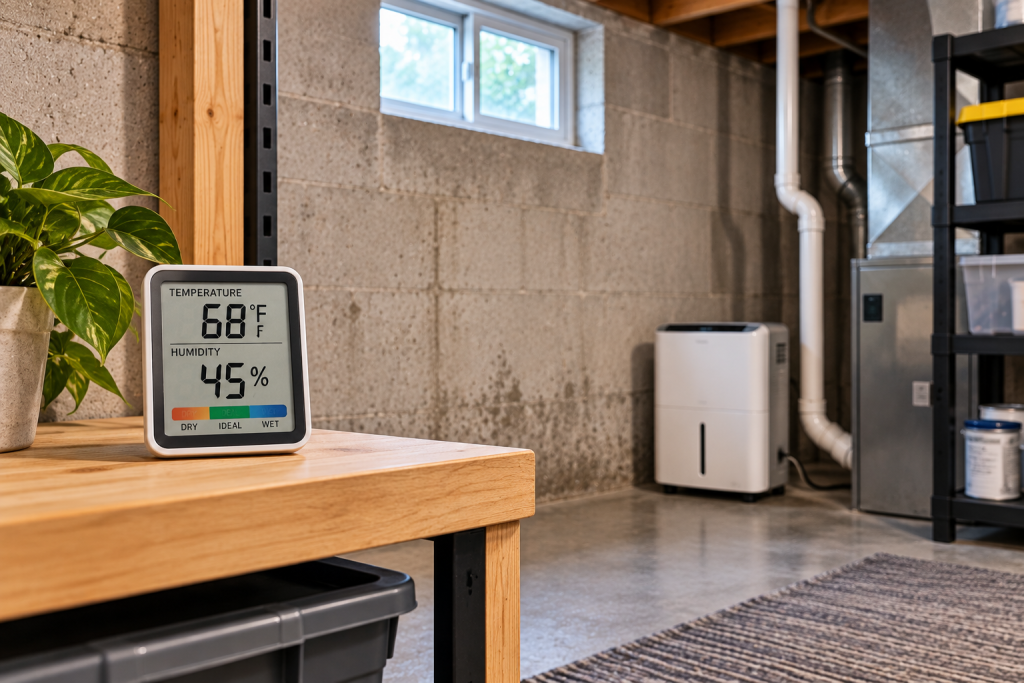
A hygrometer can tell you whether humidity is actually elevated. Watch the readings over time rather than reacting to one number, then address the moisture source before deciding whether ventilation, air conditioning, or a dehumidifier is the appropriate response.
What Relative Humidity Means in a Basement
Relative humidity, or RH, describes how much water vapor is in the air compared with how much that air can hold at its current temperature.
Temperature matters because warm air can hold more moisture than cool air. That helps explain why a basement can feel clammy even when the rest of the house feels comfortable.
For example, warm humid outdoor air entering a cool basement may cool enough that its relative humidity rises sharply. If a surface is cool enough, moisture can condense on it.
That is why basement humidity is not only about how much moisture enters the space. Temperature, airflow, and surface conditions also affect what you see and feel.
What Is a Good Basement Humidity Level?
For most homes, keeping indoor relative humidity below 60% is an important moisture-control goal. EPA guidance identifies approximately 30% to 50% RH as an ideal indoor range where practical.
That does not mean every basement must remain at exactly one number year-round.
A reasonable goal is to keep humidity consistently controlled rather than allowing it to remain elevated for long periods. If readings repeatedly climb above 60%, look for the reason rather than simply accepting it as normal basement behavior.
Very dry air can also be uncomfortable, particularly during winter heating season. The useful target is therefore a controlled middle range rather than the lowest humidity you can achieve.
Expect seasonal changes
Basement humidity commonly changes with the seasons.
Summer can be challenging because warm outdoor air often contains substantial moisture. When that air enters a cooler basement, the relative humidity rises, and condensation may develop.
During the heating season, indoor air is often drier. ENERGY STAR notes that lower humidity may be appropriate in cold weather to reduce window condensation.
Your basement may therefore need active moisture control during one season and little intervention during another.
How to Measure Basement Humidity
A digital hygrometer is the simplest way to stop guessing about humidity.
Place it in a representative part of the basement rather than directly beside a dehumidifier, HVAC supply register, open window, or other location that may distort the reading.
If the basement has separate rooms or noticeably different conditions, moving the hygrometer between areas can reveal whether the problem is widespread or concentrated in one section.
Watch trends instead of one reading
One humidity measurement provides only a snapshot.
Record or check readings at different times of day and under different weather conditions. Pay particular attention to:
- Hot, humid days
- Periods after heavy rain
- Times when the air conditioner is running
- Days when basement windows are open
- Laundry or other moisture-producing activities
- Extended dry-weather periods
A pattern is more useful than an isolated number. Humidity that rises only when windows are open during muggy weather suggests a different problem from humidity that remains high during dry conditions.
Some hygrometers store high and low readings or provide historical data. Those features can make seasonal patterns easier to recognize, but a basic unit and a few written observations can also provide useful information.
Why Basements Often Have High Humidity
Several moisture sources can contribute at once. The goal is to identify which ones actually apply to your home.
Cool surfaces can create condensation
Condensation occurs when humid air contacts a sufficiently cool surface and water vapor turns into liquid. EPA specifically identifies condensation on windows, walls, and pipes as a sign that indoor moisture deserves attention.
Common basement locations include:
- Cold-water pipes
- Metal ductwork
- Concrete walls
- Concrete floors
- Basement windows
- Cool metal equipment
If droplets appear across several cool surfaces during humid weather, excess airborne moisture is a likely contributor.
Humid outdoor air can enter a cool basement
Opening basement windows on a muggy summer day may seem like a good way to dry the space, but it can have the opposite effect.
Warm humid air that enters and cools can push indoor relative humidity higher. EPA moisture guidance recommends ventilation when outside air is cool and dry, while dehumidification may be more appropriate when outdoor air is warm and humid.
Ventilation should therefore depend on outdoor conditions rather than on a rule that basements always need more outside air.
Plumbing, appliances, and HVAC equipment can add moisture
A plumbing leak or malfunctioning appliance can raise humidity even when it produces no large puddle.
Inspect visible areas around water-supply piping, drain piping, washing machines, utility sinks, water heaters, and other water-using equipment for dripping or persistent dampness.
Air-conditioning equipment also removes moisture from indoor air and produces condensate. Problems with accessible condensate drainage can contribute moisture to the basement.
Keep these checks observational. Water inside HVAC equipment, hidden plumbing leaks, or repairs requiring disassembly should be handled by an appropriate professional.
Foundation moisture can raise indoor humidity
Humidity can also be a symptom of water entering through or around the foundation.
Moisture from outside can seep through basement floors or other building components, and controlling the underlying water source is an important part of moisture management.
Clues that the problem goes beyond airborne humidity include:
- Walls that become visibly damp after rain
- Water at the wall-floor joint
- Wet areas that repeatedly form in the same place
- Water coming through floor cracks or joints
- Peeling coatings associated with recurring dampness
- Standing water
A dehumidifier may lower the resulting indoor humidity, but it does not stop the water from entering.
How to Control Basement Humidity
Start with the moisture source, then use mechanical humidity control as needed.
Limit unnecessary moisture
Address visible plumbing and appliance leaks promptly. Keep HVAC condensate drainage functioning properly, and avoid allowing wet materials or standing water to remain in the basement.
If laundry equipment is located downstairs, make sure moisture-producing equipment is vented and maintained as designed.
Also avoid storing large amounts of wet material in the basement after cleaning, flooding, or outdoor projects.
Use ventilation selectively
Ventilation can help when outdoor air is drier than basement air.
On a cool, dry day, exchanging basement air may reduce humidity. On a hot, muggy day, the same open windows can introduce additional moisture.
Use humidity readings and outdoor conditions rather than relying on how fresh the outside air feels.
Use air conditioning where appropriate
Air conditioning removes moisture while cooling indoor air.
In homes where conditioned air reaches the basement effectively, normal air-conditioning operation may help control seasonal humidity. Results vary with the HVAC layout, basement temperature, moisture load, and how the space is connected to the rest of the home.
Do not modify ductwork or HVAC equipment as a humidity experiment. Persistent problems involving system performance should be evaluated by a qualified HVAC professional.
Use a dehumidifier for excess airborne moisture
A dehumidifier is appropriate when relative humidity remains high, and the main problem is moisture in the air.
An adjustable humidistat allows the unit to cycle toward a selected humidity level rather than running without control. ENERGY STAR-certified portable dehumidifiers include built-in humidistats for this purpose.
Choose and operate the unit according to the conditions in the basement. Capacity, drainage method, temperature compatibility, and maintenance all matter, but detailed product selection and sizing are separate decisions from determining the correct humidity level.
If the dehumidifier runs heavily while walls or floors remain actively wet, investigate the water source instead of assuming more dehumidification is the answer.
If excess airborne moisture is the main issue, our guide to the best dehumidifier for basement use explains what to compare before choosing a unit.
Practical Habits for Keeping Humidity Under Control
Humidity management is easier when you watch for changes rather than waiting for the basement to feel damp.
Useful habits include:
- Keep a hygrometer in the basement.
- Check readings more often during humid weather.
- Watch for condensation on pipes, windows, and masonry.
- Keep air intakes, exhausts, and dehumidifier airflow unobstructed.
- Maintain dehumidifier filters and drainage according to the manufacturer’s instructions.
- Address visible plumbing and appliance leaks promptly.
- Check previously damp areas after heavy rain.
- Avoid leaving wet materials in the basement longer than necessary.
- Watch for sudden humidity increases that do not match normal seasonal patterns.
A steady reading within your target range is more useful than repeatedly driving humidity down and allowing it to climb again.
Signs Humidity Is Not the Only Problem
High humidity is sometimes the result of another moisture problem rather than the primary problem itself.
Look beyond ordinary humidity control if you notice:
- Active wall or floor seepage
- Recurring standing water
- Water appearing immediately after storms
- Persistent wetness in one localized area
- Plumbing or appliance leakage
- Significant peeling or deterioration associated with dampness
- Extensive suspected mold growth
- Sewage or potentially contaminated water
Standing water near electrical equipment requires particular caution. Do not enter water around energized outlets, wiring, appliances, sump equipment, or other electrical components.
A dehumidifier can remove moisture from the air after a leak or seepage event, but it should not be used as a substitute for correcting the source.
If dampness appears after rain or shows up in specific wall or floor areas, see our guide to a damp basement for a broader look at possible moisture sources.
When Professional Evaluation Makes Sense
Professional help is appropriate when humidity remains high despite reasonable control measures or when the moisture source cannot be identified safely.
A plumber may be appropriate for persistent plumbing leaks. An HVAC technician can evaluate condensate or equipment problems. Recurring foundation seepage may require a drainage or waterproofing evaluation.
Seek professional help when there is substantial water intrusion, significant electrical exposure, sewage or contaminated water, extensive suspected mold, or signs of structural movement.
The goal is not simply to achieve a lower hygrometer reading. It is to keep the basement dry enough by controlling the source of unwanted moisture.
Final Thoughts
Basement humidity should generally remain below 60% relative humidity, with roughly 30% to 50% serving as a useful target range where practical. Monitor it with a hygrometer and pay attention to trends across weather, seasons, and household activities rather than relying on a single reading.
When humidity is the primary problem, selective ventilation, air conditioning, moisture-source control, and dehumidification can all help. When wet walls, floor seepage, leaks, or standing water are present, treat high humidity as a symptom and address the underlying water problem as well.