
how to get rid of a musty smell in a basement: find and fix the moisture source
If you are trying to figure out how to get rid of musty smell in basement spaces, start with moisture rather than fragrance. A musty odor usually means something in the basement is staying damp enough to create persistent odors, support microbial growth, or keep porous materials from drying properly.
The lasting solution is to find the moisture source, dry or remove affected materials, clean appropriate surfaces, and keep the basement dry enough that the odor does not return. Air fresheners and odor absorbers may temporarily change what you smell, but they do not correct the underlying problem.
If standing water is near outlets, wiring, appliances, sump equipment, or other electrical components, do not enter the water or touch wet electrical equipment. Sewage, contaminated water, extensive suspected mold, and substantial hidden water damage also call for professional help rather than routine odor cleanup.
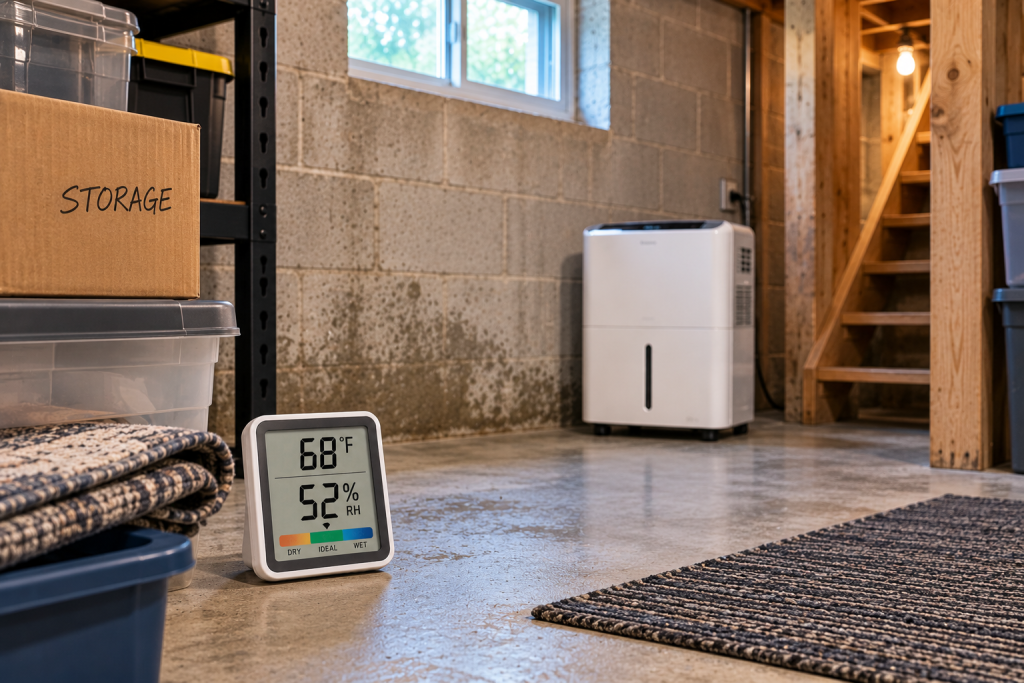
Why Does a Basement Smell Musty?
Basements can develop musty odors from several moisture conditions, and more than one can occur at the same time.
High humidity and condensation
A basement can smell musty even without an obvious leak.
Cool foundation walls, floors, pipes, and ducts can cause moisture in humid air to condense. Stored materials can then absorb some of that moisture and remain damp enough to develop stale or musty odors.
This is especially common during warm, humid weather when outdoor air enters a cooler basement.
Damp concrete or masonry
Concrete and masonry can hold or transmit moisture without producing a visible puddle.
A wall may look darker in one area, feel persistently damp, develop mineral deposits, or cause stored items nearby to smell musty. If the condition changes after rain or snowmelt, moisture movement through or around the foundation deserves closer attention.
Seepage and other water intrusion
Minor seepage can create a significant odor even when it does not leave standing water.
Check wall-floor joints, basement windows, cracks, utility penetrations, and previously wet areas. Water that repeatedly appears after storms points toward a water-entry problem rather than ordinary indoor humidity alone.
A dehumidifier may help dry the air, but it will not stop active seepage.
Plumbing, appliances, and HVAC equipment
A small plumbing or mechanical leak can keep one area damp for a long time without flooding the room.
Inspect visible areas around water-supply and drain pipes, washing machines, utility sinks, water heaters, HVAC equipment, and condensate components.
A musty odor that is concentrated around one appliance, wall, or utility area may be a clue that the moisture source is localized.
Keep these checks visual. Hidden plumbing leaks, water inside HVAC equipment, or problems requiring wall or equipment disassembly should be handled by the appropriate professional.
Damp stored materials
Cardboard boxes, rugs, upholstered furniture, fabrics, paper, and other porous materials readily absorb basement moisture.
Once damp, they can hold odors long after the surrounding air feels drier. Items stored directly against cool foundation walls or on a damp floor are especially vulnerable.
Mold or mildew
Visible fungal growth can contribute to a musty smell, but odor alone cannot tell you whether mold is present or what type it might be.
Do not try to identify mold species by color, appearance, or smell. If there is extensive visible growth, significant water damage, contaminated water, or suspected growth inside walls or other inaccessible areas, professional evaluation is more appropriate than a general basement-cleaning project.
How to Get Rid of Musty Smell in Basement Areas
The most effective approach is a sequence: locate the dampness, stop or control the source, deal with affected materials, and then manage the basement environment.
Step 1: Inspect for obvious moisture
Walk through the basement and look for places where water or dampness could be originating.
Check:
- Foundation walls and floors
- The wall-floor joint
- Basement windows and window wells
- Visible plumbing
- Water heaters and water-using appliances
- HVAC and condensate components
- Sump areas
- Utility penetrations
- Rugs, boxes, furniture, and stored fabrics
Look for wet spots, staining, condensation, peeling coatings, darkened masonry, damaged cardboard, and materials that feel damp.
Use your nose only as a general locator. An odor that becomes noticeably stronger in one part of the basement can help focus the inspection, but it does not identify the substance causing the smell.
Step 2: Measure the humidity
Place a digital hygrometer in the basement to measure relative humidity.
One reading is less useful than watching the pattern. Check the humidity over several days and compare it with outdoor weather, rainfall, air-conditioning use, and whether basement windows have been open.
If the basement becomes mustier during warm, muggy weather and you see condensation on cool surfaces, excess airborne moisture is likely contributing.
If the odor remains concentrated around one wet wall or appliance regardless of humidity, look for a localized water source instead.
If humidity appears to be contributing to the odor, our basement humidity guide explains target levels, common causes, and practical ways to keep moisture under control.
Step 3: Correct the moisture source
Match the response to what you found.
If humid air and condensation are the main problem, humidity control may be sufficient.
If a visible plumbing or appliance leak is causing the dampness, that source needs repair.
If moisture repeatedly appears after rain, through a wall, or at the floor, investigate the water-entry problem rather than treating the smell as an isolated indoor-air issue.
This is the step that determines whether the odor stays away. Cleaning a damp basement without stopping the moisture usually produces only temporary improvement.
If the smell is tied to recurring dampness rather than simple humidity, see our damp basement guide for a broader look at rain, groundwater, condensation, and indoor moisture sources.
Step 4: Remove or dry damp porous materials
Once the source is controlled, inspect stored materials carefully.
Cardboard, paper, rugs, fabric, upholstery, and similar porous materials can retain moisture and odor. Items that can be safely dried should be moved to an appropriate dry area with good airflow.
Discard ordinary low-value materials that are badly water-damaged, cannot be dried adequately, or remain persistently musty.
Be more cautious with materials affected by sewage, floodwater, extensive suspected mold, or substantial hidden water damage. Those conditions require different cleanup precautions and may justify professional restoration.
Avoid placing replacement cardboard boxes or fabrics directly against damp masonry or on a basement floor that has a history of moisture.
Step 5: Clean washable surfaces safely
After moisture is controlled, clean ordinary washable surfaces that have accumulated dirt or stale residue.
Use a cleaner that is appropriate for the specific material, follow its label instructions, and dry the surface completely afterward.
Do not assume one cleaning product is safe for every basement surface. Finished wood, painted surfaces, masonry, plastics, metals, and flooring can have different care requirements.
Never mix cleaning chemicals. In particular, do not combine bleach with ammonia or other cleaners. Do not treat bleach as a universal solution for musty odors or mold.
If substantial visible mold is present, stop treating the job as ordinary surface cleaning and arrange appropriate evaluation.
Step 6: Dry and monitor the basement
After cleaning, give the basement time to dry while continuing to monitor humidity and previously affected areas.
Check whether the odor decreases as materials dry. A noticeable improvement after humidity drops and damp items are removed supports the idea that moisture was driving the smell.
If the odor returns quickly, look again for a source that was missed rather than adding stronger fragrance.
When Ventilation Helps—and When It Can Make the Smell Worse
Fresh air can help a basement dry when the outdoor air is actually drier than the basement air.
But opening windows during warm, humid weather can introduce more moisture into a cool basement. That can increase relative humidity, create condensation, and eventually make musty conditions worse.
Use the weather and your hygrometer as guides.
On a dry day, ventilation may be helpful. During humid summer conditions, closing the windows and using air conditioning or dehumidification may make more sense.
When a Dehumidifier Can Help
A dehumidifier is useful when excess airborne moisture is contributing to the musty conditions.
It can reduce humidity and help damp surfaces and stored materials remain drier after the underlying water sources have been addressed.
It cannot repair:
- A plumbing leak
- Wall or floor seepage
- A wet window well
- Standing water
- A failed drainage system
- Another continuing source of liquid water
If the machine runs heavily but walls or floors continue getting wet, investigate the water source rather than relying on more dehumidification.
Detailed dehumidifier capacity and product selection are separate decisions. For odor control, the important point is to use dehumidification for airborne moisture, not as a substitute for stopping water intrusion.
Why Air Fresheners and Odor Absorbers Are Not the Fix
Scented sprays, plug-ins, candles, charcoal products, and other odor-control products may make a basement smell different for a while.
They do not dry damp cardboard, stop condensation, repair a leak, or prevent water from entering through the foundation.
Odor absorbers can have a limited supporting role after moisture control and cleaning, but they should not be the main response to a recurring musty smell.
A fragrance that masks the warning sign can actually make diagnosis harder if it encourages you to ignore persistent dampness.
How to Keep the Musty Smell From Returning
Once the basement smells better, focus on keeping the conditions that caused the odor from returning.
- Monitor humidity with a hygrometer.
- Check for condensation during humid weather.
- Address plumbing and appliance leaks promptly.
- Inspect previously wet areas after heavy rain.
- Keep stored materials away from known damp surfaces.
- Avoid storing important items in moisture-sensitive cardboard when dampness is recurring.
- Maintain dehumidifiers and their drainage systems as directed.
- Use outdoor ventilation only when conditions favor drying.
- Investigate new stains, damp spots, or odors instead of covering them.
If the basement has flooded or experienced a significant leak, deal with wet materials promptly rather than allowing them to remain damp.
When a Musty Basement Needs Professional Evaluation
A persistent smell does not automatically mean the basement has a serious problem, but some conditions exceed reasonable homeowner troubleshooting.
Arrange appropriate professional help for:
- Recurring or substantial water seepage
- Standing water near electrical equipment
- Sewage or potentially contaminated water
- Extensive suspected mold growth
- Persistent odors associated with hidden wall, ceiling, or floor cavities
- Plumbing leaks that cannot be accessed safely
- Water inside HVAC equipment
- Signs of structural movement along with moisture
- A moisture source that remains unidentified
- Repeated odors that return despite humidity control, drying, and ordinary cleaning
The appropriate professional depends on the source: a plumber for plumbing leaks, an HVAC technician for equipment or condensate problems, a drainage or waterproofing professional for persistent foundation water, or a qualified remediation professional when extensive mold or contaminated materials are involved.
Final Thoughts
A musty basement usually needs moisture control more than odor control. Find where the dampness is coming from, measure the humidity, dry or remove affected materials where appropriate, and clean ordinary washable surfaces only after the source is under control.
If the smell disappears and stays gone as the basement remains dry, you have addressed the condition that was feeding it. If it returns with rain, visible seepage, persistent wet materials, or unexplained moisture, investigate that underlying problem instead of trying to cover the odor.